When evaluating industrial and commercial infrastructure projects, selecting the optimal electrical conduit pipe is critical for ensuring long-term durability and overall safety.
This technical comparison between rigid and EMT conduit pipes provides engineers and technical evaluators with essential insights into material properties and installation.
By understanding the distinct mechanical advantages of each steel conduit type, procurement teams can make informed decisions for their specific applications.
These decisions must perfectly align with stringent project specifications and international manufacturing standards to guarantee optimal performance in demanding environments.
Proper selection ultimately minimizes lifecycle costs while ensuring the electrical distribution system remains fully compliant with all relevant safety codes.
What Are the Core Mechanical Differences?
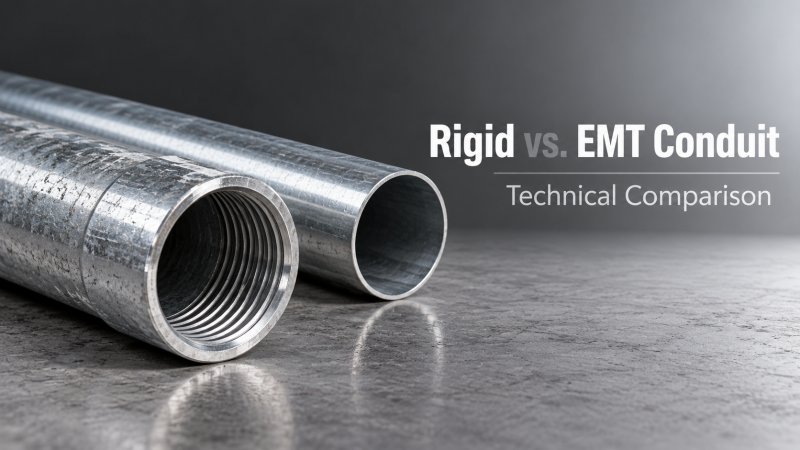
Rigid steel conduit offers exceptional mechanical protection due to its thick walls and robust structural integrity under very heavy physical stress conditions.
It can withstand significant impact forces without deforming, making it ideal for areas where physical damage to the wiring system is highly likely.
Conversely, electrical metallic tubing features much thinner walls, which significantly reduces its overall weight while still providing adequate protection for most applications.
EMT cannot handle the same level of physical abuse as rigid conduit, requiring careful routing to avoid accidental impacts during facility operations.
The threading capability of rigid conduit allows for secure mechanical connections that maintain structural continuity even under extreme vibration or structural shifting.
EMT relies on set-screw or compression fittings, which are faster to install but do not offer the same level of mechanical joint strength.
Both options utilize galvanized steel to resist corrosion, but the thicker zinc coating on rigid pipes provides superior longevity in harsh conditions.
Technical evaluators must weigh these mechanical properties against the specific physical threats present in the intended installation environment of the facility.
The yield strength of the base steel also plays a crucial role in determining how well the conduit resists permanent deformation under load.
Rigid conduit maintains its circular cross-section much better than EMT when subjected to heavy external pressures or accidental crushing forces.
Understanding these fundamental mechanical differences is the first step in specifying the correct conduit for any demanding industrial or commercial project.
How Do Installation and Labor Costs Compare?
Installation efficiency plays a massive role in the overall project budget, often outweighing the initial material cost differences between the two options.
EMT is significantly lighter and easier to cut and bend on-site, drastically reducing the physical effort and time required by electrical contractors.
Rigid conduit requires threading for every connection, a labor-intensive process that demands specialized tools and highly skilled technicians to ensure proper alignment.
The bending of rigid conduit also requires heavy, expensive hydraulic benders, whereas EMT can be bent using much simpler and cheaper manual tools.
Consequently, the labor costs associated with rigid conduit installations can be substantially higher, especially on large-scale commercial or industrial construction projects.
However, rigid conduit can sometimes act as an equipment grounding conductor, potentially eliminating the need for a separate internal grounding wire.
This potential material savings must be carefully calculated against the increased labor hours to determine the true total installed cost for each system.
Project managers should conduct a detailed time-and-motion study for their specific site conditions before finalizing the conduit selection for the budget.
The availability of skilled labor in the local market can also heavily influence this decision, as threading requires specific technical expertise.
Additionally, the physical storage and handling requirements on-site differ greatly, with rigid conduit requiring more robust support structures due to its weight.
Evaluating all these installation factors holistically ensures that the chosen electrical conduit pipe delivers the best overall value for the construction budget.
Which Environment Demands Rigid Over EMT?
Environmental exposure is a primary driver in selecting the correct electrical conduit pipe for any specific industrial or commercial application environment.
Rigid conduit is mandatory in severe corrosive environments, such as chemical processing plants, where its thick walls and heavy galvanization provide essential protection.
It is also required in areas subject to severe physical damage, like outdoor industrial yards, parking garages, and heavy manufacturing facility floors.
For instance, when routing power across a A36 Patterned steel plate used for heavy equipment flooring, rigid protection is absolutely necessary to prevent severe damage.
EMT is perfectly suitable for dry, indoor environments where physical damage is unlikely, such as standard office buildings and light commercial spaces.
It is also widely used in dropped ceiling spaces and interior wall cavities where its lightweight nature simplifies the routing process.
However, EMT should never be used in wet locations or buried underground unless it is specifically coated and approved for such direct burial.
Technical evaluators must thoroughly assess the moisture levels, chemical exposures, and physical impact risks before specifying EMT for any critical infrastructure project.
In coastal areas with high salt spray, the enhanced corrosion resistance of heavy-duty rigid conduit becomes an absolute necessity for long-term reliability.
Temperature fluctuations can also affect the performance of both systems, requiring proper expansion fittings to prevent stress buildup in the conduit runs.
Matching the conduit type to the specific environmental hazards ensures that the electrical system remains safe and operational throughout its design life.
What Is the Long-Term Maintenance Reality?
Long-term maintenance requirements significantly impact the total lifecycle cost of the electrical distribution system throughout the entire operational lifespan of the facility.
Rigid conduit systems are highly durable and rarely require maintenance, but if damage occurs, repairing threaded connections can be complex and time-consuming.
EMT systems are easier to modify or expand because the set-screw fittings can be quickly loosened and re-tightened without specialized threading equipment.
However, the thinner walls of EMT make it more susceptible to accidental denting, which can restrict wire pulling during future system upgrades.
Corrosion is another critical factor, as compromised galvanized coatings on EMT can lead to rapid degradation in humid or mildly corrosive environments.
Rigid conduit maintains its protective qualities much longer, ensuring that the internal wiring remains safe from environmental factors for decades of service.
Facility managers must balance the ease of future modifications against the need for robust, long-lasting physical protection when planning maintenance strategies.
Regular visual inspections are recommended for both systems, but EMT in marginal environments may require more frequent checks for early signs of rust.
When upgrading wiring, the smooth interior of well-maintained rigid conduit allows for easier wire pulling compared to dented or corroded EMT sections.
Ultimately, the maintenance reality dictates that rigid conduit is a set-and-forget solution, while EMT requires a more proactive facility management approach.
Understanding these long-term operational realities helps technical evaluators choose a system that aligns with the specific maintenance capabilities and budgets of facilities.
How to Make the Final Procurement Decision?
Making the final procurement decision requires a comprehensive evaluation of both immediate construction budgets and long-term operational reliability requirements for the facility.
Technical evaluators should create a detailed matrix comparing material costs, estimated labor hours, expected lifespan, and specific environmental protection needs for each zone.
It is often most cost-effective to use a hybrid approach, utilizing rigid conduit in high-risk areas and EMT in safe, indoor zones.
Always ensure that the selected electrical conduit pipe meets all local building codes and the latest edition of the National Electrical Code.
Consulting with experienced electrical contractors early in the design phase can reveal hidden installation challenges that might significantly impact the final project cost.
Ultimately, the choice between rigid and EMT conduit is not about which is universally better, but which is right for the specific application.
By carefully analyzing the technical requirements, project teams can select the optimal conduit system that ensures safety, compliance, and long-term operational success.
Procurement teams should also consider the reliability of their steel suppliers, ensuring consistent quality and adherence to international manufacturing standards for all materials.
Partnering with a trusted structural steel manufacturer can provide additional value through customized solutions and dependable lead times for large-scale infrastructure projects.
Evaluating the total cost of ownership is essential, as the cheapest initial material might result in much higher installation and maintenance expenses later.
Suppliers who offer comprehensive technical support can also help engineering teams navigate complex code requirements and optimize their conduit routing designs effectively.
Furthermore, verifying the certifications of the steel products ensures that the conduit will perform as expected under the specified environmental conditions.
This holistic approach to procurement guarantees that the electrical infrastructure is built on a foundation of quality, reliability, and professional service.
Summary of Technical and Procurement Insights
Selecting between rigid and EMT electrical conduit pipe involves balancing mechanical strength, installation efficiency, environmental resistance, and overall lifecycle costs.
Rigid conduit provides unmatched physical protection and durability for harsh environments, while EMT offers significant labor savings for standard indoor applications.
Technical evaluators must prioritize the specific physical and environmental threats present in their projects to make the most informed procurement decisions.
By applying these technical insights, engineering and procurement teams can optimize their electrical infrastructure for safety, compliance, and long-term operational reliability.
Please give us a message


Please enter what you want to find