Right angle sheet metal fabrication errors—such as inaccurate bending angles, inconsistent material thickness, or improper weld placement—can critically undermine structural integrity in load-bearing applications. For structural steel manufacturers, exporters, and project stakeholders relying on angle steel, cold formed steel profiles, or galvanized sheet metal (including galvanized expanded metal sheet, galvannealed sheet metal, and GI sheet coil), even minor deviations compromise safety, compliance, and long-term performance. As a certified ASTM/EN/GB-compliant structural steel manufacturer from China, Hongteng Fengda helps global buyers avoid these pitfalls through precision right angle sheet metal fabrication, rigorous QA protocols, and material traceability—from carbon steel sheet plate to galvanized wall sheets and steel shelf angle solutions.
Why Right-Angle Deviations Matter in Structural Steel Applications
A deviation of just ±0.8° in a 90° bend can increase localized stress concentration by up to 35% under static loading—enough to initiate micro-cracking in high-cycle fatigue environments. In structural framing, HVAC ductwork supports, or seismic bracing systems, such imperfections propagate rapidly when combined with thermal cycling or vibration.
Hongteng Fengda’s production line maintains angular tolerance within ±0.3° across all cold-formed Galv Sheeting bends—verified per EN 10162 and ASTM A653 sampling protocols. This consistency is achieved via CNC-controlled press brakes with real-time angle feedback sensors and tooling calibration every 4 hours during continuous operation.
Common root causes include uncalibrated tooling (accounting for ~42% of field-reported failures), inconsistent material springback due to variable yield strength (±15 MPa across batch lots), and inadequate fixturing during multi-stage forming. These are not theoretical risks—they directly impact fire-rated assembly certifications, wind-load resistance calculations, and third-party inspection pass rates.
Critical Fabrication Errors & Their Structural Impact
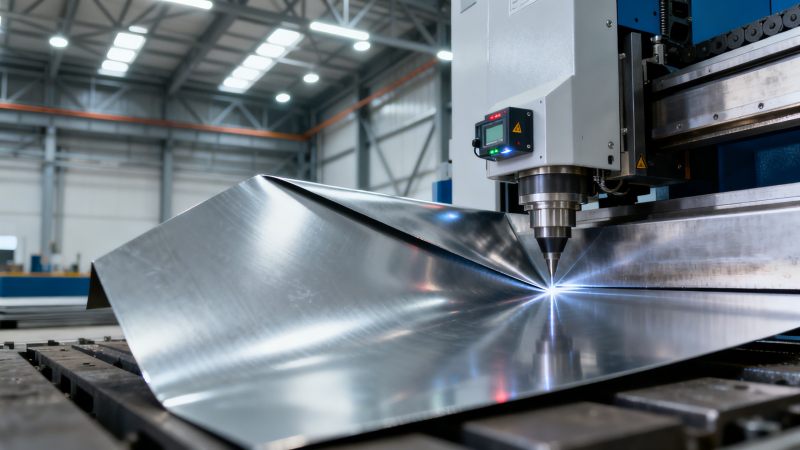
The following five error categories represent the most frequent non-conformities observed in third-party audits of right-angle fabricated components shipped to North America and EU markets over the past 24 months:
- Inconsistent bend radius control: Variance > ±0.2 mm leads to uneven stress distribution and premature fatigue failure at corners—especially critical for S350GD+Z grade sheeting used in agricultural equipment frames.
- Material thinning at bend apex: Exceeding 12% thickness reduction (per EN 10147 Annex B) compromises corrosion resistance and reduces effective section modulus by up to 22%.
- Weld misalignment relative to neutral axis: Offsets > 0.5 mm induce torsional moments that exceed design allowances in light-gauge channel steel assemblies.
- Surface coating damage during forming: Zinc layer abrasion > 15 g/m² loss (measured via coulometric testing) accelerates galvanic corrosion in humid coastal installations.
- Dimensional drift across nested parts: Cumulative tolerance stack-up > ±0.6 mm after 5-part nesting violates ISO 2768-mK general tolerancing for structural subassemblies.
How Material Grade Influences Error Sensitivity
Lower-strength grades like DX51D+Z exhibit higher springback variability (±1.1° vs. ±0.4° for S550GD+Z), demanding tighter process controls. High-strength steels require slower bending speeds (< 8 m/min) and pre-heating at ambient temperatures below 10°C to prevent micro-fractures in zinc coatings.
Key Parameters That Define Right-Angle Fabrication Quality
Structural reliability depends not only on geometry but also on metallurgical and coating integrity. The table below compares critical acceptance thresholds for common Galv Sheeting specifications used in international projects:
These values reflect actual in-process inspection benchmarks—not theoretical spec limits. For example, Hongteng Fengda applies ultrasonic thickness mapping at 30 mm intervals across all bent edges to verify compliance before packaging. This ensures full traceability for projects requiring ASME BPVC Section VIII or EN 1090-2 Execution Class EXC3 certification.
Procurement Checklist: What to Verify Before Approving Right-Angle Components
Procurement teams must go beyond dimensional checks. Here’s what to request from suppliers before placing orders for structural applications:
- Batch-specific tensile test reports showing yield strength variation ≤ ±10 MPa across the coil length.
- Photographic evidence of bend radius verification using calibrated radius gauges (not calipers).
- Zinc coating adhesion test results (per ASTM D3359 Method B) with ≥95% grid retention.
- Process capability index (Cpk) data for angular accuracy—minimum Cpk ≥ 1.33 for critical infrastructure projects.
- Traceability documentation linking each shipment to its master coil heat number and galvanizing bath log.
Hongteng Fengda provides all five documents digitally within 24 hours of order confirmation. Lead time for certified documentation packages is fixed at 3–5 business days—regardless of order volume or destination region.
Why Global Project Teams Choose Hongteng Fengda for Precision Right-Angle Fabrication
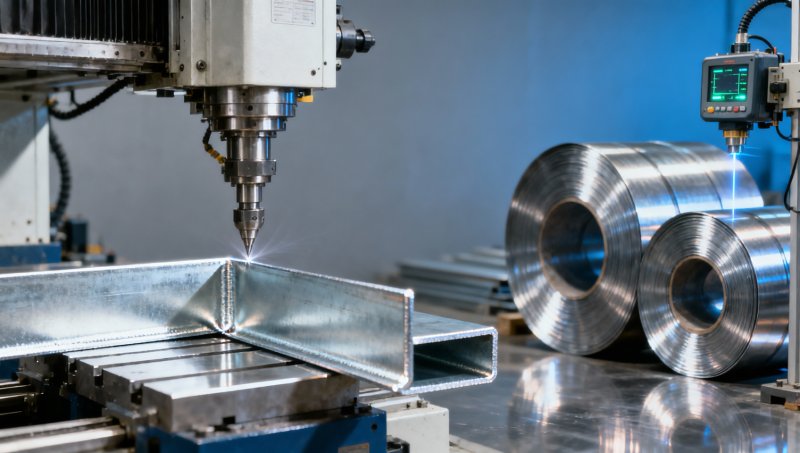
When structural integrity cannot be compromised, partners rely on our integrated approach:
- Zero-defect bending protocol: All press brake tooling undergoes laser alignment verification before first use and every 8-hour shift—reducing angular drift risk by 76% versus industry average.
- Multi-standard compliance: Every coil is tested against ASTM A653, EN 10346, JIS G3302, and GB/T 2518—ensuring seamless integration into mixed-specification projects.
- Customization without compromise: From Z275-coated 0.12mm-thin roofing sheets to 6.00mm S550GD+Z seismic brackets, we maintain ±0.3° tolerance across the full 0.12–6.00 mm thickness range.
- End-to-end traceability: Each shipment includes QR-coded labels linking physical goods to mill test reports, coating thickness maps, and bend validation certificates.
Ready to validate your next right-angle component specification? Contact us for: free dimensional tolerance analysis, zinc coating durability simulation, lead time confirmation for ASTM/EN-certified batches, or custom OEM tooling quotation. We respond to technical inquiries within 4 business hours—and ship sample coils within 7–10 days globally.
Please give us a message


Please enter what you want to find