For technical evaluators comparing framing and bracing components, the right angle steel plate is valued for its load transfer efficiency, connection stability, and ease of fabrication. Used across structural steel systems, it helps improve joint strength, alignment accuracy, and installation reliability. Understanding its applications can support better material selection, compliance assessment, and long-term project performance.
Why does the right angle steel plate matter in framing and bracing design?
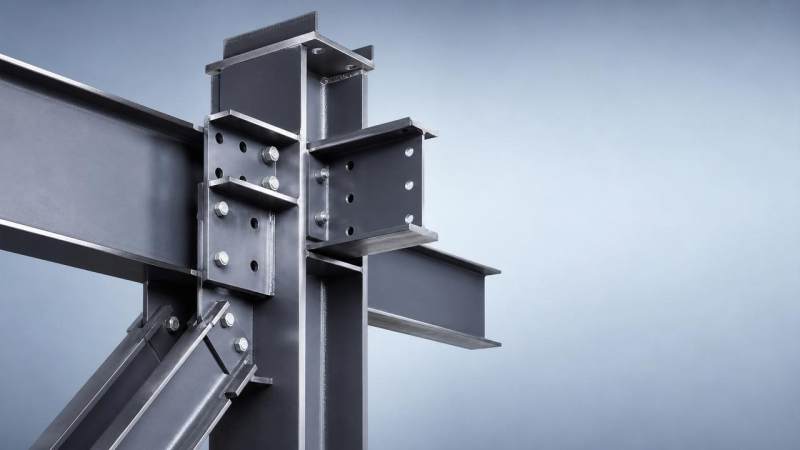
In steel construction, a right angle steel plate is commonly used as a connection, reinforcement, or support element where two members meet at 90 degrees. Technical evaluators often review it not as a simple accessory, but as a load path component that affects stiffness, tolerance control, and assembly efficiency.
Its value becomes clear in framed bays, equipment platforms, column-beam joints, truss nodes, and secondary support systems. When properly selected, the right angle steel plate can reduce localized deformation, improve bolt or weld positioning, and support repeatable installation across projects with tight schedules.
Core roles in structural systems
- Transfers force between intersecting steel members by creating a stable connection plane and controlling stress concentration at the joint.
- Improves bracing integrity by helping diagonal members connect accurately to frames, gussets, or support lines.
- Assists fabrication teams through simpler cutting, drilling, welding, and dimensional inspection compared with more complex custom brackets.
- Supports field installation by reducing fit-up issues when alignment, hole location, and edge preparation are managed correctly.
For evaluators responsible for cost, compliance, and delivery risk, the right angle steel plate is often a practical choice because it balances structural performance with manufacturing simplicity. This is especially important in export supply chains where standardization and inspection consistency directly affect project schedules.
Which framing and bracing applications benefit most?
The right angle steel plate is used in both primary and secondary steel systems. Its suitability depends on load direction, joint restraint requirements, fabrication method, and whether the project favors bolted assembly, welded assembly, or a hybrid connection strategy.
The table below helps technical evaluators compare common applications of the right angle steel plate in framing and bracing work.
In practice, technical teams should match the right angle steel plate to the actual connection demand. A plate used for light secondary framing should not be evaluated by the same criteria as one used in a heavily loaded bracing node. Load path clarity remains the first filter.
Typical project scenarios
- Industrial buildings where bracing geometry must remain stable under wind and operational loads.
- Warehouse framing where installation speed and repeated joint design influence total project cost.
- Machinery bases and access floors where angular support details need both structural support and safe surface integration.
- Export projects requiring standard-compliant steel components with dependable lead times and inspection records.
What technical factors should evaluators check first?
When assessing a right angle steel plate, many sourcing mistakes come from reviewing only thickness and price. A stronger evaluation process should also examine base steel grade, connection type, tolerance capability, surface condition, and compatibility with the larger steel assembly.
Key technical checkpoints
- Material grade and standard equivalence. Check whether the supplier can provide grades aligned with ASTM, EN, JIS, or GB requirements based on project documents.
- Plate thickness and stiffness demand. Thin plates may simplify fabrication, but they can increase deformation at loaded joints.
- Connection method. Bolt holes, weld bevels, and contact faces must align with the intended fabrication process.
- Dimensional tolerance. Tight fit-up projects need reliable control on length, width, angle accuracy, and hole position.
- Coating or surface treatment. Indoor dry use and outdoor corrosive environments require different protection strategies.
Some framing systems also combine angular plates with floor or platform components. In those cases, an anti-skid material may be specified near access zones. For example, A36 Patterned steel plate can be considered in equipment-floor or platform-related areas where slip resistance, structural compatibility, and manageable fabrication are all required.
The product range may include grades such as A36, Q235B, 235JR, S235, SS400, and SM400 series, with common thickness from 2 mm to 8 mm, width from 600 mm to 1800 mm, and length from 2 m to 12 m or custom requirements. For evaluators, the importance is not the catalog alone, but whether those parameters suit the connection zone and access-use environment.
How does a right angle steel plate compare with other connection options?
Technical evaluators are often asked whether a right angle steel plate is the best option, or if gusset plates, bent brackets, or rolled angle sections would perform better. The answer depends on fabrication efficiency, structural demand, and site conditions.
The comparison table below highlights where the right angle steel plate typically fits in procurement and design decisions.
This comparison shows why the right angle steel plate remains popular. It usually offers a strong balance between manufacturability and structural usefulness. However, evaluators should still confirm whether force direction and connection detailing justify a more specialized component.
When the right angle steel plate is usually the better choice
- When the project uses repeated joint geometry and benefits from standardized fabrication.
- When site assembly speed is important and simple connection interfaces reduce installation errors.
- When design review requires a component that is easy to inspect for dimensions, hole placement, and weld preparation.
What procurement criteria reduce risk for global steel projects?
For technical evaluators, a good right angle steel plate is not only about section performance. It is also about whether the supplier can deliver stable quality, standard compliance, export documentation, and consistent lead times. This is where manufacturer capability directly affects project outcomes.
Procurement checklist for technical teams
- Confirm applicable standards at the start, including ASTM, EN, JIS, or GB references in drawings and specifications.
- Request dimensional details beyond nominal size, especially tolerance on thickness, width, hole position, and edge finish.
- Check whether OEM or custom fabrication is available for project-specific geometry and pre-processing needs.
- Review production capacity and shipping coordination if the project includes multiple steel categories such as angle steel, channel steel, beams, and custom components.
- Verify documentation support for inspection, material traceability, and export packing requirements.
Hongteng Fengda operates as a structural steel manufacturer and exporter from China, supplying angle steel, channel steel, steel beams, cold formed profiles, and customized structural steel components. For evaluators handling international sourcing, this broader product capability can simplify package coordination and reduce interface risk between separate suppliers.
The company’s manufacturing and quality control approach is relevant when a right angle steel plate must align with major international standards and project-specific delivery timing. Technical buyers in North America, Europe, the Middle East, and Southeast Asia typically prioritize consistency, not just unit price, because schedule disruption and rework often cost more than nominal material savings.
How should standards, tolerances, and fabrication be reviewed?
Compliance review should cover both material standards and fabrication practicality. A right angle steel plate that meets nominal grade requirements may still create problems if edge quality, hole accuracy, or weldability do not match the fabrication sequence.
The table below summarizes common review points for compliance and fabrication assessment.
A practical example is when a support area combines structural framing with operator access. In that case, the evaluator may need a right angle steel plate for the connection and a patterned plate for the walking surface. If the anti-skid plate must meet tight tolerance expectations, details such as thickness range, width tolerance, and pattern height become relevant to the full assembly review.
This is also where supplier coordination matters. A manufacturer that can support both standard specifications and custom structural steel components can help technical teams avoid mismatched tolerances across connected parts.
What mistakes do buyers and evaluators commonly make?
In many steel sourcing projects, the most expensive problems are not caused by major design failures. They come from small review gaps that delay fabrication, create installation conflict, or require replacement after shipment. The right angle steel plate is simple in form, but not always simple in evaluation.
Common misconceptions
- Assuming all right angle plates are interchangeable. Material grade, thickness, and fabrication detail can produce very different performance.
- Focusing only on initial price. Lower material cost may increase field labor, rework, or alignment problems.
- Ignoring surface environment. Exterior, marine, and industrial exposure conditions may require different protective strategies.
- Overlooking supply integration. When the project includes beams, channels, angle steel, and custom plates, fragmented sourcing can create inconsistency in schedule and documentation.
A disciplined review process should connect engineering intent with manufacturability. That means asking not only whether the right angle steel plate meets the drawing, but whether it can be produced, inspected, packed, and installed without avoidable friction.
FAQ for technical evaluators
How do I choose the right grade for a right angle steel plate?
Start with the project standard and the required mechanical performance. Many projects reference ASTM, EN, JIS, or GB systems. Equivalent grades may be available, but equivalence should be reviewed against design documents, welding procedure needs, and approval expectations rather than assumed from naming alone.
Is a thicker plate always better for bracing connections?
Not necessarily. More thickness can improve stiffness, but it may also increase weight, welding demand, and cost. The correct decision depends on force level, eccentricity, bolt layout, and whether the connected members can fully benefit from the added stiffness.
When should I combine a right angle steel plate with patterned plate products?
This is common in industrial platforms, machinery zones, and floor areas around equipment. The connection component handles structural joining, while the walking surface may require anti-skid performance. In such cases, products like A36 Patterned steel plate can support safer access and coordinated steel fabrication.
What delivery questions should I raise with a supplier?
Ask about production capacity, batch consistency, custom processing scope, documentation support, and packaging for export transit. If the project requires multiple structural steel items in one shipment, confirm how the supplier coordinates schedules across product categories.
Why work with a structural steel manufacturer that understands global project demands?
For technical evaluators, the real challenge is not only selecting the right angle steel plate. It is selecting a supply partner that can translate technical requirements into stable production, controlled quality, and predictable delivery. That is especially important when the project combines standard steel products with custom framing or bracing details.
Hongteng Fengda supports global buyers with structural steel manufacturing and export service built around practical project needs. This includes standard and OEM supply, material options aligned with major international standards, and coordination across angle steel, channel steel, beams, cold formed profiles, and customized components.
Why choose us
- We help evaluate whether your right angle steel plate specification matches the framing load path, fabrication method, and installation sequence.
- We support parameter confirmation on grade, thickness, dimensions, tolerance expectations, and custom processing details.
- We can discuss delivery cycle planning for mixed structural steel packages, reducing coordination pressure across multiple vendors.
- We assist with standard and certification requirement alignment for export-oriented construction and industrial projects.
- We can provide support for product selection, sample communication, quotation review, and customized solution discussion based on your drawings or application scenario.
If you are reviewing framing or bracing components for an upcoming project, contact us with your required parameters, applicable standards, target delivery schedule, and any custom connection details. A clear technical discussion at the beginning can reduce sourcing risk, avoid avoidable revisions, and improve overall project execution.
Please give us a message


Please enter what you want to find