Proper rebar for concrete slab installation is crucial for structural integrity and longevity. This guide covers best practices for selecting, placing, and securing reinforcement bars to ensure optimal load-bearing capacity and crack prevention in your concrete projects. As a professional structural steel manufacturer, Hongteng Fengda shares expert insights to help construction professionals achieve durable and code-compliant slab reinforcement.
What is the Purpose of Rebar in Concrete Slabs?
Rebar (reinforcement bar) serves as the backbone of concrete slabs, providing tensile strength to counteract concrete's natural weakness in tension. Without proper reinforcement, concrete slabs are prone to cracking under load or thermal expansion. Studies show that correctly installed rebar can increase a slab's load-bearing capacity by 40-60% compared to unreinforced concrete.
The primary functions include:
- Distributing loads evenly across the slab
- Preventing crack propagation
- Compensating for concrete's low tensile strength
- Enhancing durability against weathering and seismic activity
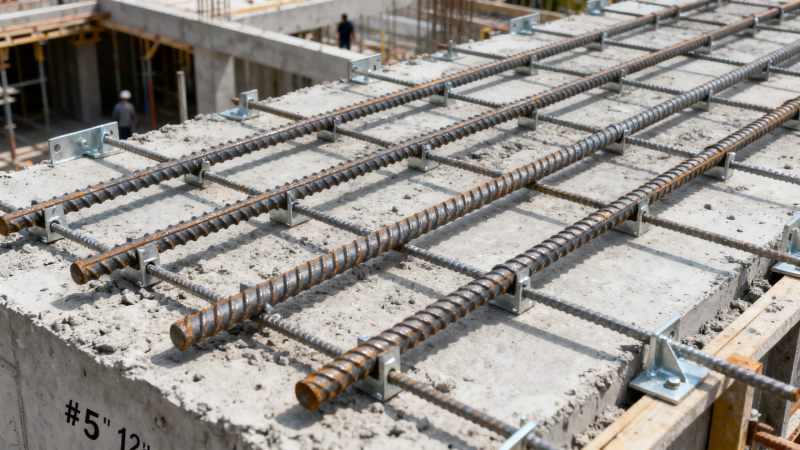
How to Select the Right Rebar for Concrete Slabs?
Choosing appropriate rebar involves considering three key factors: grade, size, and coating. ASTM A615 Grade 60 (yield strength of 60,000 psi) is the most common for slabs, while higher grades (75 or 80) suit heavy-load applications. For residential slabs, #3 (3/8") to #5 (5/8") bars are typical, with commercial projects often requiring #6 (3/4") or larger.
For structural steel components like beams that interface with concrete slabs, I Beam Manufacturers provide solutions with specifications including flange widths from 100mm-400mm and web thicknesses of 6mm-28mm, complying with ASTM, EN, JIS, and GB standards. These components often work in tandem with slab reinforcement systems.
What Are the Best Practices for Rebar Placement?
Proper placement ensures optimal performance. Follow these guidelines:
- Maintain minimum 3/4" concrete cover on all sides
- Use chairs or spacers to position rebar at mid-depth of the slab
- Overlap bars by 40 times the bar diameter (e.g., 20" for #5 bar)
- Stagger lap splices in adjacent bars by at least 3'
- Place bars perpendicular to expected stress directions
How to Secure Rebar Before Pouring Concrete?
Use tie wire (16-18 gauge) at every intersection or alternate intersections for light loads. For heavy traffic areas or seismic zones, tie all intersections. Avoid welding unless using W-grade rebar specifically designed for welding. Proper tying prevents displacement during concrete placement while allowing slight movement during curing.
What Are Common Rebar Installation Mistakes?
Avoid these frequent errors that compromise slab integrity:
- Insufficient concrete cover leading to corrosion
- Improper lap splice lengths (minimum 12" for #3 bars)
- Placing bars directly on subgrade (reduces effective depth)
- Using rusty rebar without proper cleaning (reduces bond strength)
- Neglecting edge and corner reinforcement (high-stress areas)
How Does Rebar Installation Vary for Different Slab Types?
Installation techniques adapt based on slab function:
Why Choose Professional Structural Steel Solutions?
For projects requiring integrated steel and concrete systems, professional manufacturers like Hongteng Fengda provide:
- Customized structural components that interface with reinforced slabs
- Materials compliant with ASTM, EN, JIS, and GB standards
- Technical support for hybrid steel-concrete designs
- Consistent quality control from production to delivery
For specific requirements on slab reinforcement or structural steel components, consult our engineering team to discuss:
- Load calculations and reinforcement specifications
- Custom fabrication options
- Project-specific lead times and logistics
- Quality certifications and testing protocols
Please give us a message


Please enter what you want to find