In reinforced concrete work, rebar for beam is a small detail that can create major delays, safety risks, and costly site rework when handled incorrectly. For engineers, contractors, buyers, and project managers, understanding beam reinforcement layout, bar selection, and compliance is essential to keep construction quality, schedules, and budgets under control.
The core issue behind most beam reinforcement problems is not usually a lack of steel, but a lack of coordination between design intent, fabrication accuracy, and site execution. When bar sizes, anchorage lengths, stirrup spacing, lap locations, or congestion zones are misunderstood, teams often discover the problem only after formwork is in place or concrete placement is about to begin. At that point, rework becomes expensive. The fastest way to avoid this is to treat beam rebar as a control point early in procurement, detailing, inspection, and installation.
Why does rebar for beam so often lead to site rework?
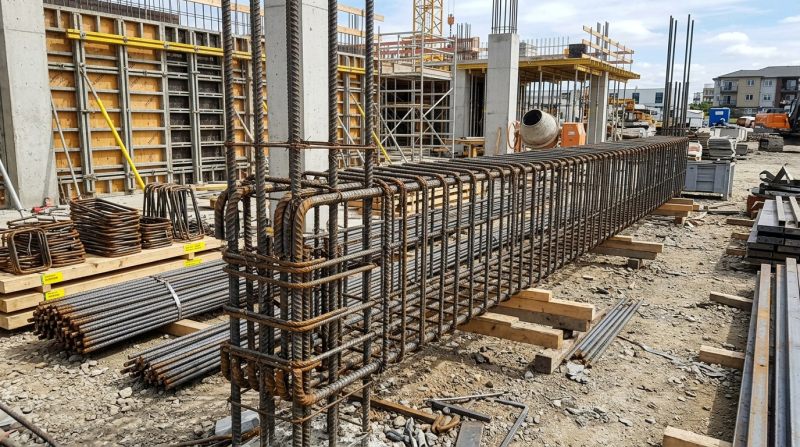
Beam reinforcement sits at the intersection of structural design, shop handling, and field installation. That is why even small errors can escalate quickly. Common reasons include:
- Drawing interpretation gaps: Site teams may misread top bars, bottom bars, extra bars at supports, or torsion reinforcement requirements.
- Bar congestion: Beams connecting with columns, slabs, and walls often create limited space for proper bar placement and concrete cover.
- Incorrect cutting or bending: Fabricated bars that do not match bending schedules can delay installation.
- Improper lap splice or anchorage: Bars may be cut too short or placed in the wrong zone.
- Late design changes: Revised loads, opening locations, or support conditions may force beam reinforcement changes after materials arrive on site.
- Weak inspection control: Problems are discovered too late, often right before pouring.
For project managers and commercial teams, these mistakes do not stay technical for long. They affect labor efficiency, concrete schedules, crane time, subcontractor coordination, and even claims management.
What do engineers, contractors, and buyers need to check first?
If the goal is to prevent rework, the most important question is simple: Is the reinforcement arrangement practical to build exactly as designed? A beam may be structurally correct on paper but difficult to execute on site. Before fabrication or installation, teams should review the following:
- Bar diameter and quantity: Confirm that the specified bars fit within the beam width while maintaining required spacing and concrete cover.
- Support zone detailing: Check top reinforcement over supports, anchorage into columns or walls, and confinement requirements.
- Stirrup spacing: Verify closer spacing near supports and any seismic detailing requirements.
- Lap splice locations: Ensure splices are placed in permitted zones, not in areas of maximum stress unless specifically allowed.
- Openings and embedded items: MEP sleeves, inserts, and embedded plates often interfere with beam bars.
- Constructability: Confirm workers can actually place, tie, and inspect the reinforcement before concreting.
For procurement and QA teams, this review should happen before mass fabrication and delivery. Catching one inconsistency in the bar bending schedule can prevent repeated errors across dozens or hundreds of beams.
Which beam rebar details create the highest risk on site?
Some beam reinforcement details are much more likely than others to trigger delays or nonconformance reports. These deserve special attention:
1. Anchorage length at supports
Insufficient development length is a frequent hidden defect. Even if the beam cage looks complete, inadequate anchorage can undermine structural performance. This is especially critical where beams frame into columns, deep walls, or heavily reinforced joints.
2. Congestion at beam-column joints
When longitudinal bars, stirrups, slab reinforcement, column ties, and embedded parts all meet in one area, installation becomes difficult. Poor concrete flow and honeycombing risks increase if spacing is too tight.
3. Stirrups with wrong spacing or hook orientation
Stirrups are often treated as routine items, but errors here are common. Wrong spacing near supports, incorrect hook bends, or missing closed ties can lead to both safety and inspection problems.
4. Wrong placement of top and bottom bars
In continuous beams, top bars over supports and bottom bars at mid-span serve different structural functions. Reversing or misplacing them can be serious.
5. Uncoordinated revisions
Design updates that are not transmitted clearly to fabrication, purchasing, and site teams can result in mixed reinforcement versions being installed.
How can teams reduce beam reinforcement errors before construction starts?
The best prevention method is early coordination, not late correction. A practical control process usually includes:
- Design review meeting: Bring together structural, site, QA, and procurement personnel for critical beam zones.
- Bar bending schedule verification: Cross-check quantities, shapes, lengths, and revision status.
- Sample installation review: For repetitive projects, inspect one typical beam first before full-scale installation.
- Clash review: Coordinate beam reinforcement with slab bars, columns, MEP penetrations, and embeds.
- Pre-pour inspection checklist: Include cover blocks, spacing, lapping, stirrup spacing, cleanliness, and support stability.
This type of control matters not only for reinforced concrete beams but also for mixed structural projects where steel framing and concrete elements interact. In industrial and building projects, teams often need reliable structural members for secondary framing, supports, or wall systems alongside reinforced concrete work. In such cases, products like C Channel Beam may be used in steel structure buildings or mechanical light industry applications, especially where lightweight framing, wall beams, purlins, or custom processed steel components are required. Choosing certified materials with clear standards, tolerances, and processing options helps reduce coordination risk across the project as a whole.
What should buyers and decision-makers evaluate when sourcing related structural materials?
For buyers, technical evaluators, and business decision-makers, the concern is broader than unit price. Rework caused by poor dimensional control, inconsistent material quality, or unreliable lead time can cost far more than the original purchase value. Key sourcing checks include:
- Standards compliance: Confirm compatibility with ASTM, EN, JIS, GB, or project-specific requirements.
- Manufacturing capability: Check whether the supplier can maintain stable tolerances and process consistency.
- Surface treatment and durability: For steel components, galvanized or coated finishes may be necessary depending on environment.
- Processing support: Evaluate whether bending, welding, punching, and cutting services are available when needed.
- Certification and inspection: CE, SGS, BV, ISO, and third-party inspection support can improve procurement confidence.
- Delivery reliability: Lead time stability is essential when reinforcement work and structural installation are schedule-sensitive.
For example, if a project also requires cold formed or hot rolled steel sections for wall beams, purlins, or machine-support framing, a product such as C Channel Beam may offer flexibility in thickness, length, finish, and further processing. This becomes particularly useful when project teams want to simplify sourcing from a manufacturer that can support both standard and customized structural steel supply.
How do QA and site teams know the beam rebar is ready for concrete?
Before pouring, QA and site supervisors should not rely on visual impression alone. A beam reinforcement cage may look complete but still fail key checks. A practical acceptance review should confirm:
- Correct bar grade and diameter
- Correct number of top, bottom, and extra bars
- Required clear cover maintained
- Stirrups installed at specified spacing
- Lap splices and anchorage lengths as detailed
- No unauthorized cutting, shifting, or omission
- Clean reinforcement free from excessive debris or loose rust where prohibited by specification
- Adequate support to prevent movement during concreting
Where congestion is severe, teams should also assess whether concrete can be placed and compacted properly. If not, the problem should be solved before pouring, not after stripping forms.
What is the real cost of getting beam reinforcement wrong?
The direct cost of replacing or adjusting rebar may seem manageable, but the total impact is usually much larger. Rework can trigger:
- Concrete pour delays
- Additional labor and supervision
- Schedule disruption across follow-on trades
- Higher inspection and approval time
- Material waste
- Potential structural noncompliance
- Commercial disputes and reputation damage
For contractors and owners, the lesson is clear: beam reinforcement should be treated as a high-value quality checkpoint, not a routine installation item.
Conclusion: the small beam detail that protects quality, time, and budget
Rebar for beam is often where design theory meets on-site reality. That is why it causes so much preventable rework. The most effective approach is early review, clear detailing, disciplined inspection, and reliable material coordination. Engineers need constructable layouts, site teams need clear bending and placement guidance, buyers need dependable supply, and managers need risk visibility before installation begins.
When these controls are in place, beam reinforcement stops being a hidden problem area and becomes a manageable part of project execution. In practical terms, that means fewer delays, safer structures, better cost control, and stronger confidence from all stakeholders involved.
Please give us a message


Please enter what you want to find