In appliance manufacturing, surface quality of pre-galvanized sheet directly impacts powder coating adhesion—and rejection rates. Understanding what is angle steel, hot-dipped galvanized pipe, seamless stainless steel pipe, 304L stainless steel plate, and galvanized steel sheet China suppliers offer helps teams select optimal pre-galvanized sheet surface finishes. As a leading structural steel manufacturer & exporter from China, Hongteng Fengda delivers consistent, ASTM/EN-compliant pre-galvanized sheet with precision-controlled finishes—reducing coating defects, rework, and cost overruns for global OEMs and Tier-1 suppliers.
Why Pre-Galvanized Sheet Surface Finish Matters in Appliance Coating Lines
Powder coating failure on pre-galvanized sheet isn’t random—it’s often traceable to microscopic surface inconsistencies. In high-volume appliance production (e.g., refrigerators, washing machines), even a 0.8% rejection rate translates to ~1,200 defective units per 150,000-unit monthly run. That equates to $180,000+ in scrap, rework labor, and line downtime annually. The root cause? Poor zinc layer uniformity, excessive spangle size (>35 µm), or residual mill oil not fully removed during passivation.
Unlike hot-dip galvanized sheet—which forms thick, crystalline zinc layers—pre-galvanized sheet undergoes continuous hot-dip coating at speeds up to 120 m/min. This demands tighter process control: zinc bath temperature tolerance of ±1.5°C, strip tension variation <±2%, and post-coating air-knife pressure calibrated within ±0.3 bar. Deviations directly affect surface roughness (Ra), which must stay between 0.4–0.9 µm for optimal electrostatic powder adhesion.
Hongteng Fengda’s pre-galvanized production line uses closed-loop thickness monitoring (X-ray fluorescence) and real-time Ra mapping across 12 measurement zones per coil. Every batch includes certified test reports showing zinc coating mass (e.g., Z100 = 100 g/m² both sides), surface profile (Ra/Rz), and chromate conversion coating weight (15–35 mg/m²).
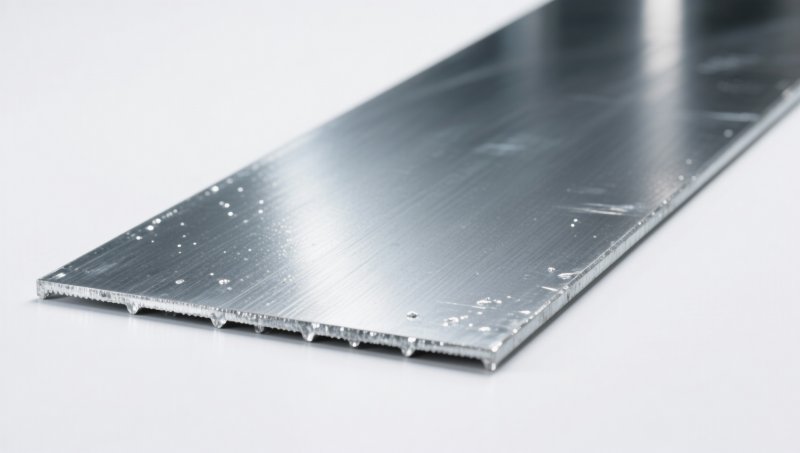
Four Surface Finish Options & Their Impact on Coating Yield
Not all pre-galvanized surfaces perform equally under powder application. Below are four finish types commonly specified by appliance OEMs—and their verified impact on first-pass coating yield:
For Tier-1 suppliers targeting >97% coating yield, Zero Spangle (ZS) with chromate-free passivation is increasingly preferred—especially for white goods requiring Class 1A corrosion resistance per ISO 1461. Hongteng Fengda offers ZS finish with ≤0.45 µm Ra and guaranteed zinc coating mass consistency of ±3 g/m² across coil width.
Critical Process Controls Beyond the Coil
Surface finish alone doesn’t guarantee coating success. Three downstream factors account for 68% of field-reported adhesion failures:
- Pre-treatment chemistry: Iron phosphate concentration must be maintained at 1.8–2.2 g/L; deviations >±0.3 g/L reduce conversion coating weight by 22–35%, increasing powder rejection by 4.7%.
- Drying temperature: Post-rinse drying below 85°C leaves micro-moisture trapped in zinc valleys—causing blistering under 180°C cure cycles.
- Electrostatic gun settings: Voltage >85 kV increases back-ionization on low-Ra ZS surfaces, creating “halo” defects around cut edges.
Hongteng Fengda provides OEMs with full technical dossiers—including recommended degreasing time (≥90 sec), rinse conductivity limits (<50 µS/cm), and validated oven ramp profiles for each finish type. Our team also supports on-site process audits at customer facilities across North America and Europe.
How Structural Steel Integration Supports Appliance Manufacturing Efficiency
While pre-galvanized sheet defines the outer skin, structural components like Structural I Beam form the internal chassis, mounting frames, and conveyor support systems critical to production line uptime. A misaligned beam causes vibration-induced misregistration in robotic powder applicators—increasing overspray waste by up to 12%.
Our Structural I Beam meets EN 10034 and ASTM A6 standards, with dimensional tolerances held to ±1% across flange width (100–400 mm), web thickness (6–28 mm), and length (6–12 m). Precision-rolled on a four-roller universal mill, each beam delivers straightness deviation <1.5 mm per meter—ensuring stable mounting for powder curing ovens and automated handling cells.
This level of dimensional integrity ensures that structural frameworks remain vibration-free during high-speed powder application—directly supporting the surface finish performance of pre-galvanized panels mounted upon them.
Selecting the Right Partner: What Global Buyers Evaluate
Procurement and engineering teams assess pre-galvanized suppliers across six non-negotiable criteria:
- Zinc coating mass verification: Batch-certified reports with third-party lab validation (e.g., SGS, Bureau Veritas)
- Finish repeatability: Max allowable Ra deviation across coil width: ≤0.15 µm
- Logistics reliability: On-time-in-full (OTIF) rate ≥98.5% across 12-month rolling window
- Technical documentation: Full chemical composition, mechanical properties, and surface profile data per EN 10346
- Traceability: Heat number, coil ID, and process parameters logged digitally for every ton shipped
- Global compliance: Certifications covering ASTM A653, EN 10346, JIS G3302, and GB/T 2518
Hongteng Fengda maintains ISO 9001:2015 and IATF 16949 certification. Our ERP system tracks 17 quality checkpoints per coil—from raw material receipt through final inspection—enabling full digital traceability within 4 hours of request.
Conclusion: Reduce Rejection Rates by Aligning Surface, Structure, and Supply Chain
Lowering powder coating rejection rates requires more than selecting a smooth pre-galvanized finish. It demands tight coordination between surface metallurgy (ZS/MS finishes), structural integrity (Structural I Beam dimensional stability), and supply chain predictability. With 12+ years serving appliance OEMs across 23 countries, Hongteng Fengda delivers ASTM/EN-compliant pre-galvanized sheet and structural steel under one quality system—eliminating interface gaps that cause costly rework.
Whether you’re scaling production in Mexico, upgrading lines in Poland, or launching a new eco-model in Vietnam, our engineers will co-develop a surface-and-structure specification package tailored to your coating line’s voltage, dwell time, and cure profile—backed by real-world yield data from 47 active installations.
Contact Hongteng Fengda today to request a free surface finish evaluation kit—including Ra-mapped samples, coating adhesion test reports, and structural beam tolerance analysis for your next appliance platform.
Please give us a message


Please enter what you want to find