Selecting the right pre-painted galvanized steel coil is critical for achieving long-term corrosion resistance, coating durability, and consistent fabrication performance. For technical evaluators, understanding substrate quality, zinc coating weight, paint systems, adhesion, and applicable standards helps reduce project risk and ensure the material meets structural, architectural, and industrial requirements. This guide explains the key coating considerations and evaluation points to support informed sourcing decisions for global steel projects.
In B2B steel procurement, coating selection is not only a surface appearance decision. It affects forming behavior, outdoor service life, maintenance frequency, and compliance during project acceptance. A well-specified pre-painted galvanized steel coil can reduce rework, color variation, edge corrosion, and unexpected fabrication delays.
Understanding the Coated Steel System
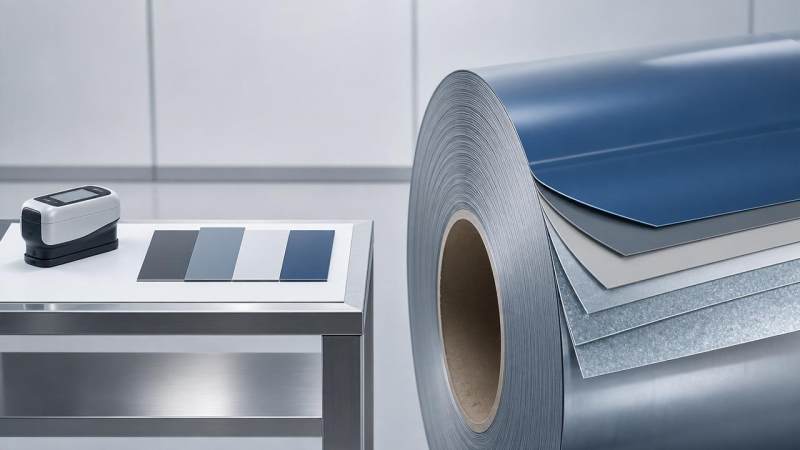
A pre-painted galvanized steel coil is a layered steel product. It normally includes a cold-rolled or galvanized substrate, zinc coating, chemical pretreatment, primer, and topcoat. Each layer contributes to corrosion resistance, paint adhesion, and processing stability.
For technical evaluation, the coil should be reviewed as a complete system rather than as a single paint layer. A 20 μm topcoat may perform poorly if zinc weight, pretreatment quality, or primer compatibility is not controlled.
Key Layers and Their Functions
The base steel provides mechanical strength and dimensional stability. The galvanized layer offers sacrificial protection. The primer improves bonding and corrosion resistance, while the topcoat determines color, gloss, weatherability, and scratch resistance.
Common zinc coating weights for coated steel evaluation include Z80, Z120, Z180, and Z275. For exterior roofing or wall cladding, higher zinc coating is often preferred when the environment includes moisture, salt spray, or industrial pollutants.
The following table summarizes practical evaluation points for the main layers in a pre-painted galvanized steel coil system.
The key conclusion is simple: coating thickness alone is not enough. A balanced combination of substrate quality, zinc protection, primer compatibility, and topcoat chemistry is required for stable field performance.
Why Technical Evaluators Should Check Compatibility
A coil used for roofing panels, sandwich panels, ceiling systems, or appliance parts may undergo bending, roll forming, punching, and cutting. These operations can stress the coating within seconds during production.
Evaluators should confirm that the selected pre-painted galvanized steel coil matches the intended bend radius, forming speed, and environmental exposure. A coating that passes visual inspection may still crack during 180-degree bending if the system is not suitable.
Coating Types and Selection Criteria
Paint chemistry is one of the most important variables in pre-painted galvanized steel coil specification. Polyester, silicon-modified polyester, high-durability polyester, PVDF, and plastisol systems serve different cost, weatherability, and processing requirements.
A technical evaluator should not select a coating based only on color card approval. The right choice depends on expected service years, UV exposure, chemical contact, temperature range, and maintenance access.
Common Paint Systems
- Regular polyester is widely used for interior panels, general building components, and cost-sensitive projects with moderate exposure.
- Silicon-modified polyester improves weatherability and gloss retention for exterior wall and roof applications.
- High-durability polyester is suitable for projects requiring stronger UV resistance and longer repainting intervals.
- PVDF is often selected for architectural envelopes where color stability over 15–20 years is a major requirement.
For aggressive coastal or industrial environments, coating selection should be paired with higher zinc mass, edge protection design, and drainage details. Even a premium topcoat cannot fully compensate for poor installation geometry.
Comparing Coating Options
The table below provides a practical comparison for coating selection. Actual specifications should be verified against project standards, forming requirements, and supplier test data.
This comparison shows why a universal coating specification is risky. The best pre-painted galvanized steel coil is the one aligned with exposure category, fabrication process, and lifecycle cost targets.
Color and Gloss Control
Color tolerance should be agreed before production. For multi-batch projects, technical teams often request retained reference samples and controlled color difference checks, commonly using ΔE values defined by the project specification.
Gloss consistency is equally important for visible building envelopes. A roof made from coils with inconsistent gloss can show panel-to-panel variation even when the nominal color code is identical.
Substrate, Zinc Coating, and Mechanical Performance
The substrate under the coating must meet the mechanical needs of the final component. Yield strength, elongation, coil thickness, and flatness influence roll forming, panel rigidity, and dimensional accuracy.
A common technical mistake is to focus on paint performance while overlooking steel grade. If the base metal is too hard, forming cracks may appear; if it is too soft, the finished profile may lack stability.
Mechanical Checks Before Approval
- Confirm base steel grade and applicable standard, such as ASTM, EN, JIS, or GB.
- Check thickness tolerance against forming line requirements, commonly within project-defined mill tolerances.
- Review yield strength and elongation to avoid coating fracture during bending or profiling.
- Verify coil edge quality, camber, and flatness before high-speed processing.
For buyers sourcing multiple steel categories, coated coil evaluation may be linked with structural steel procurement. Hongteng Fengda supplies structural steel products and customized solutions for global construction, industrial, and manufacturing projects.
In reinforced concrete construction, HRB400 Rebar is a mainstream hot-rolled ribbed bar used as primary load-bearing reinforcement. It is available in specifications such as 6 mm to 50 mm, lengths from 5 m to 14 m, and has a standard yield strength of no less than 400 MPa.
This broader material capability helps technical evaluators coordinate coated products, beams, channels, angles, cold formed profiles, and reinforcement bars under consistent quality control and international standards.
Zinc Coating Weight and Corrosion Logic
Zinc protects steel through sacrificial action. When a cut edge or scratch exposes the substrate, zinc near the exposed area corrodes preferentially, slowing red rust formation on the base steel.
For dry interior applications, a lower zinc coating may be acceptable. For exterior roofing, coastal zones, or industrial atmospheres, evaluators often specify higher zinc weight combined with a more durable topcoat.
Testing, Standards, and Inspection Workflow
Reliable pre-painted galvanized steel coil sourcing requires a clear inspection plan. The plan should include document review, incoming material checks, laboratory testing, trial forming, and final batch release.
International buyers commonly reference ASTM, EN, JIS, and GB standards depending on project location. The purpose is not only compliance, but also repeatability across different coil batches and production periods.
Recommended 5-Step Evaluation Process
- Define application conditions, including indoor, outdoor, coastal, industrial, or high-UV exposure.
- Confirm steel grade, zinc coating weight, paint system, nominal thickness, and coil size.
- Review mill test certificates and coating data before shipment approval.
- Perform sample tests such as T-bend, impact, pencil hardness, MEK rub, and salt spray where required.
- Run trial forming and inspect edges, bends, surface marks, and color consistency.
For high-volume projects, a pre-shipment inspection schedule can be arranged around production milestones. Typical review points include raw material entry, coating line setup, mid-production sampling, and final packing inspection.
Common Test Items
T-bend testing checks coating flexibility after deformation. Impact testing evaluates resistance to sudden mechanical stress. Salt spray testing, often run for 240, 500, or 1,000 hours depending on specification, helps compare corrosion resistance.
Pencil hardness provides a practical indication of surface scratch resistance. MEK rub testing checks solvent resistance and curing quality, especially where coating cure consistency is important for fabrication reliability.
Risk Control for Global Sourcing
Global sourcing adds extra variables such as shipping time, storage conditions, port handling, and documentation requirements. A pre-painted galvanized steel coil may leave the mill in good condition but suffer damage if packaging is unsuitable.
Technical evaluators should review not only the material specification, but also coil protection, inner diameter, outer diameter, vertical or horizontal packing, moisture barriers, and handling labels.
Packaging and Logistics Factors
- Use seaworthy packaging for ocean freight, especially on routes lasting 20–45 days.
- Confirm coil ID requirements, commonly 508 mm or 610 mm, to match decoiling equipment.
- Protect edges and outer wraps to reduce dents, water stains, and transit scratches.
- Store coils in dry, ventilated warehouses and avoid long-term outdoor exposure before fabrication.
Lead time planning is also important. Depending on coating color, specification complexity, order volume, and shipping route, production and delivery may require several weeks. Early confirmation reduces color mismatch and schedule pressure.
Supplier Evaluation Points
A dependable supplier should provide clear technical communication, stable production capacity, and traceable quality documents. For overseas buyers, fast response during specification clarification can prevent costly misunderstandings.
Hongteng Fengda supports buyers across North America, Europe, the Middle East, and Southeast Asia with structural steel manufacturing and export services. Its product scope includes angle steel, channel steel, steel beams, cold formed profiles, and customized structural steel components.
For coated coil procurement, the same sourcing discipline applies: define standards clearly, verify technical data, confirm tolerances, and align delivery schedules before mass production begins.
Practical Specification Checklist
A clear purchase specification reduces dispute risk. It should describe the material from substrate to packaging, with measurable requirements wherever possible. Vague descriptions such as “good coating” or “standard quality” are not enough for technical procurement.
Before confirming a pre-painted galvanized steel coil order, evaluators should prepare a specification sheet that includes at least 10 core items. These items help both supplier and buyer verify the same technical target.
Minimum Items to Define
- Base steel grade, applicable standard, and mechanical property requirements.
- Nominal thickness, tolerance range, coil width, coil weight, and inner diameter.
- Zinc coating mass, such as Z120, Z180, or Z275, based on exposure conditions.
- Primer and topcoat type, dry film thickness, color code, and gloss range.
- Testing requirements, inspection frequency, documentation, and packing method.
Avoiding Common Misunderstandings
One frequent misunderstanding is assuming the same color code from different mills will always match. In practice, pigment source, resin type, gloss level, and curing conditions can create visible differences.
Another mistake is ignoring the back coat. For sandwich panels, liners, or humid environments, the reverse side coating may influence adhesion, condensation resistance, and long-term appearance.
Technical teams should also clarify whether samples represent laboratory-prepared panels or production-line material. Production samples are more useful because they reflect actual coating line conditions.
Choosing a Reliable Steel Partner
The best results come from matching engineering requirements with a supplier capable of consistent execution. For technical evaluators, this means looking beyond unit price and reviewing process control, documentation, export experience, and communication efficiency.
A suitable pre-painted galvanized steel coil supplier should be able to discuss coating systems, fabrication risks, inspection methods, and shipment protection in practical terms. This reduces uncertainty before the first container is loaded.
Hongteng Fengda provides structural steel manufacturing and export support for global construction, industrial, and manufacturing projects. With products aligned to ASTM, EN, JIS, and GB requirements, the company helps buyers control sourcing risk and maintain dependable project schedules.
For projects involving coated steel, beams, channels, angles, cold formed profiles, or customized structural components, early technical communication can improve specification accuracy and reduce downstream rework.
If you are evaluating pre-painted galvanized steel coil for roofing, cladding, industrial panels, or fabricated steel systems, share your required grade, zinc coating, paint system, size range, and destination market. Contact Hongteng Fengda to discuss product details, request a customized sourcing plan, or learn more about integrated structural steel solutions.
Please give us a message


Please enter what you want to find