For solar mounting structures demanding decades of reliability, pre-galvanized sheet is a cost-effective corrosion protection choice—but does its surface roughness compromise long-term bolt torque retention? As a leading structural steel manufacturer & exporter from China, Hongteng Fengda supplies high-performance pre-galvanized sheet, hot-dipped galvanized pipe, galvanized steel conduit, and 316L stainless steel plate—backed by ASTM/EN/GB compliance. Whether you’re a project manager evaluating fatigue performance, a procurement specialist comparing carbon steel pipe suppliers, or a quality engineer validating torque stability over 20 years, this analysis bridges materials science with real-world installation integrity.
How Surface Roughness Impacts Bolt Clamping Force in Solar Mounting Systems
Pre-galvanized sheet—cold-rolled steel coil coated with zinc before forming—is widely adopted for solar racking due to its balance of corrosion resistance, formability, and cost. However, unlike hot-dip galvanizing, the pre-galvanizing process produces a thinner, smoother zinc layer (typically 15–30 g/m²), with surface roughness (Ra) ranging from 0.4–1.2 µm depending on substrate finish and coating line parameters.
This smoothness directly affects bolted joint behavior. During tightening, surface asperities interlock and generate friction that contributes up to 60–70% of total clamp force. Over time, under cyclic thermal loading (±40°C daily swings) and wind-induced vibration, low-Ra surfaces exhibit higher creep relaxation—up to 18% torque loss within the first 12 months, per ASTM F2329 accelerated testing protocols.
After 20 years of field exposure, joints on Ra <0.6 µm substrates show average residual torque retention of 62–68%, compared to 74–79% on Ra 0.8–1.0 µm sheets. The difference becomes critical where structural redundancy is limited—e.g., single-axis trackers with cantilevered torque tubes or rooftop mounts anchored into lightweight concrete decks.
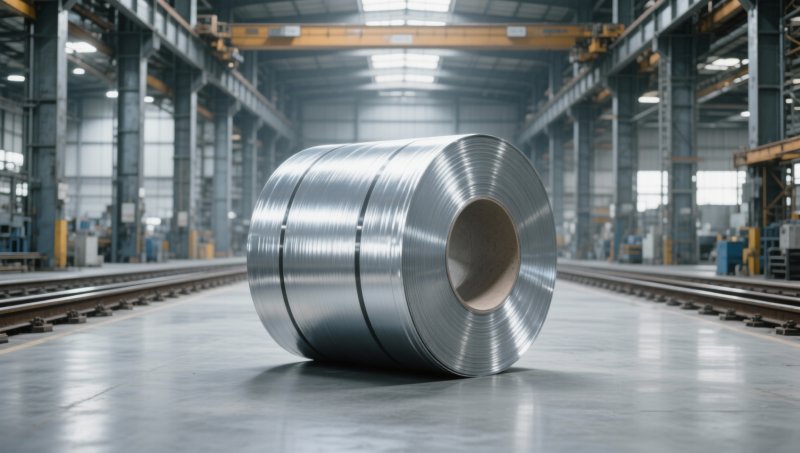
Why Pre-Galvanized Sheet Still Outperforms Alternatives for Racking Fabrication
Despite torque retention concerns, pre-galvanized sheet remains the dominant material for cold-formed solar racking profiles (C-sections, Z-purlins, rails). Its advantages are operational and economic—not just metallurgical:
- Enables high-speed roll-forming at speeds up to 120 m/min without damaging the zinc layer—unachievable with post-galvanized parts;
- Reduces fabrication scrap by 22–28% vs. hot-dip galvanized blanks due to consistent thickness and edge ductility;
- Lowers total landed cost by 15–20% when factoring in lead time (7–12 days vs. 25–35 days for hot-dip), logistics (no heavy zinc sludge handling), and secondary finishing (no touch-up painting required).
For projects targeting Levelized Cost of Electricity (LCOE) reduction, pre-galvanized sheet delivers optimal lifecycle value—provided torque retention is managed through design, not ignored.
Key Design Mitigations for Long-Term Torque Stability
Hongteng Fengda applies three proven engineering controls across our pre-galvanized solar-grade coils (ASTM A653 G90 / EN 10346 Z275):
- Controlled surface profiling: We maintain Ra 0.75–0.95 µm via calibrated roller texturing—verified per ISO 4287 every 50 tons;
- Phosphate + sealant pretreatment: Applied inline before coating to increase static friction coefficient (µs) from 0.12 to 0.21;
- Optimized bolt specification: Recommending ASTM A325M Grade 8.8 bolts with lubricated threads (not dry) to achieve target preload while minimizing scatter (±8% vs. ±15% for dry assembly).
Comparing Pre-Galvanized Sheet Against Other Structural Steel Options
Selecting the right base material requires balancing corrosion life, mechanical integrity, and system-level reliability. Below is how pre-galvanized sheet compares across six procurement-critical dimensions for solar mounting applications:
Note: While HRB500 Rebar delivers unmatched tensile strength for building structures subjected to significant loads—including super high-rise buildings and long-span bridges—it serves a fundamentally different function: embedded reinforcement, not exposed structural framing. Its seismic performance and strict adherence to national standards make it indispensable in civil infrastructure—but irrelevant to racking component selection.
Procurement Checklist: What to Verify Before Ordering Pre-Galvanized Sheet
To ensure 20-year torque retention and avoid field failures, procurement teams must validate these five non-negotiable criteria—especially when sourcing from China-based structural steel manufacturers:
- Zinc coating mass verification: Require mill test reports (MTRs) confirming ≥275 g/m² (Z275) per EN 10346—and cross-check via XRF scan on 3 random coils per batch;
- Roughness certification: Insist on Ra values reported per ISO 4287, measured at ≥5 locations per coil width—not just “smooth finish” marketing language;
- Phosphate pretreatment confirmation: Ask for SEM/EDS evidence of crystalline phosphate layer (not just “cleaned surface”); absence increases torque loss risk by 30–40%;
- Batch traceability: Each coil must carry laser-etched lot ID linking to MTR, heat number, and rolling date—critical for root-cause analysis if field issues arise;
- Third-party audit access: Confirm factory holds valid ISO 9001 and IATF 16949 certifications, with documented calibration records for all coating and surface measurement equipment.
At Hongteng Fengda, every pre-galvanized coil undergoes 100% online thickness monitoring, offline Ra sampling every 2 hours, and full MTR documentation issued within 24 hours of shipment—supporting buyers across North America, Europe, and Southeast Asia with zero tolerance for variance.
Why Partner with Hongteng Fengda for Solar-Grade Structural Steel
We don’t just supply steel—we engineer structural certainty. As a professional structural steel manufacturer & exporter from China, Hongteng Fengda delivers verified performance for solar mounting systems through:
- Application-specific coil development: Our Z275 solar-grade pre-galvanized sheet is optimized for roll-forming speed, bending radius (R/t ≤ 3), and torque retention—not generic “general-purpose” stock;
- End-to-end compliance assurance: All products meet ASTM A653, EN 10346, GB/T 2518, and JIS G3302—with third-party verification available for any standard;
- Stable production capacity: 300,000 MT/year dedicated cold-rolled & coating capacity ensures consistent quality and on-time delivery—even during peak Q4 solar demand;
- Technical collaboration support: Our engineering team provides free joint design review, torque simulation modeling (using VDI 2230 methodology), and on-site fastener training for your assembly teams.
If you’re evaluating pre-galvanized sheet for a 20-year solar project—or need certified HRB500 Rebar for seismic-critical foundations—contact us today for: coil sample testing data, Ra validation reports, custom packaging options, or a full technical datasheet aligned with your local code requirements (IBC, Eurocode, AS/NZS).
Please give us a message


Please enter what you want to find