Not all steel beams supplier certifications guarantee equal structural reliability—especially when sourcing high strength stainless steel pipe, corrosion resistant stainless steel pipe, or hot dip galvanized angle steel. As a certified steel beams manufacturer and stainless steel sheet manufacturer from China, Hongteng Fengda ensures every product—from steel roof sheet price-sensitive batches to precision-engineered steel bar manufacturer outputs—meets ASTM, EN, JIS, and GB standards. Whether you’re a procurement professional evaluating hot dip galvanized steel price, a project manager assessing pipe stainless price vs. performance, or a safety manager verifying steel beams supplier credentials, this article reveals how certification depth—not just presence—impacts real-world structural integrity and long-term cost efficiency.
Why Certification Depth Matters More Than Certification Count
A supplier holding “ISO 9001” or “CE marking” does not automatically mean their steel beams meet ASTM A653 Grade G550 yield strength requirements—or that their hot dip galvanized angle steel sustains ≥275 g/m² zinc coating thickness across full coil length. Certification is a snapshot of compliance at point of audit; structural reliability depends on continuous process control, raw material traceability, and third-party witnessed testing per batch—not just annual audits.
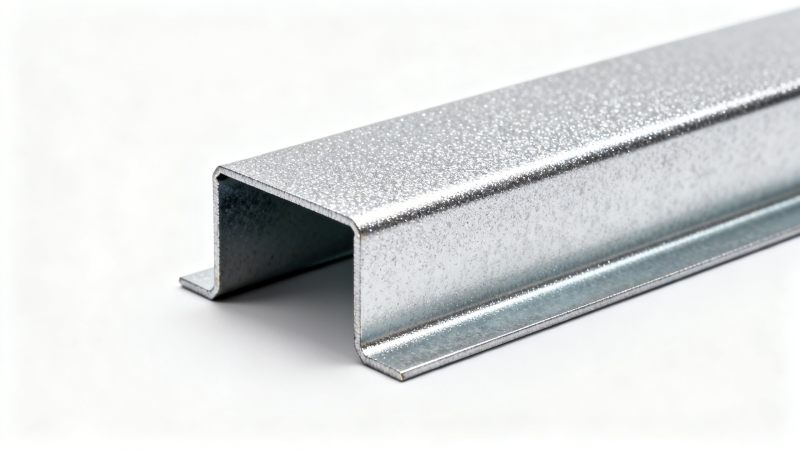
At Hongteng Fengda, each production lot undergoes mandatory tensile testing (per ASTM E8), bend testing (ASTM A370), and coating adhesion verification (ASTM D3359). We maintain 100% batch-level documentation for all steel beams, channel steel, and cold formed profiles—enabling full traceability from slab casting to final packaging. This operational rigor underpins our compliance with ASTM A653, EN 10346, JIS G3321, and GB/T 2518—standards that define minimum mechanical properties, dimensional tolerances, and surface quality thresholds.
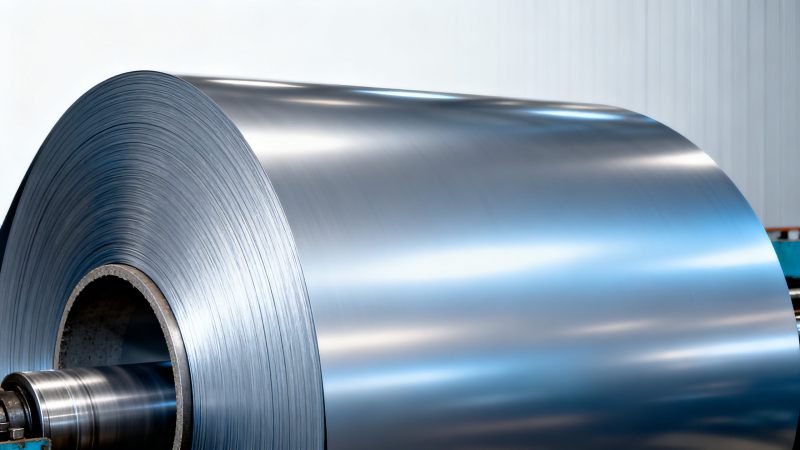
For example, our AZ50 Galvalume Steel Coil adheres to strict aluminum-zinc-silicon alloy composition (Al: 55%, Zn: 43.5%, Si: 1.5%) and delivers consistent coating mass of 30–185 g/m²—verified via gravimetric analysis on every coil. This level of granularity separates verified conformance from paper-only compliance.
Key Structural Parameters That Certifications Often Overlook
Certification bodies rarely validate real-time process parameters like furnace atmosphere dew point (±2°C tolerance), cooling rate consistency (±5°C/sec deviation), or tension leveling force calibration (≤0.3% drift per shift). Yet these directly affect grain structure uniformity, residual stress distribution, and ultimately, beam deflection under cyclic loading.
Hongteng Fengda’s in-line tensile testing station performs 12 automated tests per coil—covering yield strength (≥240–380 MPa), tensile strength (≥270–500 MPa), and elongation (≥22%), all aligned with DX51D–S550GD grade specifications. These values are logged into our ERP system with time-stamped operator IDs and equipment calibration records—accessible to clients upon request.
The table below compares typical test frequency and reporting depth between standard-certified suppliers versus Hongteng Fengda’s operational baseline:
This granular validation ensures that when your team specifies S350GD-grade steel beams for a seismic-resistant industrial facility in Istanbul—or requires DX52D for roofing in humid Southeast Asia—the delivered material performs as engineered, not merely as certified.
How Procurement Teams Can Verify Real Structural Reliability
Procurement professionals must move beyond certificate scanning. Start with four actionable checks:
- Request full batch reports—not just summary certificates—for the last three orders;
- Verify if tensile test results include actual curves (not just pass/fail flags);
- Confirm whether coating mass is measured via X-ray fluorescence (XRF) or destructive gravimetric methods;
- Ask for evidence of internal calibration logs for testing machines (e.g., load cell recalibration every 72 hours).
Hongteng Fengda provides digital access to live production dashboards for qualified partners—including real-time coating thickness heatmaps and tensile curve overlays. This transparency reduces pre-shipment inspection costs by up to 40% and accelerates engineering sign-off cycles.
For projects requiring corrosion resistance in coastal environments, our AZ50 Galvalume Steel Coil offers proven performance in salt-spray testing (ASTM B117): ≥1,200 hours to red rust onset—outperforming standard galvanized coils by 3.2×. Its dual-layer protection (aluminum barrier + sacrificial zinc) makes it ideal for exterior of your house applications and demanding industrial applications alike.
Risk Mitigation Across Your Supply Chain
Structural failures rarely stem from single-point defects—but from compounding variances: inconsistent yield strength across beam lengths, undetected micro-cracks in welded joints, or coating voids missed during visual inspection. These risks multiply when sourcing across multiple tiers without vertical integration.
Hongteng Fengda operates fully integrated facilities—from raw material melting (electric arc furnace) to precision roll forming and post-treatment lines. Our cold formed steel profiles undergo 100% eddy current inspection for subsurface flaws, and all steel beams receive ultrasonic testing per ASTM A609 for internal discontinuities. Lead times remain stable at 2–4 weeks—even during peak demand—because capacity planning is synchronized across casting, rolling, and finishing units.
The following table outlines common risk scenarios and how our integrated controls address them:
This disciplined approach helps global buyers reduce total landed cost by 7–12%—through lower rework rates, fewer delays, and extended service life of structural components.
Conclusion: Partner With Verification, Not Just Validation
Certifications are necessary—but insufficient—for structural reliability. What matters is how deeply a supplier embeds quality into daily operations: real-time testing, full traceability, and cross-functional accountability across metallurgy, rolling, and finishing teams.
Hongteng Fengda delivers precisely that—backed by 15+ years of export experience to North America, Europe, and the Middle East. From angle steel used in wind turbine foundations to AZ50 Galvalume Steel Coil specified for architectural cladding in Singapore, our solutions balance technical rigor with commercial pragmatism.
If your next project demands verifiable structural integrity—not just certified paperwork—contact our engineering support team today. We’ll provide customized test protocols, sample batch reports, and lead-time guarantees tailored to your project schedule.
Please give us a message


Please enter what you want to find