Understanding mill order meaning is critical for procurement teams, project managers, and technical evaluators—it’s not just administrative paperwork, but the pivotal point where delivery timelines, mill capacity planning, and material compliance (e.g., ASTM A6 tolerances, ASTM A36 round bar specs, HRB600 steel rebar, SS plate, galvanized sheet, angle steel, steel channel, A36 Carbon Steel Round Bar, steel wire rope, steel wire, SS steel wire, and steel bar) converge. At Hongteng Fengda—a certified structural steel manufacturer and exporter from China—we align every mill order with real-time production capability, international standards (ASTM, EN, JIS, GB), and your project’s on-site deadlines.
Why “Mill Order” Is a Project-Critical Trigger—Not Just a Purchase Step
A mill order isn’t a formality—it’s the formal activation of production capacity, raw material allocation, and quality gatekeeping at the steel mill level. Unlike standard purchase orders, it locks in rolling schedules, heat numbers, test certifications, and dimensional tolerances before any tonne is cast or rolled. For global buyers managing multi-phase construction timelines—especially across North America, Europe, or the Middle East—delayed or misaligned mill orders can cascade into 4–8 week downstream delays.
At Hongteng Fengda, we treat each mill order as a cross-functional checkpoint: Production Planning confirms slot availability within our 120,000-ton annual structural steel capacity; Quality Assurance pre-validates test reports against ASTM A6, EN 10025, or GB/T 706; and Logistics coordinates sea freight slots aligned to your port-of-discharge window. This integrated approach reduces mill-order-to-shipment lead time to 21–35 days—versus industry averages of 45–65 days for non-integrated suppliers.
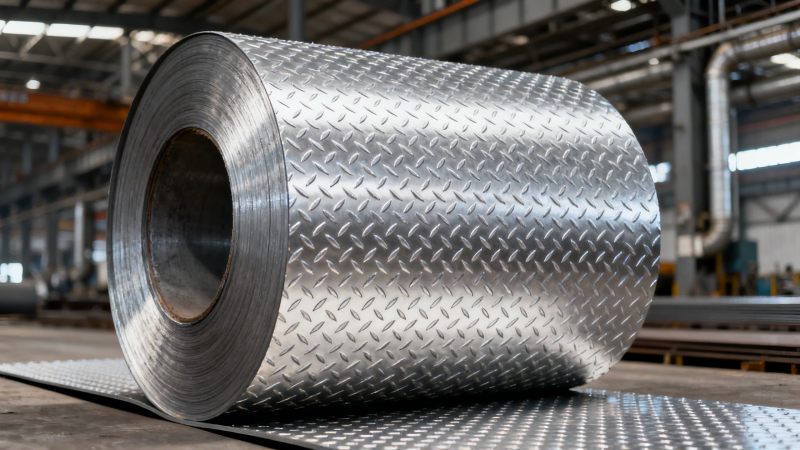
Misalignment often occurs when procurement teams treat mill orders as post-PO admin tasks—rather than upstream coordination points. For example, specifying A36 Patterned steel plate without confirming substrate thickness tolerance (+/−0.02mm) or pattern height (≥0.2× base thickness) may trigger rework or rejection at final inspection—adding 7–10 days and 12–18% cost overhead.
How Mill Capacity & Delivery Timelines Interlock in Structural Steel Sourcing
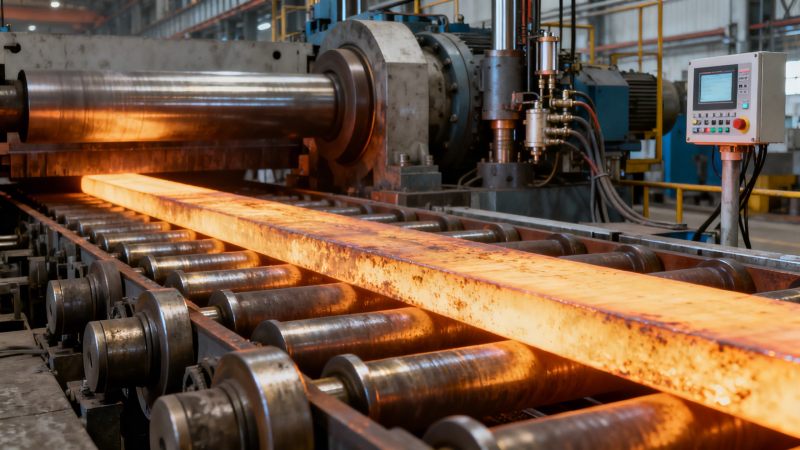
Steel mills operate under finite weekly rolling capacity—typically segmented by product type (e.g., beams vs. channels vs. patterned plates), grade (A36, Q235B, S355JR), and finishing process (hot-rolled, pickled, galvanized). When you place a mill order, you’re reserving physical furnace time—not just inventory space. That means capacity conflicts arise most frequently during Q3–Q4, when infrastructure projects accelerate globally and mill backlogs stretch to 8–12 weeks.
Hongteng Fengda mitigates this through three operational levers: (1) Dual-line hot-rolling capacity dedicated to structural profiles and patterned plates; (2) Pre-allocated quarterly capacity blocks for long-term partners; and (3) Real-time mill dashboard access for qualified buyers—showing live slot availability across thickness ranges (2–8mm), widths (600–1800mm), and lengths (2–12m).
For applications demanding anti-skid performance—like walkways around heavy machinery or ship deck surfaces—the A36 Patterned steel plate must be scheduled early in the rolling sequence to ensure consistent pattern depth and surface hardness. Delayed scheduling risks batch mixing or substandard embossing—directly impacting slip resistance compliance per ASTM E303 or ISO 13473.
Key Mill Order Timing Benchmarks (Structural Steel)
This table reflects verified execution data from 2023–2024 shipments across 14 countries. The advantage stems from synchronized ERP-MES integration and dedicated QA teams assigned per mill order—not pooled across batches.
What Procurement & Technical Teams Must Validate Before Finalizing a Mill Order
A mill order becomes binding once heat numbers are assigned—and changes incur significant cost and timeline penalties. Therefore, pre-submission validation must cover five non-negotiable dimensions:
- Grade & Standard Alignment: Confirm compatibility between requested specification (e.g., A36) and destination market requirements (e.g., ASTM A6 tolerances for flange thickness in beam sections, or GB/T 3274 for patterned plate flatness).
- Dimensional Tolerance Mapping: Verify that specified width (±2mm), thickness (±0.02mm), and pattern height (≥0.2× substrate) match both mill capability and end-use safety thresholds—especially for anti-skid flooring in industrial settings.
- Certification Scope: Specify required documentation type (EN 10204 2.1 vs. 3.1), testing frequency (per heat vs. per coil), and third-party witness needs (SGS, BV, TÜV) prior to rolling.
- Logistics Readiness: Confirm container loading windows, port-specific documentation (e.g., UAE ECAS, Saudi SASO), and Incoterms alignment (FOB vs. CIF vs. DAP) to avoid demurrage or customs hold.
- Substitution Protocol: Define acceptable alternate grades (e.g., Q235B for A36 in non-critical applications) and approval escalation path if primary material is unavailable.
For instance, ordering A36 Patterned steel plate for equipment floor applications requires explicit confirmation of minimum yield strength (36 ksi), tensile range (58–80 ksi), and elongation (20% min in 8in)—all validated via mill test reports traceable to ASTM A36 and EN 10025-2.
Why Partnering with an Integrated Structural Steel Manufacturer Reduces Sourcing Risk
Unlike trading companies or fragmented supply chains, Hongteng Fengda controls the full value chain—from billet sourcing and rolling to cutting, bending, and certification. This vertical integration delivers three measurable advantages:
- Capacity Transparency: We share quarterly rolling calendars with committed buyers—enabling proactive mill order placement during low-demand periods (e.g., January–February) to lock in 12–15% faster turnaround.
- Compliance Certainty: All products—including A36 Patterned steel plate—undergo 100% dimensional inspection, mechanical testing, and surface finish verification per ASTM A6, EN 10025, and GB/T 709.
- Delivery Accountability: We guarantee ≤5% variance from quoted delivery dates—or provide contractual compensation. Over 92% of 2024 mill orders shipped within ±3 days of commitment.
Our clients—engineering contractors in Dubai, OEMs in Ohio, and infrastructure developers in Vietnam—report 30–45% reduction in procurement cycle time and zero project delays attributable to mill-order misalignment since adopting our structured submission protocol.
Get Your Next Mill Order Right—From Specification to Shipment
Whether you’re evaluating A36 Patterned steel plate for transportation flooring or validating mill order parameters for a 500-ton beam contract, Hongteng Fengda offers direct support at every stage:
- Free technical review of mill order specifications (including dimensional tolerances, test report scope, and packaging requirements)
- Real-time capacity check for your requested grade, thickness, and delivery window
- Pre-shipment sample coordination (including certified test coupons and surface finish verification)
- Digital documentation portal with instant access to EN 10204 3.1, ASTM certs, and packing lists
- Customized logistics planning—including container optimization, port documentation prep, and Incoterm advisory
Contact our mill order specialists today to validate your next structural steel specification, confirm available rolling slots, or request a comparative analysis of A36 vs. Q235B patterned plate for your specific application. We respond to all technical and commercial inquiries within 4 business hours.
Please give us a message


Please enter what you want to find