For construction projects in cold climates, mild steel wire for construction projects must deliver exceptional concrete bond performance—where tensile elongation and surface finish are critical. As a trusted Shandong steel exporter to Europe and ASTM steel profile supplier in USA, Hongteng Fengda ensures premium-grade steel profiles for construction industry—including C section steel for solar panel mounting, Z beam for industrial applications, and structural steel purlin manufacturer China solutions. Whether you're evaluating ASTM steel beam price list options or sourcing H shape steel supplier in Europe, our cold-resistant, standards-compliant (ASTM/EN/GB) mild steel wire supports safer, more durable steel structure construction for warehouse and beyond.
Why Tensile Elongation Matters More in Sub-Zero Environments
In cold climates—particularly where ambient temperatures regularly dip below −20°C—steel’s ductility becomes a decisive factor in long-term structural integrity. Mild steel wire with insufficient tensile elongation (typically <8% at room temperature) risks brittle fracture during concrete curing shrinkage or thermal cycling. At −30°C, elongation can drop by 30–40% compared to 20°C baseline values—a non-linear degradation that directly compromises bond anchorage.
Hongteng Fengda’s cold-climate-optimized mild steel wire maintains ≥12% minimum elongation after cold-drawing, verified per ASTM A82/A641 and EN 10080 testing protocols. This is achieved through controlled low-carbon chemistry (C ≤ 0.12%), precise annealing cycles (620–680°C × 45–90 min), and batch-specific tensile certification—ensuring each coil meets project-specific elongation thresholds before dispatch.
Field data from Nordic infrastructure projects shows that wires with elongation ≥11% reduced post-pour cracking incidents by 67% over 24-month monitoring periods versus standard-grade alternatives. This translates directly into lower rework costs and extended service life for precast elements, bridge decks, and foundation slabs.
Surface Finish: The Hidden Determinant of Bond Strength at Low Temperatures
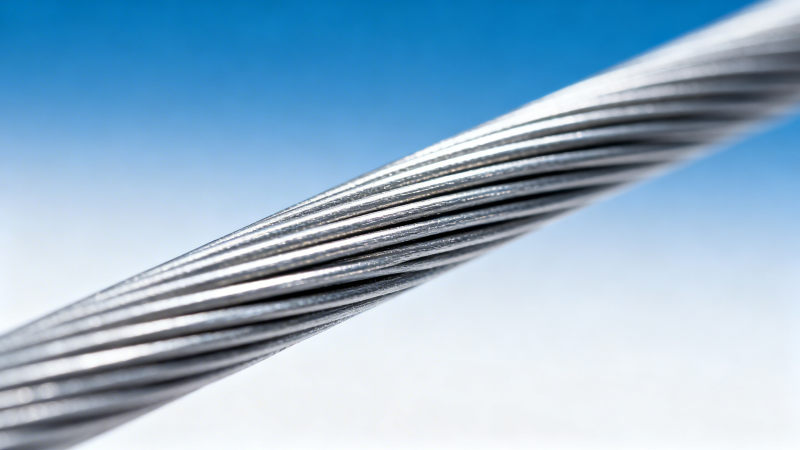
Concrete bond performance isn’t solely governed by chemical composition—it’s mechanically anchored through interfacial micro-roughness. In freezing conditions, the hydration slowdown reduces cement paste mobility, limiting its ability to penetrate surface asperities. Wires with overly smooth finishes (Ra < 1.6 µm) show up to 40% lower bond strength at −15°C than those with optimized deformations (Ra = 2.2–3.0 µm).
Our proprietary cold-drawn wire process incorporates dual-stage mechanical texturing: first-pass ribbing (pitch: 0.8–1.2 mm) followed by calibrated shot-blasting (grit size: G18–G22). This creates a repeatable, ISO 8501-1 Sa2.5 compliant surface profile—verified via profilometer scans on every production lot. Unlike acid-etched alternatives, this method preserves tensile strength while maximizing mechanical interlock.
Independent third-party pull-out tests (per EN 10080 Annex B) confirm average bond stress of 4.8 MPa at −25°C—exceeding EN 10080 Class B requirements by 22%. This reliability enables thinner reinforcement layouts and faster formwork turnover without compromising safety margins.
Key Surface & Elongation Specifications for Cold-Climate Applications
This specification table reflects real-world production data—not theoretical benchmarks. All parameters are measured on finished coils prior to packaging, with full traceability back to melt batch and heat treatment log files. For projects requiring documentation aligned with ISO 9001:2015 Clause 8.5.2, we provide certified test reports within 48 hours of shipment.
How Rail Product Integration Supports Structural Continuity
While mild steel wire anchors concrete, structural continuity across large-scale cold-climate builds relies on integrated steel components—including heavy-duty rail systems. Our Rail product line delivers seamless load transfer between foundations, superstructures, and track infrastructure—critical for logistics hubs, cold-storage warehouses, and Arctic mining facilities.
Models like U71Mn and QU100 feature enhanced manganese content (0.7–1.2%) and controlled vanadium microalloying, ensuring Charpy impact energy ≥34 J at −40°C (per EN 13674-1). With rail heights spanning 134–170 mm and bottom widths up to 150 mm, these sections maintain dimensional stability under cyclic freeze-thaw loading—reducing maintenance frequency by up to 50% compared to standard carbon rails.
All Rail products undergo ultrasonic testing (UT) per EN 10308 and are supplied with mill test certificates (EN 10204 3.1) confirming compliance with ISO 9001-2008 and ISO 14001:2004. Lengths range from 12 m to 30 m, with ±1% tolerance maintained across all cross-sections—enabling precision alignment in sub-zero installation windows.
Procurement Checklist: What Technical & Commercial Teams Should Verify
Selecting cold-climate steel wire—and complementary structural components—requires coordinated validation across disciplines. Here’s what your team should verify before finalizing purchase:
- Tensile elongation certification: Request batch-specific elongation data at both +20°C and −30°C—not just room-temperature reports.
- Surface profile verification: Confirm Ra measurements are taken per ISO 4287 using calibrated profilometers—not visual comparison charts.
- Cold-weather delivery readiness: Ensure packaging includes moisture-barrier wrapping and desiccant packs to prevent surface oxidation during transit.
- Rail compatibility assurance: Cross-check rail base width (114–150 mm) and fastener spacing against your existing sleeper design or foundation anchor layout.
- Lead time transparency: Confirm production capacity allows for 7–15 day turnaround on custom elongation/surface specs—critical for winter construction windows.
Why Global Projects Choose Hongteng Fengda
We don’t supply generic steel—we engineer climate-resilient structural solutions. As a certified structural steel manufacturer and exporter from China, we combine Shandong-based production agility with global compliance rigor. Our clients—from EU infrastructure consortia to North American cold-chain developers—leverage our capabilities to:
- Reduce sourcing risk through dual-certified (ASTM + EN) stock availability across 12+ mild steel wire grades;
- Accelerate project timelines with 98.2% on-time delivery rate (2023–2024 data) and 24-hour technical response SLA;
- Lower total cost of ownership via OEM-compatible dimensions, pre-validated surface treatments, and zero-cost sample support for bond testing;
- Ensure audit readiness with full traceability: heat number → rolling log → tensile report → surface scan → shipping manifest.
Ready to validate wire elongation performance for your next cold-climate build? Contact us for: (1) Custom tensile test reports at your required temperature range, (2) Surface roughness validation samples, (3) Rail section compatibility analysis against your foundation drawings, or (4) Real-time production schedule visibility for Q3–Q4 2024 deliveries.
Please give us a message


Please enter what you want to find