Selecting the right Mild Steel Plate for shipbuilding starts with understanding how thickness affects strength, weight, fabrication, and compliance. Weldability is just as important, because it directly influences fit-up speed, heat control, joint quality, and long-term marine durability. This guide explains the practical thickness ranges, welding factors, and specification checkpoints that support dependable, standards-focused decisions.
Why a Checklist Matters for Mild Steel Plate for Shipbuilding
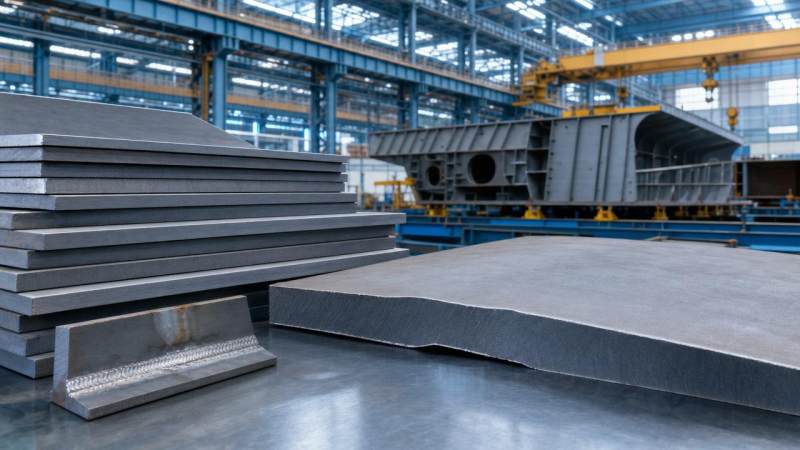
Marine steel selection involves more than choosing a plate by nominal size. Thickness, grade, welding process, coating system, and class requirements all interact during design and fabrication.
A checklist helps control avoidable risks. It reduces mismatch between drawings and material supply, limits welding defects, and supports compliance with marine construction standards.
For Mild Steel Plate for shipbuilding, a structured review is especially useful when balancing strength, weight, ease of cutting, and total production efficiency.
Core Thickness and Weldability Checklist
Use the following checklist before ordering, detailing, or approving any Mild Steel Plate for shipbuilding for hull, deck, bulkhead, or support structures.
- Confirm the structural location first, because bottom shell, deck zones, stiffened panels, and internal members often require different thickness ranges and different design margins.
- Match plate thickness to load path, not only panel size. Bending stress, impact exposure, and buckling resistance should guide final thickness selection.
- Check classification or project standards early. ASTM, EN, JIS, and GB references may affect chemistry limits, mechanical properties, and testing scope.
- Review whether thinner plate improves weight efficiency but increases distortion sensitivity during welding, especially on wide panels and long continuous seams.
- Verify carbon equivalent before approving weld procedures. Lower carbon equivalent usually improves weldability and reduces preheat demand and crack risk.
- Select the welding method according to thickness. SMAW, FCAW, GMAW, and SAW each behave differently in penetration, heat input, and productivity.
- Control preheat and interpass temperature on thicker sections to avoid hydrogen cracking, uneven cooling, and reduced toughness in critical marine joints.
- Inspect edge condition before fabrication. Poor cutting quality, lamination, or heavy oxide can reduce weld consistency and increase repair rates.
- Evaluate flatness and dimensional tolerance, because plate waviness and thickness variation complicate fit-up, root gap control, and automated welding stability.
- Coordinate coating and blasting plans with welding sequence. Rework often rises when surface preparation and assembly planning are separated.
Typical Thickness Reference Ranges
Actual values depend on vessel type and design approval, but common reference ranges help frame early evaluation of Mild Steel Plate for shipbuilding.
These ranges are not substitutes for approved drawings. They simply support preliminary material review and help compare fabrication implications across thickness levels.
How Thickness Changes Weldability
Thin plate generally welds fast, but it is more likely to warp. Heat concentration can cause angular distortion, burn-through, and poor surface fairness on exposed panels.
Medium thickness plate offers a practical balance. It supports common marine fabrication methods and usually allows predictable groove design, manageable heat input, and better dimensional control.
Thicker plate improves load capacity, yet welding becomes more demanding. Edge preparation, preheat, filler selection, and sequence planning become essential to maintain sound fusion and toughness.
In many projects, plate systems are combined with rolled sections for frame support. For adjacent structural members, I Shaped Beams can be used in industrial structure support where dimensional tolerance, welding compatibility, and multi-standard compliance are required.
Available in carbon steel grades such as Q195-Q235, Q345, SS400, A36, St37, and St52, this section product supports hot rolled forming, bending, welding, punching, and cutting. Thickness options of 4.5 mm to 15.8 mm and standards including JIS, ATSM, DIN, GB, and EN help align supply with broader structural steel packages.
Application Notes by Marine Structure Scenario
Hull Shell and Bottom Areas
These zones face water pressure, impact exposure, and cyclic loading. Thickness selection should prioritize structural strength, fatigue life, and approved welding procedures for long seams.
For Mild Steel Plate for shipbuilding used here, inspect plate flatness, lamination resistance, and edge quality carefully. Welding defects in these areas carry higher repair and service risks.
Decks and Superstructure
Deck structures need a balanced approach. Excess thickness adds weight high above the center of gravity, while insufficient thickness may reduce stiffness and damage fatigue performance.
Weldability remains important because deck assemblies often involve long fillet welds and repeated attachments. Distortion management should be part of the material review process.
Bulkheads, Tanks, and Internal Panels
These applications often use thinner or medium plate sections. The focus usually shifts from maximum strength toward fabrication speed, dimensional consistency, and corrosion protection compatibility.
When selecting Mild Steel Plate for shipbuilding in these zones, check whether the welding sequence supports minimal deformation, especially near openings, stiffeners, and corner joints.
Commonly Missed Risk Points
- Ignoring heat input limits can reduce toughness and create oversized distortion, even when base plate chemistry and filler selection appear acceptable.
- Approving thickness by strength alone may overlook weld access, groove volume, and labor cost, which can heavily affect overall project efficiency.
- Skipping mill certificates and traceability checks increases the risk of nonconforming chemistry, inconsistent mechanical values, and later inspection disputes.
- Underestimating cutting and edge preparation quality often leads to fit-up delays, root defects, and rework during panel assembly.
- Treating all marine zones the same can result in overdesign in light areas and underperformance in high-stress regions.
Practical Execution Steps
- List each structural zone and assign the required thickness range from approved design documents.
- Check grade, chemistry, and carbon equivalent against welding procedure specifications before procurement release.
- Confirm plate tolerance, flatness, and edge condition with the supplier before cutting schedules are finalized.
- Align welding process, preheat, filler metal, and inspection method with the selected thickness band.
- Review coating, blasting, and storage conditions so material quality is preserved before fabrication starts.
A reliable steel supply base also supports execution quality. Hongteng Fengda, a structural steel manufacturer and exporter from China, provides structural steel products and customized solutions for global construction, industrial, and manufacturing projects, with compliance to major standards such as ASTM, EN, JIS, and GB.
Conclusion and Next Action
Choosing Mild Steel Plate for shipbuilding requires a practical review of thickness, weldability, structural location, and standard compliance. The best result comes from matching plate size and chemistry with real fabrication conditions, not from thickness alone.
Use this checklist to compare thickness bands, validate welding needs, and reduce avoidable rework. The next step is to align drawings, material certificates, and welding procedures before placing the final order.
Please give us a message


Please enter what you want to find