At sea, even a small material failure can trigger major safety, cost, and schedule risks. When selecting Mild Steel Plate for shipbuilding, buyers and engineers must look beyond steel sheet price or steel coil price per ton and focus on corrosion resistance, weldability, strength consistency, and compliance. This article explores what can go wrong offshore and how the right high strength steel plate and sourcing strategy can reduce failure risks.
Why Mild Steel Plate Fails Faster at Sea Than Many Buyers Expect
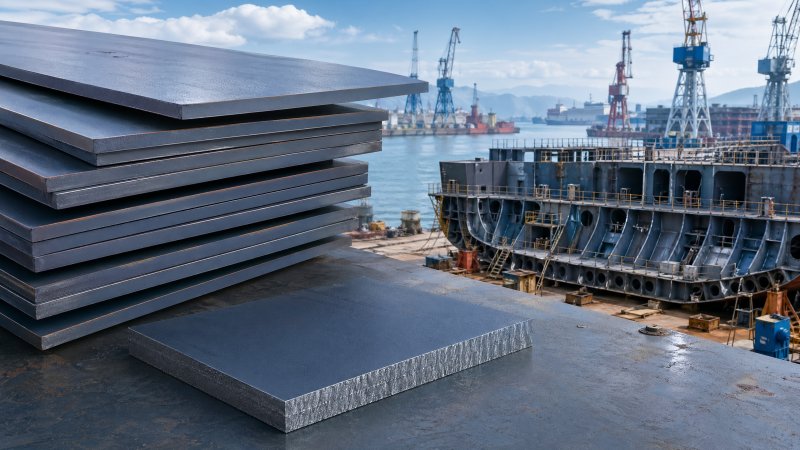
Shipbuilding is unforgiving because marine structures face salt spray, cyclic loading, humidity, impact, and temperature variation at the same time. A mild steel plate that performs adequately in a warehouse, workshop, or inland structure may deteriorate much faster offshore if its chemistry, thickness tolerance, or coating preparation does not match the actual service environment.
For procurement teams, the first mistake is treating all carbon steel plate as interchangeable. On paper, two plates may look similar in basic grade naming, yet they can differ in sulfur and phosphorus control, flatness, edge condition, and weld response. Those differences often become visible only after 2–6 months of fabrication or during the first operating cycle at sea.
For operators and project managers, the second mistake is focusing only on initial purchase cost. A lower steel coil price per ton may appear attractive, but rework, delayed commissioning, repair welding, coating failure, and downtime can make the total installed cost much higher within a single project phase of 4–12 weeks.
Technical evaluators and quality teams usually examine 3 core dimensions before approval: material consistency, process suitability, and standard compliance. If one of these is weak, the risk moves downstream into fabrication, inspection, and vessel service. In marine use, downstream risk is always more expensive than upstream verification.
Typical offshore failure mechanisms to watch
- Accelerated corrosion on exposed surfaces, cut edges, weld seams, and areas where coating adhesion is poor due to surface contamination or unsuitable pre-treatment.
- Weld cracking or deformation when the plate has inconsistent chemistry, excessive residual stress, or poor fit-up during multi-pass welding.
- Thickness loss and reduced structural reliability under repeated wave loading, vibration, and localized impact from cargo handling or deck equipment.
- Inspection disputes caused by missing traceability, unclear heat records, or mismatch between ordered standard and delivered material marking.
What Procurement and Engineering Teams Should Compare Before Ordering
When comparing mild steel plate for shipbuilding, it helps to use a structured matrix instead of evaluating by unit price alone. Buyers, finance approvers, and distributors often need a practical way to compare plate options across 5 key checkpoints: grade suitability, welding behavior, corrosion management, documentation, and supply reliability.
The table below summarizes common decision points that matter in marine fabrication. It is especially useful during pre-qualification, RFQ review, or supplier comparison when lead times typically fall within 2–4 weeks for standard material and longer for customized processing.
This comparison method helps different stakeholders speak the same language. Engineers can focus on technical acceptance, procurement can assess supplier execution, and management can evaluate total risk rather than only price. In shipbuilding, a supplier that controls documentation and consistency often creates more value than a supplier offering the lowest headline rate.
Hongteng Fengda supports this process by supplying structural steel products under recognized standards such as ASTM, EN, JIS, and GB, with stable production capacity and strict quality control. That matters for overseas buyers who need repeatable supply, dependable lead times, and fewer surprises between sample approval and bulk delivery.
How lower price can become higher project cost
A cheaper plate may increase hidden cost in at least 4 areas: extra welding consumables, rework hours, coating preparation time, and inspection failures. If a project includes multiple fabrication stages, even a small thickness inconsistency such as ±1% beyond the accepted process window can slow alignment, cutting, and welding.
For finance and commercial evaluation teams, the key question is not only “What is the price per ton?” but also “What is the cost per compliant installed ton?” That shift often leads to better supplier decisions, especially in export projects serving North America, Europe, the Middle East, and Southeast Asia.
Which Technical Properties Reduce Offshore Risk Most Effectively
In marine fabrication, the most practical technical priorities are weldability, consistency, formability, and standard traceability. For some components, buyers also compare high strength steel plate options, but mild steel plate remains relevant where fabrication flexibility, cost control, and broad availability are important. The right choice depends on structural load, corrosion strategy, and code requirements.
A useful mid-process material reference for many industrial steel applications is Rolled Coil. In carbon steel grades such as Q235, Q235B, Q345, Q345B, Q195, St37, St42, St37-2, St35.4, St52.4, and St35, typical carbon content may fall in the 0.12% to 0.20% range, manganese in the 0.30% to 0.70% range, while phosphorus and sulfur are commonly controlled at not exceeding 0.045%.
These ranges matter because they influence how the steel behaves during cutting, bending, stamping, forging, hot rolling, and welding. In practical terms, buyers often prefer material that exhibits excellent weldability, good cold working properties, and reliable hot working behavior, especially when fabrication includes multiple welding methods and no special post-weld heat treatment is desired.
For teams reviewing processing suitability, available specifications can cover broad thickness ranges such as 0.1mm–300mm, with customer-driven length and coated surface options depending on the application. Standards like GB/T 700-2006, AiSi, ASTM, DIN, and JIS provide useful reference points, but project buyers must still verify whether a general carbon steel supply route aligns with marine structural acceptance.
Practical property checklist for shipbuilding use
- Confirm whether the steel will be used for primary structure, secondary support, deck fittings, or equipment foundations, because each category has different tolerance for corrosion and deformation.
- Review welding compatibility with your actual process, including manual, MIG, submerged arc, or multi-pass fabrication, rather than relying only on a catalog statement.
- Check whether the surface condition is suitable for blasting, priming, or coating within the planned production window of 24–72 hours after preparation.
- Verify mill certificates, heat identification, and batch consistency before shipment, not after materials arrive at the yard.
When should buyers consider alternatives?
If the vessel area is exposed to high cyclic stress, splash-zone corrosion, or stricter class requirements, mild steel plate may need to be upgraded or paired with a stronger corrosion control strategy. In those cases, comparing it against higher grade or higher strength material can reduce maintenance frequency over a 1–3 year service interval.
That said, upgrading material without reviewing weld procedure, coating system, and fabrication discipline can waste budget. Material selection works best when it is integrated with the full process chain rather than treated as an isolated purchasing decision.
How to Build a Safer Sourcing and Quality Control Process
A safer shipbuilding steel purchase usually follows 4 steps: define the service condition, lock the technical specification, verify supplier control, and inspect delivered batches. This process helps procurement officers, quality managers, and engineering leaders reduce disputes before production starts. It also creates clearer approval logic for finance and senior decision makers.
For imported structural steel, documentation discipline is especially important. Buyers should request the material standard, grade, size range, tolerance expectations, surface condition, packing method, and test certificate format before placing the order. This is more effective than trying to solve traceability gaps after cargo arrival or during third-party inspection.
Hongteng Fengda works with global buyers that need standard specifications as well as OEM solutions across structural steel categories such as angle steel, channel steel, steel beams, cold formed steel profiles, and customized structural components. That broader manufacturing experience is helpful when a shipbuilding or marine-related project also includes adjacent support structures, frames, brackets, or industrial modules.
In supply planning terms, stable production capacity and dependable lead times are often as important as grade selection. A technically acceptable mild steel plate loses value if delivery slips by 2–3 weeks and disrupts cutting, welding, painting, or vessel assembly sequencing. Reliable scheduling reduces both fabrication idle time and cross-team conflict.
Recommended inspection and approval points
The table below gives a practical quality review structure for buyers who need to connect technical checks with commercial control. It can be used during supplier audit, incoming material inspection, or pre-shipment confirmation.
This workflow is not complicated, but it is often skipped when schedules are tight. In practice, the 20–30 minutes spent validating certificates and dimensional details can prevent days of rework. For distributors and project coordinators, that is one of the simplest ways to protect delivery performance.
Common sourcing mistakes that create marine risk
- Ordering by generic grade name without confirming the exact standard and application environment.
- Assuming weldability from past inland projects without reviewing saltwater exposure and coating demands.
- Approving a low quotation before checking batch traceability, export packing, and lead-time realism.
- Leaving inspection to the receiving stage, when corrective action is slower and more expensive.
FAQ: What Buyers, Engineers, and Project Teams Often Ask
Below are frequent questions from information researchers, operators, technical reviewers, purchasers, and business decision makers involved in marine steel sourcing. These questions usually emerge during RFQ preparation, supplier comparison, and risk review.
How do I know whether mild steel plate is suitable for a marine project?
Start with 3 checks: structural function, exposure severity, and approval standard. If the material will be used in a low-to-moderate load area with controlled coating protection and acceptable welding conditions, mild steel plate may be suitable. If the zone faces severe splash exposure, high fatigue, or class-driven mechanical requirements, a higher specification may be necessary.
What matters more: steel sheet price or certification and consistency?
For marine use, consistency and compliance usually matter more over the full project cycle. A small savings at purchase can disappear quickly if you face coating defects, welding rework, or inspection rejection. Buyers should compare price together with documents, tolerance control, chemistry range, and lead-time reliability.
What delivery timeline is realistic for export structural steel?
For standard specifications, a common planning window is 2–4 weeks depending on quantity, processing needs, and shipping route. Customized dimensions, OEM components, or mixed structural packages may require a longer schedule. The safer approach is to confirm production and packing milestones before final project commitment.
Can one supplier support both standard steel and customized structural parts?
Yes, and that can simplify coordination. A manufacturer with experience in angle steel, channel steel, steel beams, cold formed profiles, and customized structural components can often reduce sourcing fragmentation. That is useful when a shipbuilding-related project combines plates, supports, frames, and OEM steel assemblies within one supply package.
Why Choose a Structured Steel Supply Partner for Marine and Industrial Projects
Marine steel purchasing is not just about buying tonnage. It is about securing material that fits the drawing, performs in fabrication, arrives on time, and supports inspection without unnecessary dispute. That is why experienced buyers look for a supplier that understands standards, export execution, and the link between material quality and project schedule.
Hongteng Fengda is a professional structural steel manufacturer and exporter from China, serving customers across North America, Europe, the Middle East, and Southeast Asia. With modern manufacturing facilities, strict quality control, and support for both standard and OEM requirements, the company helps buyers reduce sourcing risk, control cost, and improve delivery confidence.
If you are reviewing mild steel plate, related carbon steel products, or broader structural steel packages for shipbuilding, offshore support, industrial fabrication, or construction projects, you can consult on 6 practical topics: grade confirmation, dimensional range, standard matching, welding suitability, lead time planning, and export packing requirements.
You can also request support for sample review, quotation comparison, customized structural solutions, and document alignment for ASTM, EN, JIS, or GB-based procurement. A clear technical and commercial discussion at the start usually saves the most time later, especially when your project has tight schedules, multiple stakeholders, or strict approval gates.
Please give us a message


Please enter what you want to find