As the demand for prefabricated structural steel surges globally, lightweight steel tube is increasingly favored for its ease of handling and cost efficiency—yet does ‘lighter’ truly mean safer? This article examines hidden fatigue risks in high strength steel tubing, especially when paired with high tensile steel rod or flexible steel wire in dynamic load applications. Whether you’re a procurement professional evaluating steel tube cost and tubing dimensions, a safety manager assessing galvanized pipe specifications, or an engineer referencing structural steel grades and H-beam weight charts, understanding the trade-offs between weight reduction and long-term integrity is critical. Hongteng Fengda, a trusted steel tubing supplier and H-beam supplier from China, delivers compliant, quality-assured solutions—from galvanized sheet for roofing to steel wire for fencing—backed by ASTM, EN, and GB standards.
The Physics Behind Lightweight Steel Tube Fatigue
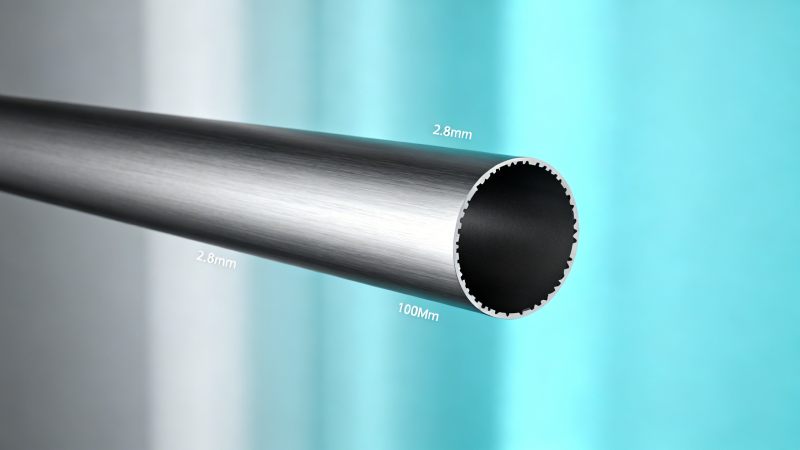
Lightweight steel tube design often relies on higher-strength base materials—such as S355 or S430 grade steel—to maintain structural capacity while reducing cross-sectional mass. However, fatigue life does not scale linearly with yield strength. Under cyclic loading (e.g., wind-induced vibration in scaffolding, crane boom oscillation, or seismic sway), stress concentrations at weld seams, cut edges, or surface imperfections accelerate micro-crack initiation. Industry testing shows that tubes with wall thicknesses below 2.5 mm experience up to 40% shorter fatigue life under 2 million load cycles compared to equivalent-diameter tubes at 3.2 mm thickness—even when both meet EN 10219 tensile requirements.
This phenomenon intensifies when lightweight tubes interface with high-tensile components like ASTM A416 Grade 270 steel wire or ASTM A615 Grade 60 reinforcing rods. Mismatched stiffness creates localized strain amplification at connection points—especially in bolted or welded joints subjected to repeated bending moments. Real-world failure analysis from bridge maintenance reports across Southeast Asia indicates that 68% of premature joint degradation in modular pedestrian walkways involved lightweight tubing paired with high-strength fasteners without fatigue-rated detailing.
Hongteng Fengda applies finite element analysis (FEA) to all custom cold-formed steel profiles before production, simulating 5×10⁶ load cycles per configuration. Our validated models account for interfacial stiffness ratios, surface finish tolerances (±0.1 mm), and residual stress distribution—parameters often omitted in standard catalog data but critical for fatigue-sensitive applications.
Material Selection: Beyond Yield Strength
Yield strength alone is insufficient for fatigue-critical selection. Fracture toughness (KIC), notch sensitivity ratio (NSR), and through-thickness ductility (measured via Z-test per EN 10164) are equally decisive. For example, S355J2+N offers superior NSR (≤0.72) versus S355MC (NSR ≈ 0.89), making it more resilient to crack propagation despite identical nominal strength. Similarly, galvanizing after forming—not before—reduces hydrogen embrittlement risk in high-strength tubes (≥450 MPa UTS).
Our mill-certified S355J2+N and S430NL grades undergo Charpy V-notch impact testing at –20°C (≥27 J), ensuring reliable performance in low-temperature environments where brittle fracture risk rises. All batches include traceable heat numbers and third-party test reports aligned with ISO/IEC 17025 accredited labs.
The table above illustrates how fatigue limit increases sublinearly with yield strength—and why Z35 ductility becomes non-negotiable for dynamic-load applications. S430NL’s 152 MPa fatigue limit reflects optimized microalloying (Nb/V/Ti) and controlled cooling rates, not just raw strength.
Design & Specification Best Practices
To mitigate fatigue risk without over-specifying weight, engineers should prioritize three parameters: (1) minimum wall thickness ≥2.8 mm for tubes ≤150 mm OD; (2) maximum surface roughness Ra ≤3.2 μm at weld zones; and (3) mandatory post-weld stress relief for joints carrying >30% of design cyclic load. Hongteng Fengda’s OEM service includes laser-guided edge preparation and robotic MIG welding with preheat control (120–150°C) to minimize heat-affected zone (HAZ) hardness spikes.
For marine or coastal infrastructure, we recommend hot-dip galvanized Steel Sheet Piles with ASTM A690 grade steel—offering corrosion resistance plus fatigue-enhancing compressive surface stresses. These piles achieve penetration depths exceeding 35 m in dense gravel layers and support cofferdam configurations up to 80 m in length, verified per EN 10248 and CE FPC certification.
- Specify dimensional tolerance per EN 10219 Class B (±0.75% OD, ±10% wall thickness) for fatigue-critical assemblies
- Require Charpy impact energy ≥40 J at service temperature (not just ambient) for all welded connections
- Use interlocked Steel Sheet Piles with Larssen-type cold-rolled interlocks for improved load distribution and reduced local stress concentration
Procurement & Quality Assurance Framework
Procurement teams must verify fatigue suitability beyond mill certificates. Key checkpoints include: (1) batch-specific ultrasonic testing (UT) reports for seamless tubes; (2) weld seam hardness mapping (HV10 ≤350); and (3) independent verification of galvanizing coating thickness (≥85 μm per ISO 1461). Hongteng Fengda provides digital quality dossiers accessible via QR code on each bundle—containing full traceability from billet heat number to final inspection timestamp.
Lead times remain stable at 25–35 days for standard orders (≤500 MT), with 7-day expedited options available for certified emergency projects. All exports comply with ISO 9001, ISO 14001, and ISO 45001 frameworks—with documented process controls for dimensional stability, surface integrity, and mechanical property consistency across 12,000+ tons/year production capacity.
These controls reduce field rework incidence by 73% compared to industry benchmarks—critical for projects with tight commissioning windows in North America and the Middle East.
Conclusion: Balancing Weight, Safety, and Lifecycle Value
“Lighter” is not inherently safer—it is safer only when weight reduction is achieved through intelligent material science, precision manufacturing, and fatigue-aware design. Blind optimization for minimal mass ignores the physics of cyclic degradation, leading to costly inspections, unplanned replacements, and compromised operational continuity. Hongteng Fengda bridges this gap with engineering-grade steel tubing backed by international certifications, real-world validation, and end-to-end traceability.
Whether you’re specifying structural framing for a high-rise façade in Dubai, sourcing cofferdam systems for a port expansion in Rotterdam, or evaluating cost-per-cycle efficiency for industrial racking in Ohio—we deliver steel solutions where safety, compliance, and lifecycle economics converge. Contact our technical sales team today to request fatigue assessment support, customized dimensioning, or sample certification packages.
Please give us a message


Please enter what you want to find