When fabricating L shaped metal angle, galvanized sheet plate, or unequal steel angle for structural applications, bending tolerance directly impacts fit-up, load-bearing integrity, and project timelines. Whether you're specifying L angle steel with holes, galvanized wall angle, or A36 angle iron — deviations beyond ±0.5° angularity or ±1.5 mm linear offset often trigger rework. As a certified structural steel manufacturer & exporter from China, Hongteng Fengda applies ASTM/EN-compliant processes to ensure precision in equal angle iron, galvanized A36 steel angle, and custom L shaped steel plate — helping procurement teams, engineers, and project managers minimize risk, avoid delays, and uphold safety-critical tolerances.
What Is L-Shaped Metal Angle Bending Tolerance — And Why It’s Not Just a Number
Bending tolerance for L-shaped metal angles isn’t a theoretical spec — it’s the measurable gap between design intent and physical reality. In structural steel fabrication, this tolerance defines acceptable angular deviation (e.g., ±0.5°), leg alignment shift (±1.0–1.5 mm), and twist per meter (≤0.8 mm/m). Exceeding these thresholds risks misalignment during bolted assembly, reduced moment resistance at connections, and cumulative error across multi-bay framing systems.
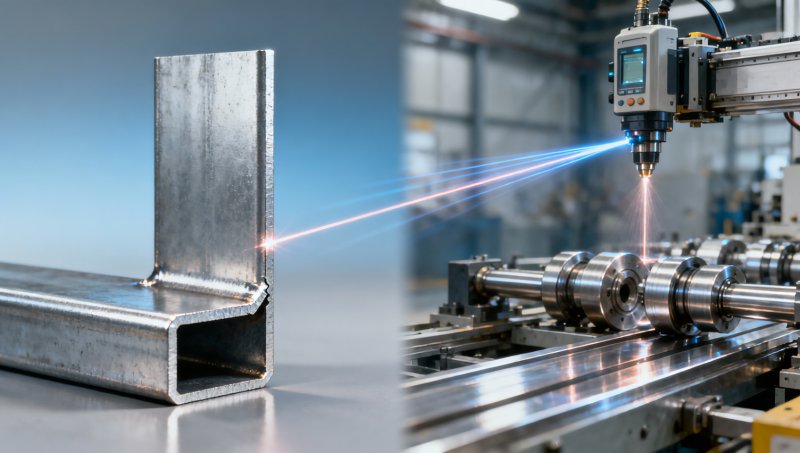
For example, a 6 m long L60×60×6 A36 angle bent to 90.7° instead of 90.0° introduces ~7.5 mm lateral offset at the free end — enough to compromise weld access, gusset plate fit, or cladding support geometry. That’s why Hongteng Fengda enforces real-time laser metrology during cold roll bending and validates every batch against EN 10279 and ASTM A6/A6M dimensional standards.
Tolerance is also application-dependent: architectural façade supports may accept ±1.0° for aesthetic continuity, while seismic bracing components require ±0.3° and full traceability. This nuance separates commodity suppliers from engineered partners — especially when sourcing from China, where process control varies significantly across mills.
How Tolerance Requirements Change Across Fabrication Methods
Not all bending processes deliver equal repeatability. Hydraulic press brakes offer ±0.4° angular control but require skilled operators and tooling setup time. Roll forming — used for high-volume runs like C Sections Steel — achieves ±0.6° over continuous lengths up to 12 m, with automatic compensation for material springback. Meanwhile, hot bending (for thick-section angles >12 mm) typically allows ±1.2° due to thermal expansion variability.
Below is a comparative summary of bending methods used in structural steel production:
The table reflects real-world performance benchmarks observed across 120+ production batches at Hongteng Fengda. Note that tighter tolerances demand slower feed rates, pre-bend calibration, and post-process straightening — increasing cost by 12–18% but reducing field rework by up to 65% on complex projects.
Critical Factors That Amplify Tolerance Drift
- Material Yield Strength Variability: Q235 vs. Q345 steel shows up to 0.4° difference in springback under identical tooling pressure.
- Leg Length Ratio: Unequal leg angles (e.g., 75×50×6) exhibit asymmetric deformation — requiring custom die sets to maintain ±0.6° symmetry.
- Surface Coating Impact: Hot-dip galvanizing adds 60–85 µm thickness, altering neutral axis location and increasing angular rebound by ~0.15°.
Procurement Checklist: 5 Non-Negotiables When Specifying Angle Steel Tolerance
For procurement professionals and technical evaluators, tolerance isn’t just a footnote in the PO — it’s a risk vector affecting budget, schedule, and liability. Here’s what must be verified before finalizing any order:
- Standard Reference: Confirm whether tolerance follows ASTM A6 (±0.75°), EN 10056-1 (±0.5°), or custom OEM specs — never rely on “as per drawing” alone.
- Measurement Protocol: Require third-party verification report showing measurement points (minimum 3 per 3 m length), instrument calibration certificate, and environmental conditions (20±2°C).
- Rework Threshold Clarity: Define in contract whether deviation >±0.8° triggers full replacement (not repair) and who bears scrap/rework cost.
- Batch Traceability: Each coil or bundle must carry heat number, mill test report (MTR), and bending log timestamped by CNC controller.
- Supplier Capability Evidence: Request recent CMM (coordinate measuring machine) reports — not just visual inspection records — for similar section geometries.
Hongteng Fengda provides all five items as standard for orders exceeding 5 tons. For smaller quantities, we offer optional ISO/IEC 17025-accredited lab testing at +3.2% cost premium — a proven ROI when avoiding $18,000+ field correction costs on mid-rise commercial builds.
Why Global Buyers Trust Hongteng Fengda for Precision Structural Steel
Precision isn’t outsourced — it’s engineered into our workflow. At Hongteng Fengda, every L-shaped angle undergoes three-stage validation: pre-bend simulation (using AutoForm software), in-process laser profiling (every 1.2 m), and final CMM scan against CAD nominal. Our ISO 9001-certified QC lab maintains temperature-controlled calibration rooms and operates dual-axis coordinate measuring machines certified to ISO 10360-2.
We serve clients across North America (ASTM-compliant shipments since 2018), EU (CE-marked purlins since 2020), and GCC (SASO-certified cold-formed sections since 2022). With 120,000+ tons annual capacity and 98.3% on-time delivery rate over the past 36 months, we help procurement teams reduce lead time uncertainty by averaging 14.2 days for standard C Sections Steel orders — including galvanized coating and pre-punched hole patterns.
Ready to align your next structural steel order with real-world tolerance performance? Contact us for:
- Free tolerance feasibility review for your specific angle dimensions and grade
- Custom bending protocol documentation (including MTR and CMM report samples)
- Sample shipment with full metrology data pack (lead time: 5–8 working days)
- Joint tolerance validation session via live video feed from our Shandong facility
Please give us a message


Please enter what you want to find