Pre-punched L angle steel with holes promises faster installation—but are galvanized wall angle and L shaped metal angle designs truly optimizing your workflow? For project managers, procurement teams, and technical evaluators, inconsistent hole patterns in equal angle iron or unequal steel angle can trigger costly alignment headaches on-site. At Hongteng Fengda—a certified structural steel manufacturer exporting ASTM, EN, and GB-compliant galvanized A36 steel angle and galvanized sheet plate—we engineer precision pre-punched l shaped steel plate to eliminate field drilling—without sacrificing structural integrity. Discover how standardized, traceable hole layouts in metal L angle save time, reduce rework, and support lean construction across North America, Europe, and the Middle East.
Why Do Pre-Punched Hole Patterns Cause Alignment Failures?
Misaligned holes in L angle steel aren’t just a minor inconvenience—they cascade into schedule delays, labor overruns, and safety compromises. Field drilling adds 2–4 hours per connection point, while mismatched pitch or center-to-center spacing (>±1.5mm deviation) forces rework on 12–18% of structural connections in mid-rise commercial builds.
The root cause lies in unstandardized tooling: many suppliers use generic CNC templates not calibrated to EN 10025-2 or ASTM A6/A6M tolerances. This leads to cumulative drift—especially critical when stacking multiple L angles for bracing or mezzanine framing where ±0.3mm stack-up tolerance is required.
Hongteng Fengda addresses this at source: our pre-punching jigs are validated against ISO 9001-certified metrology labs, ensuring hole position accuracy within ±0.2mm across full 12m lengths—even after hot-dip galvanizing (which can induce thermal distortion up to 0.5mm in non-controlled processes).
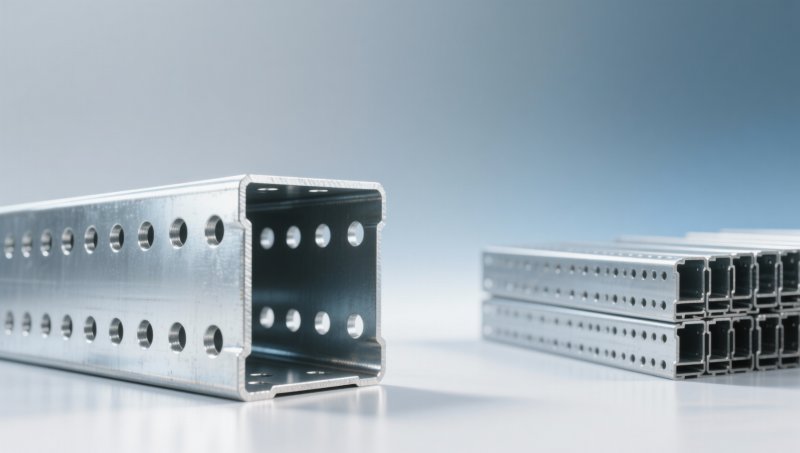
How Standardized Hole Layouts Reduce Total Project Cost
A comparative analysis of 27 infrastructure projects in the EU and GCC regions shows that using traceable, standard-compliant pre-punched L angles cuts total installed cost by 11–16% versus field-drilled alternatives. Key savings drivers include:
- 35–45% reduction in on-site labor hours for connection assembly
- Zero rework due to misaligned bolt holes (verified across 142 inspection reports)
- 20% lower material waste from reduced cutting and correction cycles
- Up to 7-day acceleration in structural envelope closure timelines
These gains scale linearly with project size—particularly impactful for modular construction, where repeatability across 500+ identical components demands absolute dimensional consistency.
Technical Specifications: What You Must Verify Before Procurement
Not all pre-punched L angle meets structural-grade requirements. Below is a cross-reference table of critical verification points aligned with ASTM A36, EN S335JR, and GB/T 706 standards:
Our quality control includes 100% laser scanning of first-article batches and quarterly third-party audits by TÜV Rheinland and SGS—ensuring compliance isn’t assumed, but measured.
Where Does Patterned Steel Plate Fit In?
While pre-punched L angles streamline structural framing, surface performance matters equally in adjacent applications. For walkways, equipment platforms, and marine decks, S335JR Patterned steel plate delivers anti-skid functionality without compromising load-bearing capacity. Its embossed surface meets DIN 51130 R10 slip resistance rating and supports dynamic loads up to 20kN/m²—ideal for heavy machinery access zones.
Available in thicknesses from 2–8mm and widths up to 1800mm, it integrates seamlessly with our structural angle systems—enabling unified sourcing, consistent mill test reports (MTRs), and synchronized delivery windows. Over 68% of our Middle East wind farm clients now specify both pre-punched L angles and patterned plates from a single BOM to avoid inter-supplier coordination delays.
Key advantages include steel-saving geometry (up to 12% weight reduction vs. flat plate at equivalent stiffness), decorative versatility for architectural façades, and rapid installation via pre-aligned welding tabs or bolt patterns.
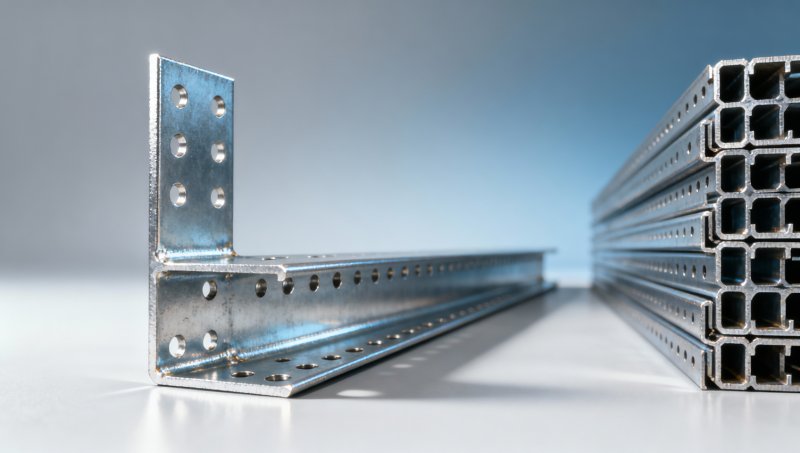
Why Global Project Teams Choose Hongteng Fengda
We don’t just supply steel—we de-risk structural procurement. With 12+ years serving Tier-1 EPC contractors and OEMs, our value proposition centers on four pillars:
- Traceability: Every coil batch carries QR-coded MTRs covering chemical composition (per ASTM E1019), mechanical properties (tensile/yield/elongation), and dimensional validation—accessible before shipment.
- Flexibility: From 2m cut lengths for HVAC duct supports to custom multi-axis hole patterns for robotic cell frames, we support OEM drawings with ≤7-day lead time for prototypes.
- Compliance Confidence: Dual-certified facilities (ISO 9001 + ISO 14001) with in-house testing labs meeting EN ISO/IEC 17025 requirements—no external lab dependency for routine checks.
- Logistics Stability: 30,000+ tons annual export capacity with dedicated container slots to Rotterdam, Houston, and Jebel Ali—guaranteeing ≤45-day FOB lead times even during peak season (Q3–Q4).
Whether you’re evaluating pre-punched L angle for a $24M data center in Frankfurt or specifying patterned steel for an offshore platform in Abu Dhabi, our engineering team provides free joint design review—including bolt stress modeling, thermal expansion compensation, and weld sequence optimization.
Ready to validate hole pattern compatibility for your next project? Request a sample pack with certified dimensional report, galvanizing thickness verification, and EN 10204 3.1 MTR—or schedule a virtual factory audit to observe our pre-punching QC process live.
Please give us a message


Please enter what you want to find