L shaped metal angle is widely used to reinforce frames, protect edges, and improve structural stability in industrial and construction applications. For operators and end users, the main question is usually practical: where does it work best, how strong should it be, and how can it be installed safely without overbuying or underprotecting? In most cases, the right angle section improves durability, reduces impact damage, and makes assemblies more reliable.
What operators usually need to know before using an L shaped metal angle
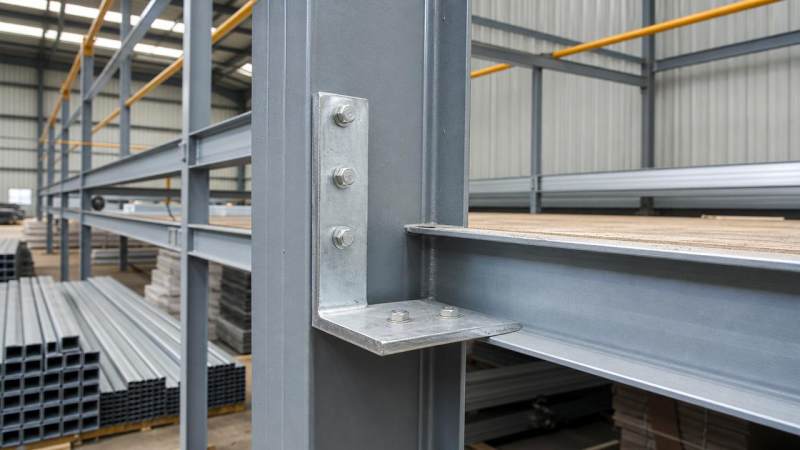
When people search for l shaped metal angle uses, they are rarely looking for theory alone. They want to know whether it is suitable for a frame, edge, support bracket, machine base, shelf, trailer, container, or wall corner.
They also want to avoid common mistakes, such as choosing a section that is too light, using the wrong finish in wet conditions, or placing the angle where repeated impact causes bending over time.
For operators, the best starting point is simple. First, identify whether the angle will carry load, resist impact, protect an edge, or keep parts aligned. Then match size, thickness, steel grade, and surface treatment to that real job.
Why the L shape works so well for frames and edge protection
The strength of an L shaped metal angle comes from its geometry. Two legs set at ninety degrees allow the section to reinforce corners, connect flat surfaces, and distribute force better than a simple flat strip.
In frame applications, the angle helps maintain squareness and reduce distortion. In edge protection, it acts as a tough sacrificial barrier that takes abrasion, knocks, and contact before the protected structure is damaged.
This is why angle steel is common in workshops, warehouses, transport equipment, building edges, steel supports, machine guards, door frames, pallet structures, and maintenance platforms. It is practical, easy to cut, and relatively simple to fasten.
Common uses in metal frames, supports, and structural assemblies
One of the most frequent l shaped metal angle uses is frame reinforcement. Operators often see it in light to medium duty frames for cabinets, racks, work tables, equipment stands, partition systems, and protective cages.
At corner joints, the angle improves rigidity and helps prevent movement under vibration or repeated handling. This is especially helpful when frames support motors, panels, storage loads, or process equipment that must stay aligned.
Angles are also used as mounting brackets. They can support trays, guardrails, cover plates, cable routing systems, or machine accessories. In these cases, the section offers both support and a clean fastening surface.
For fabrication teams, angle sections are efficient because they reduce the number of custom parts needed. A standard profile can be drilled, welded, bolted, or cut into brackets, braces, clips, and perimeter reinforcements.
How L shaped metal angle protects edges in real working environments
Edge damage is common in factories, warehouses, construction sites, and transport yards. Corners of platforms, wall openings, steel panels, loading zones, and storage systems often suffer repeated contact from tools, forklifts, carts, and materials.
Installing an L shaped metal angle along these exposed edges creates a durable protective line. Instead of the base structure wearing away, chipping, or deforming, the angle absorbs the impact and can be replaced more easily if damaged.
This is useful on stair edges, dock corners, platform perimeters, steel column corners, door surrounds, and exposed concrete or panel edges. In many cases, a low-cost angle helps avoid more expensive repair work later.
For users responsible for daily operations, this matters because edge protection is not only about appearance. It helps reduce trip hazards, prevents progressive damage, and supports safer movement of goods and equipment.
Choosing the right size, thickness, and material for the job
The right selection depends on service conditions, not guesswork. If the angle is mainly for trim or light edge protection, a smaller and thinner section may be enough. If it carries load or faces impact, heavier dimensions are usually necessary.
Leg size affects coverage and stiffness. Equal angles are often preferred where balanced support is needed on both sides. Unequal angles can work better where one leg must mount to a wider surface and the other acts as a smaller retaining edge.
Thickness is critical. Thin sections are easier to form and lighter to handle, but they may deform in high traffic areas. Thicker sections resist bending better and generally provide longer service life in harsh industrial settings.
Material choice also matters. Carbon steel is widely used for strength and cost efficiency. Galvanized or coated options are better for humid or outdoor conditions. In corrosive areas, the surface finish can be as important as the steel itself.
Installation methods that improve safety and performance
Even a good product can perform poorly if installed badly. Before fixing an angle, operators should check the substrate, alignment, hole positions, load direction, and whether the section will face direct impact or vibration.
Welding is common in permanent steel structures because it creates a rigid connection. Bolting is useful where replacement, adjustment, or easier site assembly is needed. Mechanical anchors may be suitable for concrete or masonry edges.
During installation, keep the angle straight and fully supported. Gaps between the angle and the base surface can create weak points. Poor fit-up may lead to local bending, loose fasteners, or uneven load transfer during use.
Edges should also be deburred after cutting, especially in areas with frequent hand contact. If the angle is used for protection, sharp corners at joints should be managed so the solution improves safety instead of creating a new hazard.
What causes early failure and how to prevent it
Most early problems come from under-specification, corrosion, bad fastening, or impact conditions that were not considered at the beginning. An angle that looks strong enough may still fail if repeated side loading was ignored.
Corrosion is another common issue. If moisture, chemicals, or salt exposure are present, unprotected steel can lose section thickness over time. In outdoor and marine-adjacent settings, coating choice has a direct effect on service life.
Another mistake is using edge protection where a structural support is actually needed. If the angle must carry weight, resist torsion, or hold moving equipment in position, selection should be based on structural demand, not appearance.
Routine inspection helps. Look for bent corners, cracked welds, loose bolts, coating damage, and rust at contact points. Early repair is usually simple and inexpensive compared with replacing damaged frames or broken perimeter sections.
Where this component fits in broader steel project planning
Operators may focus on one part, but angle steel often works alongside larger structural systems. In many industrial and civil projects, small reinforcement and protection details improve the performance of the main steel package.
For example, in retaining and water control works, the main structure may use sheet pile systems while angle sections are used for local supports, edge reinforcement, access details, or protective framing around service areas.
For projects that also require heavy foundation or containment solutions, Hot Rolled Steel Sheet Pile can be a relevant complement. U sheet pile options are available in grades such as S275, S355, S390, S430, SY295, SY390, and ASTM A690.
These systems can be freely combined to form continuous retaining walls or water retaining walls, with production standards including EN10248, EN10249, JIS5528, JIS5523, and ASTM. Customized dimensions and single lengths up to over 80 meters can also improve construction efficiency.
How to judge product quality before purchase or use
End users do not always control procurement, but they still benefit from knowing what to check. Straightness, angle accuracy, leg dimensions, thickness consistency, surface quality, and coating condition all affect usability.
Ask whether the product matches recognized standards and whether the supplier can provide material traceability. For international projects, compliance with ASTM, EN, JIS, or GB requirements may be necessary for acceptance and long-term confidence.
Good manufacturing quality means easier installation on site. Holes align better, frames sit square, and less rework is needed. That saves labor time and reduces frustration for operators working under schedule pressure.
A capable structural steel supplier should also support custom sizes and practical recommendations, especially when the application is not a simple stock item. This helps users avoid overdesign, material waste, and procurement delays.
Practical selection tips for operators and end users
If you need a quick decision process, start with the working environment. Is the angle indoors or outdoors? Will it face moisture, chemicals, frequent impact, or static loading? The answer narrows the right material and finish quickly.
Next, define the function clearly. If the section protects an exposed corner, focus on coverage and durability. If it supports weight or keeps a frame rigid, focus more on thickness, connection design, and load path.
Then consider maintenance. In high traffic areas, choose a solution that can be inspected and replaced without major shutdown. In permanent structures, invest more in corrosion protection and stronger connection quality from the start.
Finally, avoid choosing by price alone. A cheap section that bends, rusts, or loosens early often creates higher total cost through repairs, downtime, damaged goods, or repeat installation work.
Conclusion
The most valuable l shaped metal angle uses are practical ones: reinforcing frames, stabilizing assemblies, supporting brackets, and protecting vulnerable edges from wear and impact. Its value comes from simple geometry, flexibility, and dependable performance when correctly selected.
For operators and end users, the key is to match the section to the real job. Size, thickness, material, finish, and installation method all matter more than the basic shape alone. When these choices are right, the angle delivers safer use, less damage, and longer service life.
Whether you are improving a machine frame, protecting a loading edge, or supporting a broader steel project, a well-chosen angle section is a small component that can make a meaningful difference in durability and efficiency.
Please give us a message


Please enter what you want to find