Understanding L angle steel dimensions is critical for engineers and technical evaluators working with structural steel components. This comprehensive guide provides precise measurements, standard specifications, and practical applications of angle steel profiles to help professionals make informed material selections. As a leading structural steel manufacturer, Hongteng Fengda shares expert insights on international dimension standards (ASTM, EN, JIS, GB) and how proper sizing impacts project durability and cost-efficiency in construction and industrial applications.
Standard L Angle Steel Dimensions by International Specifications
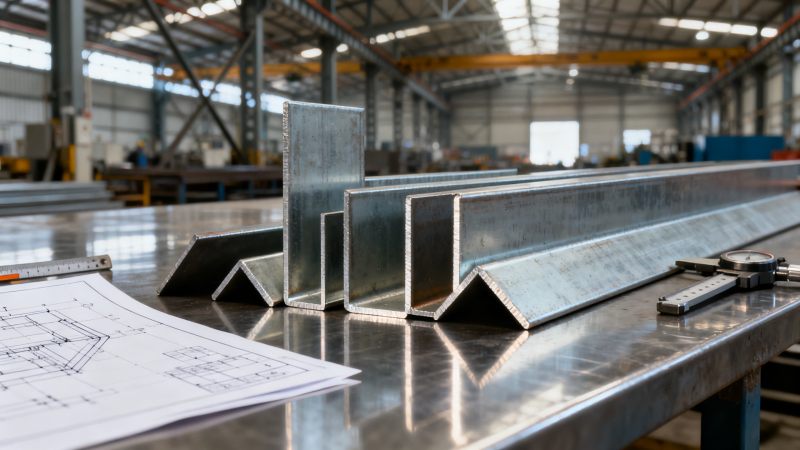
L angle steel dimensions vary significantly across global standards, affecting load-bearing capacity and compatibility. The most common specifications include:
For projects requiring corrosion resistance, galvanized steel options like Gi Sheet Coil with zinc coatings of 60-275g/m² provide additional protection while maintaining structural integrity. The DX52D and SGCD1 models are particularly suitable for building processing applications where both strength and corrosion resistance are critical.
How to Select L Angle Steel Dimensions for Structural Applications
Technical evaluators should consider three primary factors when specifying angle steel dimensions:
- Load requirements: Thicker sections (6-25mm) handle higher static and dynamic loads
- Connection methods: Welding requires minimum 4mm thickness for proper penetration
- Space constraints: Compact designs often use 30-50mm leg lengths
Common Dimension Mistakes in Structural Design
Our engineering team frequently encounters these dimension-related errors in project specifications:
- Underestimating torsion requirements in unequal leg angles
- Ignoring standard mill tolerances (±1-2mm on leg lengths)
- Mixing metric and imperial dimensions in international projects
Manufacturing Tolerances for L Angle Steel Dimensions
Hongteng Fengda maintains tighter tolerances than standard requirements for critical applications:
Frequently Asked Questions About L Angle Steel Dimensions
How do I convert between different standard dimensions?
For ASTM to EN conversions, multiply imperial dimensions by 25.4 for millimeter equivalents. However, always consult standard cross-reference charts as some sizes don't have direct equivalents. Our engineering team provides conversion services for complex projects.
What's the minimum radius for bent angle steel?
The bending radius depends on thickness - typically 2-3 times the material thickness for standard carbon steel. For 5mm thick angle steel, maintain at least 10-15mm inner radius to prevent cracking.
How does dimension affect welding performance?
Thinner sections (3-5mm) require lower heat input to prevent warping, while thicker sections (12mm+) need preheating for proper fusion. Our Gi Sheet Coil products with 140-300 MPa yield strength offer excellent weldability across various thicknesses.
Custom Dimension Solutions for Specialized Applications
Hongteng Fengda's OEM capabilities include:
- Non-standard leg length ratios (up to 3:1 difference)
- Precision-cut lengths with ±1mm accuracy
- Special thickness transitions for tapered applications
For projects requiring exact dimension matching to existing structures, we provide sample matching services with 3D scanning verification.
Request Expert Dimension Consultation
Our structural steel specialists can help with:
- Standard vs. custom dimension cost-benefit analysis
- Load calculation verification for your specific dimensions
- Multi-standard compliance assessments
- Prototype development for non-standard applications
Contact our engineering team with your project drawings or specifications for dimension-specific recommendations and lead time estimates.
Please give us a message


Please enter what you want to find