Selecting kitchen stainless steel sheeting that meets NSF/ANSI 2 isn’t just about material grade—it hinges on precise surface finish (e.g., #4 or BA), minimum thickness (typically ≥0.9mm), and fully deburred, radius-edged treatment to prevent contamination. Whether you’re a procurement officer comparing stainless steel plate prices, a project manager specifying stainless steel angle plate for food-grade installations, or a quality assurance specialist verifying compliance, understanding these technical thresholds is critical. As a trusted stainless steel plate manufacturer and exporter from China, Hongteng Fengda supplies NSF-compliant cold rolled stainless steel coil, hot rolled stainless coil, and 310s stainless steel strip—engineered for hygiene, durability, and global regulatory alignment.
Why Surface Finish Determines Cleanability—and Why #4 Isn’t Always Enough
NSF/ANSI 2 explicitly requires surfaces that are “non-porous, smooth, corrosion-resistant, and easily cleanable.” That means finish type directly impacts microbial retention risk—not just aesthetics. A standard #4 brushed finish (Ra ≤ 0.8 µm) is widely accepted, but only when paired with proper post-fabrication passivation and electropolishing verification. In high-moisture, high-fat environments like commercial fry stations, even minor micro-roughness (>0.5 µm Ra) can trap biofilm precursors.
BA (Bright Annealed) finishes offer superior uniformity (Ra ≈ 0.1–0.3 µm) and are increasingly specified for NSF-critical zones—especially where automated CIP (Clean-in-Place) systems operate. However, BA sheets require tighter handling protocols: scratches during installation or welding spatter can locally degrade corrosion resistance, triggering noncompliance during third-party audit.
Hongteng Fengda’s cold-rolled stainless steel coil undergoes final annealing in controlled hydrogen-nitrogen atmospheres, achieving consistent BA surface integrity across widths up to 1500 mm—verified via profilometer testing per ASTM E1057. This ensures repeatable Ra values within ±0.05 µm tolerance across production lots.
Thickness & Edge Treatment: Where Structural Integrity Meets Hygienic Design
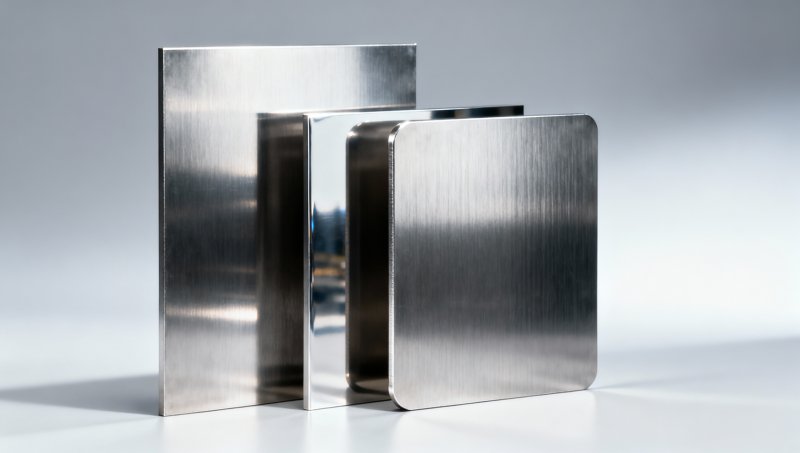
Minimum thickness isn’t arbitrary—it’s tied to deformation resistance under thermal cycling and mechanical stress. NSF/ANSI 2 doesn’t prescribe an absolute minimum, but industry best practice mandates ≥0.9 mm for wall cladding and ≥1.2 mm for worktops and splashbacks. Thinner gauges (<0.7 mm) risk denting during cleaning, creating crevices that evade sanitizers.
Edge treatment is equally non-negotiable. Sharp cut edges—even on 1.5 mm sheets—create micro-gaps at weld joints and harbor pathogens. Fully radius-edged (R ≥ 1.5 mm) or double-beveled edges eliminate this risk. Our precision slitting lines apply CNC-controlled edge radiusing before packaging, reducing field rework by up to 70% for OEM fabricators.
For structural integration—such as mounting brackets or support frames—I-beam components must align with the same hygiene logic. We supply Q235 and S235J2 I-beam sections with pre-rounded flange edges (R ≥ 2.0 mm) and shot-blasted surfaces—ensuring seamless compatibility with stainless sheeting systems in food processing facilities.
Critical Dimensional Tolerances for NSF-Compliant Fabrication
Dimensional stability affects both fit-up accuracy and long-term hygiene performance. Below are verified tolerances applied to our NSF-aligned stainless sheeting and supporting structural elements:
These tolerances ensure seamless integration between sheeting and load-bearing components—reducing gasket compression variance and preventing gap formation over time. For projects requiring traceability, we provide mill test reports (MTRs) with every shipment, including surface roughness logs and edge geometry validation.
How Global Buyers Verify Compliance—Without Delaying Procurement
Procurement teams often face a dilemma: request full NSF certification (costly, 6–10 weeks), or rely on supplier declarations (high risk). The pragmatic path lies in tiered verification. First, confirm raw material compliance: 304 or 316 stainless steel must meet ASTM A240/A480 with certified Cr/Ni/Mo ratios and intergranular corrosion test results (ASTM A262 Practice E).
Second, validate fabrication controls: all cutting, bending, and welding must follow ANSI/AWS D1.6 and include post-weld pickling/passivation per ASTM A967. At Hongteng Fengda, every coil batch undergoes in-line eddy current testing, and finished sheets receive visual inspection under 1000-lux lighting with 30° oblique angles to detect micro-scratches or roll marks.
Third, require documented evidence—not just statements. We issue compliance dossiers containing: (1) MTRs with heat numbers, (2) surface roughness certificates (per ISO 4287), (3) edge radius measurement reports, and (4) passivation verification records. These enable faster internal QA sign-off and reduce third-party audit prep time by 40–60%.
Why Global Project Teams Choose Hongteng Fengda for NSF-Critical Steel Supply
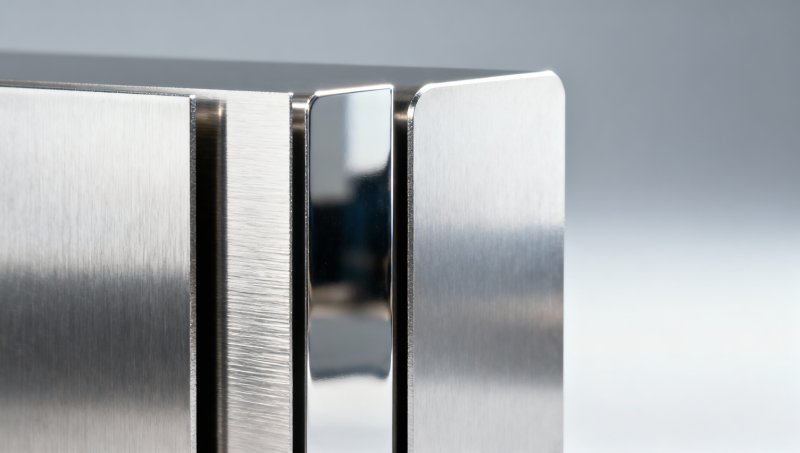
You need more than compliant material—you need predictable execution. As a structural steel manufacturer and exporter from China, Hongteng Fengda delivers certified stainless sheeting and supporting structural components—including I-beam—with zero compromise on hygiene-critical parameters. Our integrated production line handles everything from coil annealing to edge radiusing, eliminating handoff risks between suppliers.
We serve clients across North America, Europe, and Southeast Asia with stable lead times: standard stainless sheeting shipments within 15–25 days; custom-cut, radius-edged panels in 22–30 days. All products comply with ASTM, EN, JIS, and GB standards—and we support your certification process with dedicated documentation packages, sample submission support, and joint review sessions with your QA team.
Ready to align your next food-grade steel specification with real-world manufacturability? Contact us to request: (1) surface finish test reports for your target Ra value, (2) dimensional tolerance validation for your panel size, (3) lead time confirmation for your order volume, or (4) OEM co-engineering support for integrated sheet-and-structure assemblies.
Please give us a message


Please enter what you want to find