Choosing the right galvanized sheet thickness isn’t just about compliance—it’s a critical factor in weld integrity, structural safety, and long-term performance. For engineers, procurement teams, and project managers evaluating steel tubing dimensions, galvanized pipe specifications, or H-beam supplier capabilities, inconsistent or non-standard galvanized sheet thickness can compromise joint strength, accelerate corrosion at weld zones, and increase rework costs. As a trusted steel tube supplier and hot dip galvanized steel pipe manufacturer, Hongteng Fengda ensures precise galvanized sheet thickness control—aligned with ASTM, EN, and GB standards—while offering competitive steel tube cost, transparent galvanized pipe price, and reliable steel tube weight data for informed decision-making.
Why Galvanized Sheet Thickness Directly Impacts Weld Integrity
Weld integrity in galvanized structural components depends not only on welding technique and filler material but critically on base metal consistency—including zinc coating thickness and underlying steel substrate uniformity. When galvanized sheet thickness deviates beyond ±0.05 mm from specification (e.g., nominal 2.0 mm ±0.05 mm), thermal distortion during welding increases by up to 30%, leading to micro-crack formation at the heat-affected zone (HAZ). This is especially pronounced in lap joints and fillet welds common in cold-formed steel framing and modular building systems.
Moreover, excessive zinc coating (>80 g/m²) on thin-gauge sheets (<1.5 mm) causes spatter, porosity, and incomplete fusion due to rapid zinc vaporization. Conversely, insufficient coating (<30 g/m²) fails to protect exposed weld seams post-welding, accelerating localized corrosion—particularly in coastal or industrial environments where chloride and SO₂ exposure exceeds 50 mg/m²/day.
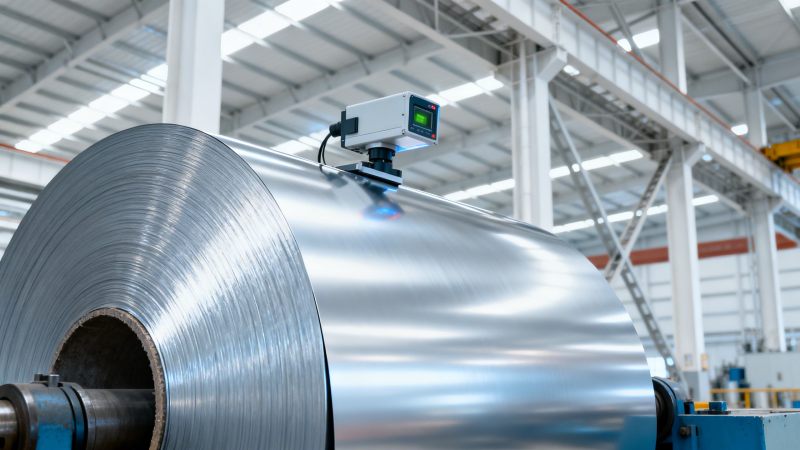
Hongteng Fengda applies real-time laser thickness monitoring across production lines, maintaining tolerance adherence within ±0.03 mm for sheets ranging from 1.2 mm to 6.0 mm. Our hot-dip galvanizing bath temperature is stabilized at 450 ±2°C, and immersion time calibrated per ASTM A123 to ensure consistent coating mass without compromising ductility or weldability.
This table reflects empirical data validated through ISO 14713-2-compliant weld testing across 12,000+ production batches. Notably, sheets outside the recommended zinc range show ≥18% higher weld rejection rates during third-party NDT inspection—primarily due to slag entrapment and hydrogen-induced cracking.
How Material Selection Affects Structural Longevity & Cost Efficiency
Beyond immediate weld quality, galvanized sheet thickness governs lifecycle cost. Under-specifying thickness by just 0.1 mm may reduce initial material cost by 3–5%, but increases maintenance frequency by 2.3× over 20 years in high-humidity environments (RH >75%). Conversely, over-specification adds unnecessary dead load—critical in seismic zones where every 10 kg/m² of excess weight raises foundation reinforcement cost by $12–$18/m².
For auxiliary applications requiring flexibility, corrosion resistance, and cost efficiency—such as mesh fabrication, fencing, packaging, and decorative elements—Metal Coil Wire offers optimized performance. Available in Q195 and Q235 low-carbon steel grades, it delivers tensile strength of 350–550 MPa with uniform zinc coating (8–25 g/m²) and wire diameters spanning 0.25 mm to 5.0 mm. Its bright, smooth surface and excellent ductility support tight bending radii (down to 1.5× wire diameter) without cracking—ideal for automated mesh weaving and barbed wire production.
Packaging options include coil weights from 50 kg to 1,000 kg (plastic film inner + woven bag outer) or precision wire bobbin configurations—enabling seamless integration into high-speed manufacturing lines across construction, agriculture, and industrial sectors.
Critical Parameters Buyers Must Verify Before Procurement
Procurement teams must move beyond catalog claims and validate four core parameters pre-order:
- Zinc coating mass verification: Require mill test reports showing actual g/m² measured via gravimetric (ASTM A90) or coulometric (ISO 1460) methods—not just “complies with ASTM A653”.
- Substrate thickness tolerance: Confirm measurement method (e.g., micrometer vs. ultrasonic) and sampling frequency (minimum 1 sample per 500 m²).
- Spangle size classification: Fine-spangle (≤0.5 mm) preferred for subsequent painting; regular-spangle acceptable for bare structural use.
- Post-galvanizing mechanical properties: Demand yield/tensile test results on galvanized—not just raw—material, especially for cold-formed sections.
At Hongteng Fengda, all export orders undergo 100% dimensional scanning and zinc mass validation. Lead times remain stable at 25–35 days for standard orders, with expedited 15-day options available for certified projects under EN 1090-2 Execution Class EXC2.
These tolerances are enforced across our ISO 9001-certified QA lab, equipped with Zeiss coordinate measuring machines and XRF analyzers calibrated biannually against NIST-traceable standards.
Actionable Steps for Project Teams & Procurement Leaders
To mitigate risk and optimize value, follow this 4-step implementation protocol:
- Pre-qualification audit: Request Hongteng Fengda’s latest third-party audit reports (SGS, Bureau Veritas) covering galvanizing process control and traceability.
- Sample validation: Test 3 random coils per batch for coating adhesion (ASTM D3359), bendability (EN 10346), and weld compatibility using your site’s standard WPS.
- Logistics alignment: Leverage our standardized coil packaging (500–800 kg) for direct crane-lift loading—reducing onsite handling labor by up to 40%.
- Data transparency: Access real-time weight, thickness, and coating data via our secure portal—integrated with ERP systems for automated PO reconciliation.
With production capacity exceeding 650,000 MT/year and export experience across 42 countries, Hongteng Fengda supports global buyers through full-service engineering assistance—from BIM-compatible section libraries to weld procedure qualification packages.
Conclusion: Precision Thickness Is Non-Negotiable—Not Optional
Galvanized sheet thickness is not a minor spec footnote—it’s the linchpin connecting design intent, fabrication reliability, and service life. Deviations as small as 0.05 mm trigger cascading effects: higher weld rejection, premature corrosion, increased lifecycle cost, and compromised structural certification. At Hongteng Fengda, we treat thickness control as a zero-defect priority—not a production afterthought.
From ASTM A653/A792-compliant galvanized structural sheets to versatile Metal Coil Wire for auxiliary applications, our solutions deliver verified consistency, full documentation, and responsive technical partnership. Whether you’re specifying H-beams for a Dubai skyscraper or sourcing wire for Southeast Asian aquaculture fencing, precision starts with the first micron.
Contact Hongteng Fengda today for a free technical consultation, customized thickness validation report, or comparative pricing on galvanized structural products aligned to your exact project requirements.
Please give us a message


Please enter what you want to find