Prefab structural steel is widely viewed as a faster route to project completion, yet speed alone is not enough. Installation crews still face lifting hazards, fit-up errors, sequencing conflicts, and weather exposure. When prefab structural steel is produced with strict dimensional control, documented material compliance, and reliable shipping coordination, it can reduce site congestion and shorten erection time without increasing risk across industrial and commercial steel construction.
Why prefab structural steel needs a checklist-based decision
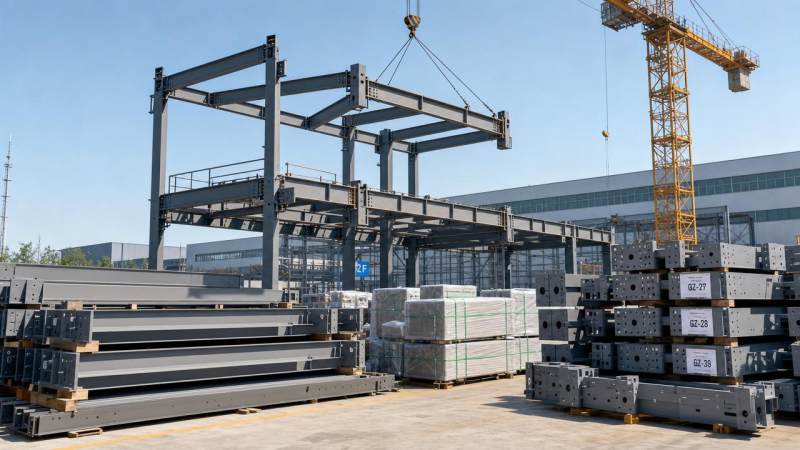
Prefab structural steel affects more than fabrication speed. It changes how materials arrive, how cranes are scheduled, how bolt-up proceeds, and how tolerances are managed from shop to site.
A checklist helps compare promised efficiency against real execution conditions. It also prevents a common mistake: assuming factory work automatically removes site risk, even when detailing, transport, and installation planning remain weak.
In steel projects, faster erection is usually achieved by reducing field cutting, field welding, and unplanned handling. That advantage only holds when every upstream step supports the site sequence.
Core checklist for using prefab structural steel safely and quickly
- Verify design freeze before production, because late drawing revisions can erase prefab structural steel time savings and create rework, replacement delays, or unsafe temporary fixes on site.
- Confirm material grades, standards, and certificates early, including ASTM, EN, JIS, or GB compliance, so structural members match engineering requirements and cross-border documentation checks.
- Check fabrication tolerances in advance, especially hole positioning, camber, length, and connection geometry, since small shop deviations can slow bolt alignment and increase lifting exposure.
- Plan transport packaging by erection sequence, not only by shipping convenience, to avoid excessive site reshuffling, double handling, and crane downtime after delivery.
- Review connection strategy carefully, including bolted joints, pre-assembly needs, and field weld limits, because connection complexity often determines whether prefab structural steel installs smoothly.
- Coordinate lifting points, member weights, and crane capacity before dispatch, ensuring each bundle and component can be handled safely under actual site access and weather conditions.
- Inspect coating, galvanizing, edge condition, and surface damage risks, since corrosion protection failures can trigger repair work that delays erection and increases hot-work hazards.
- Match production lead times with foundation readiness and anchor bolt survey results, because early steel arrival can create storage damage, while late delivery disrupts the full project sequence.
- Require traceable quality control records, including dimensional checks and weld inspection, so any issue can be isolated quickly without stopping the broader structural steel installation plan.
- Prepare a site handover checklist covering unloading zones, access roads, laydown areas, and erection priorities, keeping prefab structural steel benefits visible during real construction conditions.
How speed and site risk change in different steel applications
Industrial workshops and production buildings
In large workshops, prefab structural steel often brings the biggest schedule advantage. Repetitive frames, predictable spans, and standardized connections reduce field work and simplify crane planning.
Risk rises when equipment foundations, embedded parts, or process layouts change after fabrication starts. In these projects, coordination between civil and steel packages matters as much as steel quality.
Commercial buildings and mixed-use structures
Commercial projects benefit from prefab structural steel when tight urban schedules limit storage and site labor. Faster steel erection can also open earlier access for decking, cladding, and MEP trades.
However, denser connection zones and architectural interfaces create tolerance pressure. Shop accuracy, marking clarity, and sequence-based packing become essential to maintain safe installation flow.
Light roofs, purlins, and secondary steel systems
Secondary members can strongly influence overall productivity. For purlins, wall beams, brackets, and lightweight roof structures, standardized cold formed or shaped members reduce cutting and improve repeatability.
A practical example is Z-beam, used in steel structure construction purlin systems, wall beams, lightweight roofs, brackets, mechanical columns, and light manufacturing beams. Available in Q235B, Q345B, S275, S355, A36, A572 and other grades, with thickness 6-25mm, length 2~12m or customized, and ±1% tolerance, this profile supports predictable fit-up. Options such as perforated, galvanized coated, mill edge, and slit edge help align factory processing with site conditions.
When such secondary steel follows recognized processing control, including standards like GB50018-2002, site crews spend less time modifying members in the air. That directly improves both speed and installation safety.
Commonly overlooked issues that can erase prefab structural steel advantages
Ignoring anchor bolt survey accuracy
Even well-made steel cannot install efficiently on misaligned foundations. Early survey verification prevents slotting, forced fit, and unsafe temporary support measures during frame erection.
Treating logistics as separate from fabrication
Prefab structural steel loses value when bundles arrive out of sequence or without clear identification. Shipping plans should follow erection logic, not only container loading efficiency.
Underestimating site access constraints
Road width, turning radius, unloading space, and crane setup areas can all limit member size. Oversized fabrication may appear efficient in the factory but create delays at delivery.
Assuming all quality issues are visible on arrival
Dimensional errors, coating damage, or missing accessories may only appear during assembly. Pre-dispatch inspection records and clear packing lists reduce costly surprises in the field.
Overlooking compatibility between primary and secondary steel
Connection holes, support spacing, and cladding interfaces must align across the whole package. A fast primary frame still slows down if secondary members require manual adjustment.
Practical execution steps for better results
- Lock final drawings before steel cutting and link revision control to purchasing, fabrication, and shipping teams.
- Request mill certificates, inspection reports, and dimensional records together with production progress updates.
- Break shipments into erection zones, labeling each component to match site installation order.
- Review member weight, lifting lugs, and temporary stability measures with actual crane and rigging limitations.
- Protect galvanized or coated surfaces during transport and unloading to avoid repair work at height.
- Use suppliers with stable production capacity, customization ability, and familiarity with international standards.
For global steel sourcing, dependable manufacturing matters as much as competitive pricing. Hongteng Fengda, a structural steel manufacturer and exporter from China, supplies angle steel, channel steel, steel beams, cold formed steel profiles, and customized structural components for international construction and industrial projects. With modern facilities, strict quality control, and compliance with ASTM, EN, JIS, and GB standards, consistent prefab execution becomes easier to achieve.
Conclusion: faster is realistic when control starts before the site
Yes, prefab structural steel can be faster without raising site risk, but only when design control, fabrication accuracy, logistics planning, and installation sequencing work together. Speed comes from removing uncertainty, not from moving problems from the factory to the jobsite.
The best next step is to review each project through a simple checklist: standards, tolerances, transport, sequence, lifting, and inspection. When those items are managed early, prefab structural steel supports safer, cleaner, and more predictable construction delivery.
Please give us a message


Please enter what you want to find