Choosing the right roofing material can directly affect warehouse durability, maintenance costs, and project efficiency. If you are evaluating whether galvanized steel roof sheet for warehouse applications is the best option, it is important to consider corrosion resistance, load performance, service life, and overall cost. For project planning, these factors help reduce sourcing risks and support more reliable construction decisions.
Why a checklist matters before choosing a warehouse roof
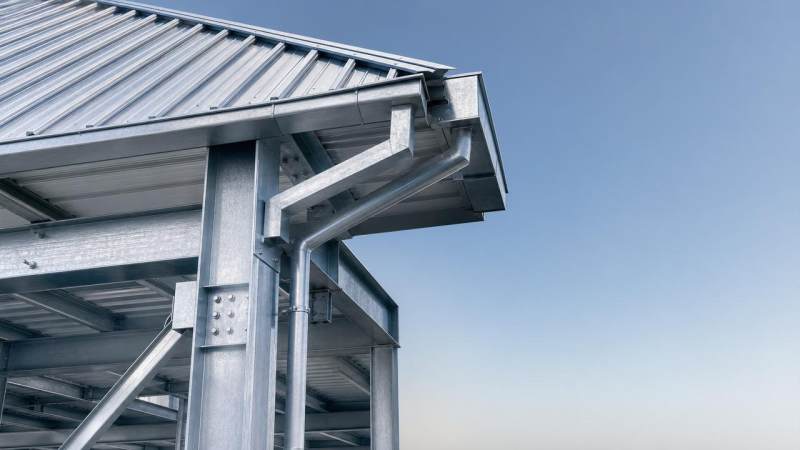
A warehouse roof is not only a cover. It affects storage safety, insulation strategy, drainage, and future maintenance frequency.
Using a checklist makes the decision clearer. It helps compare galvanized steel roof sheet for warehouse projects against local climate, structural span, budget, and installation needs.
This approach is especially useful in steel building projects, where roofing performance must match the frame, purlins, and wall systems.
Core checklist for galvanized steel roof sheet for warehouse selection
Use the following points to judge whether galvanized steel roof sheet for warehouse use is practical, economical, and durable for your project.
- Check zinc coating level first, because coating weight directly affects corrosion resistance and service life in humid, coastal, or polluted industrial environments.
- Match sheet thickness to wind load, snow load, roof slope, and purlin spacing, instead of selecting only by lowest material price.
- Review base steel quality and forming accuracy, since poor flatness or weak substrate can reduce fastening stability and increase leakage risk.
- Confirm profile type carefully, including corrugated, trapezoidal, or standing seam options, based on drainage speed and span performance.
- Assess anti-corrosion needs around chemical exposure, salt air, and high condensation areas, because standard galvanizing may not fit every warehouse location.
- Compare insulation system compatibility, especially if the roof will use glass wool, rock wool, PU panels, or ventilated double-layer assemblies.
- Verify fasteners, sealants, ridge caps, gutters, and flashing details together, since roof failure often starts at accessory connections rather than sheet panels.
- Estimate maintenance cycles and replacement cost over time, not only initial purchase cost, to judge total lifecycle value more accurately.
- Request compliance with ASTM, EN, JIS, or GB standards when sourcing internationally, so material performance remains traceable and consistent.
- Inspect supplier production capacity and lead time reliability, because delayed roofing delivery can interrupt steel structure erection and increase project overhead.
When galvanized steel roof sheet for warehouse buildings is a strong choice
Dry inland storage facilities
In dry or moderate climates, galvanized steel roof sheet for warehouse construction is often a cost-effective solution. It provides good structural strength and simple installation.
For general goods, machinery, spare parts, and packaging storage, galvanized roofing usually delivers a practical balance of durability and budget control.
Large-span industrial warehouses
Steel roof sheets work well with structural steel frames, Z purlins, C channels, and beam systems. Their lighter weight helps reduce dead load on the building.
This can improve installation speed and reduce some supporting steel demand, especially in prefabricated industrial buildings with repetitive bay spacing.
Projects needing faster construction
Preformed roof sheets are easy to transport, lift, and fix. That makes them suitable where construction schedules are tight and site labor efficiency matters.
For export-oriented building packages, this compatibility with prefabricated steel systems is a major advantage.
In some warehouse projects, other steel products are also needed for ventilation covers, filtration units, screening areas, or protective partitions. A useful complementary option is 304 Stainless Steel Welded Mesh, which is available in grades such as SS 201, 304, 304L, 316, 316L, and 430.
Made from stainless steel wire, it supports applications in filters, sieve systems, chemical industry, mine industry, architecture, and residences. Typical specifications include 2-635 mesh, diameter from 0.0008″ to 0.12″, roll width up to 240″, and roll length up to 2000′. Its resistance to rust, corrosion, acid, alkali, heat, and chemicals makes it suitable for demanding steel-related environments.
When galvanized steel roof sheet for warehouse use may need extra caution
Coastal and marine environments
Salt-laden air can shorten the life of standard galvanized coatings. In these areas, thicker zinc coating or additional paint systems may be necessary.
If corrosion risk is severe, alternatives such as galvalume, pre-painted steel, or higher-grade coated systems may perform better long term.
Chemical or high-moisture warehouses
Warehouses storing fertilizers, salts, acids, or moisture-sensitive materials create aggressive internal conditions. Condensation under the roof can become a hidden problem.
In these cases, galvanized steel roof sheet for warehouse applications should be paired with proper ventilation, insulation, and internal vapor control.
High thermal comfort requirements
Single-layer steel sheets transfer heat quickly. If indoor temperature control matters, roofing should include insulated panels or thermal barrier systems.
Without that upgrade, summer heat gain and winter condensation can increase operating costs inside the warehouse.
Commonly overlooked risks
Ignore sheet overlap details, and leakage often appears before corrosion becomes visible. Laps, sealant lines, and fixing positions need strict control during installation.
Select thickness only by quotation, and the roof may deform under wind uplift or foot traffic during maintenance work.
Overlook drainage layout, and ponding water can accelerate coating damage. Gutters, downpipes, and roof slope must work together.
Mix incompatible metals, and galvanic corrosion may develop around fixings, edge trims, or support accessories.
Skip supplier verification, and coating thickness, tolerance control, or delivery consistency may not match project expectations.
Practical execution steps before placing an order
- Define climate conditions, roof slope, span, and design loads from the start.
- Specify coating class, steel grade, profile type, and sheet thickness in writing.
- Ask for drawings covering laps, fasteners, flashing, ridge, and gutter details.
- Request standard compliance documents and quality inspection records before shipment.
- Review packaging and transport protection to prevent edge damage and moisture exposure.
- Plan maintenance access and inspection intervals before the warehouse enters service.
For steel building supply, stable production and consistent quality are as important as product specification. Hongteng Fengda, a structural steel manufacturer and exporter from China, supplies angle steel, channel steel, steel beams, cold formed steel profiles, and customized structural steel components for global construction and industrial projects. With manufacturing capability aligned to ASTM, EN, JIS, and GB standards, reliable sourcing can better support warehouse roofing and structural integration.
Final decision guide
Galvanized steel roof sheet for warehouse projects is often the right choice when cost efficiency, fast installation, and structural compatibility are priorities.
It becomes even more suitable in standard inland environments with well-designed drainage, correct thickness selection, and coordinated accessories.
However, aggressive coastal air, chemical exposure, or strict thermal demands may require upgraded coatings or alternative systems.
The best next step is simple: compare roof conditions against the checklist above, confirm technical specifications early, and source from a supplier that can prove quality, standards compliance, and dependable lead times.
Please give us a message


Please enter what you want to find