Is acero galvanizado para exterior suitable for coastal architecture without additional coating?
Short answer: Yes — but only if the hot-dip galvanizing meets strict, verified thickness and quality criteria for marine exposure. For project managers overseeing coastal buildings in regions like the Mediterranean, Gulf Coast, or Southeast Asia, assuming “galvanized = ready for salt air” is one of the most common—and costly—misjudgments in structural steel specification.
Hot-dip galvanized steel is routinely specified for exterior use. But coastal architecture isn’t just “outside.” It’s a high-salinity, high-humidity, UV-intensified environment where chloride deposition accelerates zinc consumption, and where localized pitting can initiate corrosion beneath seemingly intact coatings. The real question isn’t whether galvanizing works—it’s whether the specific galvanizing applied delivers sufficient barrier life under those conditions, and whether its performance can be reliably verified before installation.
Zinc thickness isn’t optional—it’s the durability clock
Galvanizing protects steel through two mechanisms: barrier protection (zinc physically isolating the base metal) and cathodic protection (zinc sacrificially corroding ahead of steel). In coastal settings, cathodic protection is especially valuable at cut edges, scratches, or weld zones—but it only lasts as long as there’s enough zinc remaining to act as an anode.
That’s why zinc coating thickness is not a secondary spec—it’s the primary predictor of service life. ISO 1461 sets minimum average thicknesses for hot-dip galvanizing: 85 µm for steel >6 mm thick, 70 µm for 3–6 mm, and 55 µm for <3 mm. These are minimums, and they assume moderate exposure. For coastal applications, international best practice—reflected in ASTM A123 and EN ISO 1461 Annex A—recommends exceeding those minimums by 20–40%, particularly for structural sections exposed to direct salt spray (e.g., façade framing, roof supports, bracing members).
Yet field audits consistently show that up to 30% of galvanized structural components delivered to coastal projects fall short of required thickness—even when mill certificates claim compliance. Why? Because thickness varies across complex shapes (angles, channels, beams), and many suppliers measure only on flat, accessible surfaces—not on inside corners, web-to-flange junctions, or bolt holes. Without third-party verification per ISO 1461 Annex B (magnetic induction + cross-section microscopy), thickness claims remain theoretical.
Where “acero galvanizado para exterior” often falls short
The phrase itself—common in Latin American and Spanish-speaking procurement contexts—typically signals intent, not specification. It’s frequently used on tender documents without referencing standards, minimum thickness, surface preparation (e.g., blast cleaning to Sa 2.5 before galvanizing), or post-galvanizing inspection protocols. That ambiguity creates risk at three stages:
- At sourcing: Suppliers may apply thinner, cheaper galvanizing—especially on heavy sections where zinc adhesion is harder to control—and still label it “para exterior.”
- At site delivery: No thickness verification means no recourse if premature white rust or red rust appears within 18 months.
- At handover: Warranty disputes arise when corrosion initiates at weld zones or mechanical damage—areas where thin or uneven coating leaves steel vulnerable.
This isn’t hypothetical. We’ve seen coastal resort structures in the Caribbean require full re-galvanizing of roof trusses after four years—not due to poor steel grade, but because initial coating averaged only 62 µm on channel flanges and dropped to 41 µm in web corners. The same design, with verified 95+ µm coating, would have easily achieved 25+ years in that environment.
When a topcoat isn’t “extra”—it’s essential engineering
So is additional coating always necessary? Not categorically—but it becomes strongly advisable under specific conditions:
- Structural elements within 500 m of breaking surf, where airborne chloride concentration exceeds 200 mg/m²/day (per ISO 9223 classification C5-M);
- Components with complex geometry (e.g., welded lattices, bolted connections with overlapping plates) where zinc coverage is inherently inconsistent;
- Projects requiring >30-year service life with minimal maintenance—where even robust galvanizing will deplete over time, and a compatible epoxy or polyurethane topcoat extends functional life by 15–20 years;
- Architecturally exposed elements where aesthetic consistency matters—since galvanizing alone can develop spotty oxidation or color variation in humid salt air.
A topcoat isn’t about masking weakness—it’s about adding a second, chemically resistant barrier that slows zinc depletion and shields against UV degradation of the zinc-iron alloy layer. When properly specified (e.g., zinc-rich primer + mid-coat + UV-stable finish), it transforms galvanizing from a standalone solution into a hybrid system engineered for longevity.
Practical steps for project managers
You don’t need to become a metallurgist—but you do need to shift from accepting “galvanized” as a noun to treating it as a process with measurable outputs. Here’s what to enforce in specs and contracts:
- Require thickness verification per ISO 1461 Annex B—not just mill reports. Specify minimums: e.g., “≥95 µm average on flanges, ≥80 µm on webs, with no single reading below 70 µm.”
- Specify pre-galvanizing surface prep: Blast cleaning to Sa 2.5, with profile depth 50–85 µm, documented via certified第三方 report.
- Define inspection points: Require thickness checks on 3 representative pieces per batch—and include inaccessible areas (e.g., inside channel legs, behind stiffeners).
- Clarify responsibility for damage repair: Define acceptable field repair methods (e.g., zinc-rich paint meeting ASTM D6386) and maximum allowable repaired area per component.
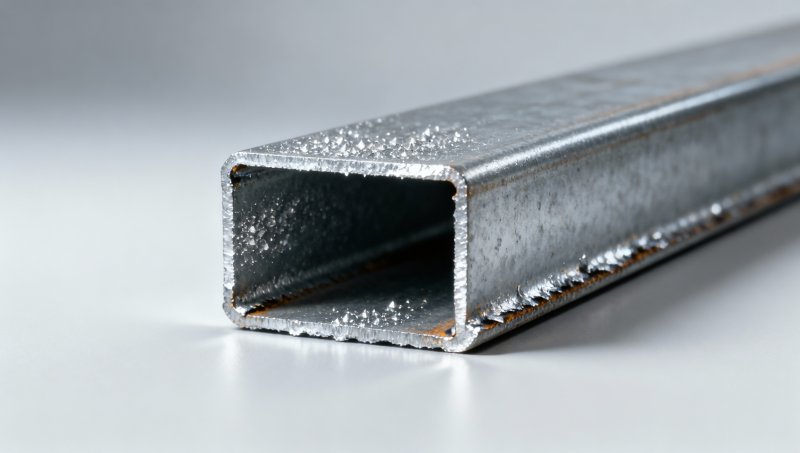
For applications where structural integrity and long-term appearance are both critical—such as coastal pedestrian bridges, seaside cultural centers, or elevated walkways—a hybrid approach often proves most cost-effective over lifecycle. Consider Galv Steel Tube with verified 90+ µm zinc and optional factory-applied primer—designed for construction industry use where corrosion resistance and dimensional reliability intersect.
Ultimately, the decision isn’t “galvanized vs. coated.” It’s whether your galvanizing is engineered for the environment—or merely labeled for it. In coastal architecture, that distinction doesn’t emerge in the specification document. It emerges in year seven, when the first rust streak appears down a column—and the warranty claim hinges entirely on what was measured, not what was promised.
Please give us a message


Please enter what you want to find