Is AZ150 Galvalume Suitable for Roofing in Highly Corrosive Industrial Atmospheres?
Yes — when properly specified, installed, and maintained, AZ150 Galvalume steel is not only suitable but often the *optimal* roofing material for highly corrosive industrial environments. As a project manager overseeing chemical processing plants, coastal oil refineries, pulp & paper mills, or wastewater treatment facilities, your top priorities are safety, service life, lifecycle cost control, and minimal unplanned downtime. AZ150 Galvalume delivers measurable advantages over standard galvanized (G90) or painted metal roofing — particularly in atmospheres laden with sulfur dioxide (SO₂), chlorides, ammonia, or acidic condensates.
At Hongteng Fengda, we supply ASTM A792/A792M and EN 10346-compliant AZ150 Galvalume coils and sheets to infrastructure teams across North America, the Middle East, and Southeast Asia. Our production adheres to strict process controls: continuous hot-dip coating with a precisely balanced 55% Al–43.4% Zn–1.6% Si alloy, followed by tension-leveling and surface passivation to ensure uniform adhesion and formability. This isn’t generic coated steel — it’s engineered for mission-critical performance.
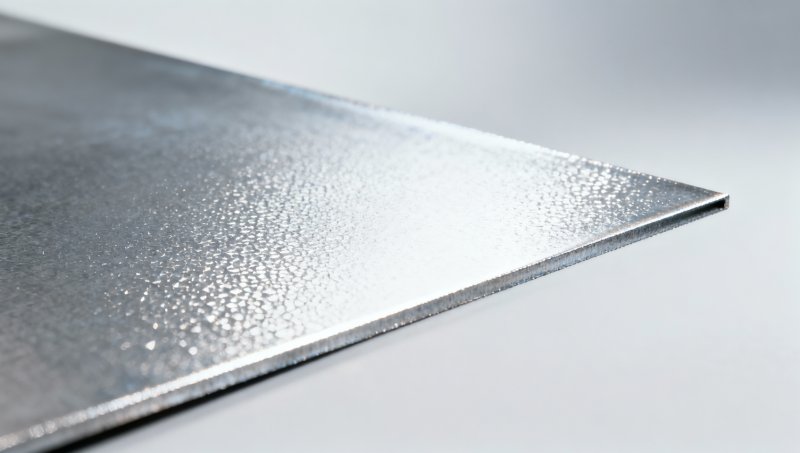
Why AZ150 Outperforms Standard Galvanized Steel in Aggressive Environments
The key lies in the metallurgy — not just the coating weight. While “AZ150” denotes a minimum coating mass of 150 g/m² (75 g/m² per side), the aluminum-rich matrix fundamentally changes corrosion behavior. Aluminum forms a dense, self-healing oxide layer (Al₂O₃) that resists acid rain, industrial fallout, and chloride penetration far better than zinc’s porous zinc hydroxide barrier. In accelerated salt-spray testing (ASTM B117), AZ150 typically achieves 2–4× the time-to-first-red-rust versus G90 galvanized steel under identical exposure conditions.
More importantly, real-world field data from refineries in Jubail (Saudi Arabia) and chemical parks in Jiangsu (China) shows AZ150 roofs maintaining structural integrity and aesthetic continuity beyond 25 years — even where adjacent G90 roofs required full replacement at year 12. That translates directly into reduced O&M budgets, fewer hazardous roof-access interventions, and predictable capital planning.
Critical Design & Specification Considerations for Project Managers
Performance hinges on correct specification — not just material selection. First, confirm substrate grade: use ASTM A653 Grade 55 (or EN 10346 S350GD+) for optimal strength-to-weight ratio and deep-draw formability in standing-seam systems. Second, insist on *full hard temper* (not soft temper) for roofing panels — it improves dent resistance during handling and wind uplift performance. Third, verify edge protection: cut edges must be sealed with compatible aluminum-zinc rich primer or overlapped ≥1.5” to prevent undercutting corrosion.
Avoid common oversights: specifying AZ150 on low-slope roofs (<3:12) without secondary drainage provisions; using incompatible fasteners (e.g., uncoated carbon steel screws); or installing without proper thermal break details in high-heat zones. These aren’t minor details — they’re failure vectors that negate the coating’s inherent advantage.
How Hongteng Fengda Supports Your Project Execution
We go beyond supply. As a structural steel manufacturer with ISO 9001-certified quality management and in-house metallurgical lab verification, we provide mill test reports (MTRs) traceable to batch, coating thickness verification via XRF, and third-party inspection support (SGS, BV, TÜV). For complex projects, our engineering team collaborates on panel profile optimization, clip design validation, and wind-load certified substructure integration — ensuring compliance with ASCE 7, Eurocode 1, or GB 50009.
Our stable production capacity ensures consistent lead times — critical when coordinating roofing with crane schedules and civil works. And because we manufacture both primary structural members (like 45# Carbon Steel Round Bar) and cladding solutions, we help streamline procurement, reduce vendor fragmentation, and align QA/QC protocols across the steel package.
When AZ150 Galvalume Is *Not* the Best Choice — And What to Use Instead
There are valid exceptions. In extreme chloride-laden coastal settings with direct seawater splash (e.g., offshore platform canopies), stainless steel (AISI 316) or aluminum 5052 may offer longer service life — though at 3–5× the material cost and higher installation complexity. Similarly, in high-temperature process areas (>150°C), AZ150’s aluminum phase can oxidize faster; here, aluminized steel (Type 2) or specialized ceramic-coated substrates perform better.
For moderate-to-high corrosion zones — including inland chemical plants, food processing facilities with cleaning-in-place (CIP) vapors, or urban-industrial mixed zones — AZ150 remains the highest-value solution. Its ROI becomes clear when you factor in 30% lower lifetime maintenance spend, 40% fewer emergency repairs, and avoidance of business interruption costs tied to roof leaks contaminating sensitive production lines.
Final Recommendation: Actionable Steps for Your Next Spec
1. **Audit your site’s actual corrosivity** — don’t rely on generic “industrial zone” labels. Use ISO 9223 corrosion categories (C4/C5) or ASTM G160 mapping, supplemented by on-site chloride/SO₂ deposition rate measurements.
2. **Require certified AZ150** — specify ASTM A792/A792M Class 1 (55% Al), minimum 150 g/m² total coating, with MTRs showing coating thickness per side (target: 70–80 g/m²/side).
3. **Integrate with structural strategy** — coordinate roofing specs with your primary steel supplier early. For example, pairing AZ150 roof panels with hot-rolled 45# Carbon Steel Round Bar for handrails or support framing ensures unified corrosion management and simplifies QA documentation.
4. **Lock in logistics** — request FOB terms with verified container loading protocols to prevent transit moisture damage, and confirm packaging includes VCI film and desiccant for long-haul shipments.
In summary: AZ150 Galvalume is not merely “suitable” — it is a strategically sound, cost-optimized, and field-proven roofing solution for demanding industrial atmospheres. Its value emerges not in the spec sheet, but in decades of leak-free operation, predictable maintenance cycles, and uninterrupted production uptime. For project managers who balance technical rigor with commercial accountability, specifying AZ150 — backed by a reliable, standards-compliant manufacturer like Hongteng Fengda — is one of the most consequential materials decisions you’ll make.
Please give us a message


Please enter what you want to find