When comparing I beam vs H beam, it’s not just about flange width or web thickness—it’s about how load paths govern structural integrity, fabrication efficiency, and long-term project ROI. As a trusted structural steel manufacturer & exporter from China, Hongteng Fengda helps global buyers navigate critical trade-offs—whether evaluating steel square rod vs stainless round, assessing 201 vs 304 stainless steel cost, or balancing standard vs custom steel lead time. From Angle Steel price per ton Philippines to SMLS pipe and flat plate stainless steel, our ASTM/EN/GB-compliant solutions support engineers, procurement teams, and project managers in making technically sound, commercially viable decisions.
Why Load Path Matters More Than Shape Alone
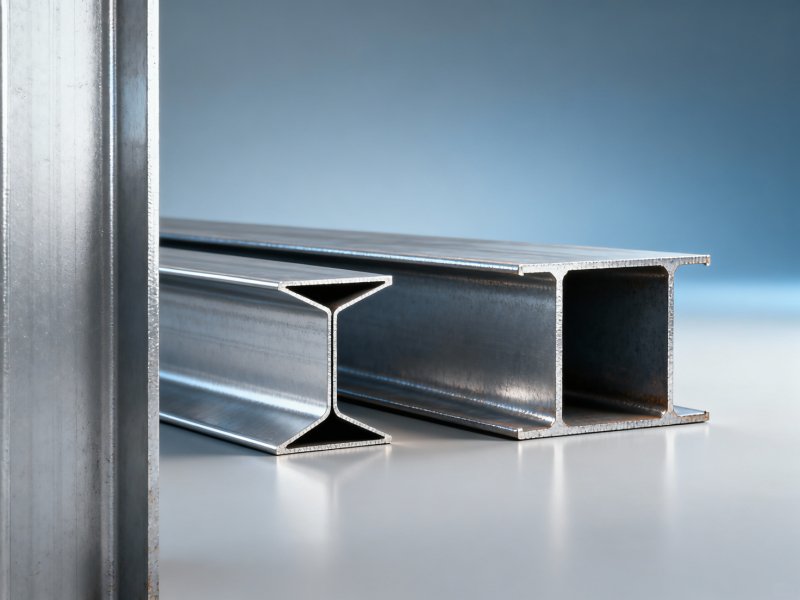
The distinction between I beam vs H beam isn’t cosmetic—it reflects fundamental differences in moment resistance, shear distribution, and connection behavior. An I beam (often rolled per ASTM A6/A6M) features tapered flanges and a relatively thin web, optimized for bending-dominated applications like floor joists. In contrast, the H beam—typically hot-rolled or welded—has parallel flanges of uniform thickness and a thicker web, enabling superior axial load transfer and column stability.
This geometry directly affects load-path continuity: I beams rely heavily on end connections to resist torsion and lateral buckling, while H beams distribute compressive forces more evenly across flange-to-web junctions. For projects where seismic resilience or multi-directional loading is expected—such as high-rise frames in Southeast Asia or industrial platforms in the Middle East—the H beam’s symmetric section delivers measurable performance advantages.
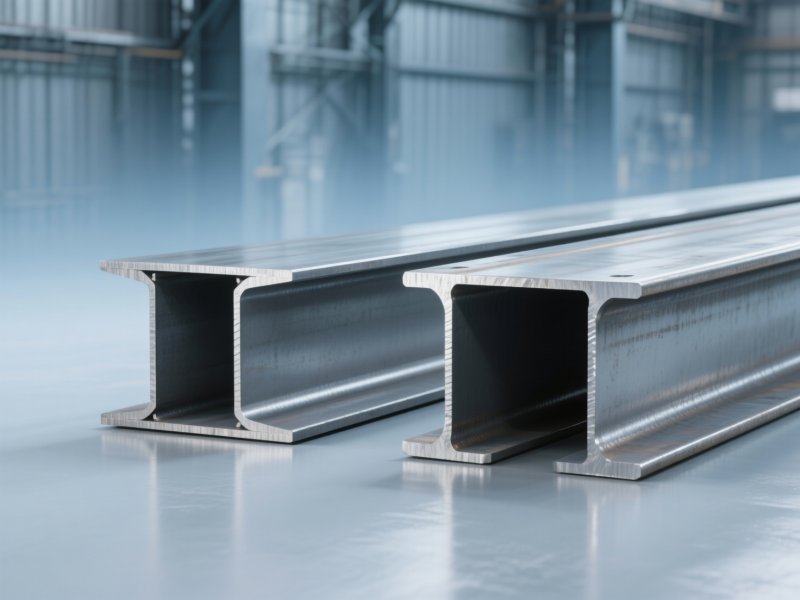
Moreover, fabrication speed differs significantly. H beams allow faster bolting and welding due to consistent flange surfaces, reducing onsite labor by up to 18% in standardized steel erection workflows. This translates directly into schedule compression—critical when lead times are constrained to 6–10 weeks for turnkey infrastructure packages.
How to Choose Between I Beam vs H Beam: A Procurement Decision Framework
Selecting the right beam type requires evaluating three interdependent dimensions: structural function, fabrication constraints, and supply chain reliability. Below is a decision matrix used by project managers at Hongteng Fengda to align technical requirements with commercial realities:
Note that H beams also enable seamless integration with Rail systems—especially where rail anchoring to main girders demands high torsional rigidity. Models such as U71Mn and QU100 are routinely specified alongside HN500×200 sections for railway bridge approaches across North America and the EU.
Key Procurement Checks for Both Types
- Verify mill test reports include tensile strength ≥400 MPa and elongation ≥22% (per EN 10025-2 or GB/T 700)
- Confirm dimensional tolerances meet ±0.5% for flange thickness and ±1.0 mm for web straightness
- Require third-party inspection (e.g., SGS or BV) for projects exceeding 5,000 tons annual volume
- Validate surface finish compliance: blast cleaning to Sa2.5 (ISO 8501-1) for galvanized or painted finishes
Beyond Beams: When Rail Systems Define Structural Strategy
In integrated infrastructure—railway stations, logistics hubs, or port terminals—the interaction between structural beams and track systems creates unique design dependencies. For instance, Rail profiles like PD3 and BNbRE require rigid base support to prevent differential settlement. Here, H beams serve dual roles: primary load-bearing members *and* anchor substrates for rail fasteners.
Our rail product line supports this synergy with precise dimensional control: head width tolerance of ±0.3 mm, base flatness within 0.5 mm/m, and hardness range of 260–320 HB for U74 grade. These specs ensure minimal wear under cyclic axle loads exceeding 25 tons—critical for freight corridors operating 24/7 in harsh desert or coastal environments.
Hongteng Fengda’s production facilities maintain dedicated rail finishing lines capable of oiling, blackening, galvanizing, or painting—all certified to ISO 9001-2008 and ISO 14001:2004. Stock availability covers 4kg/m to QU120 specifications, with typical delivery windows of 12–25 days after order confirmation.
Why Global Buyers Partner With Hongteng Fengda for Structural Steel
We don’t sell steel—we solve structural sourcing challenges. Over 12 years, Hongteng Fengda has delivered 280,000+ tons of angle steel, channel steel, steel beams, and cold-formed profiles to clients across 37 countries. Our value proposition rests on four pillars:
Whether you’re finalizing beam selections for a wind turbine foundation in Germany, specifying rail anchors for a metro extension in Manila, or validating cold-formed purlin specs for a warehouse in Dubai—we provide actionable engineering support, not just catalogs. Contact us today to request: dimensional validation for your specific I beam vs H beam application, rail compatibility analysis, ASTM/EN/GB test report samples, or a lead-time quote for your next 20-ton order.
Please give us a message


Please enter what you want to find