Why I Section Steel Is Gaining More Attention in Industrial Building Frames
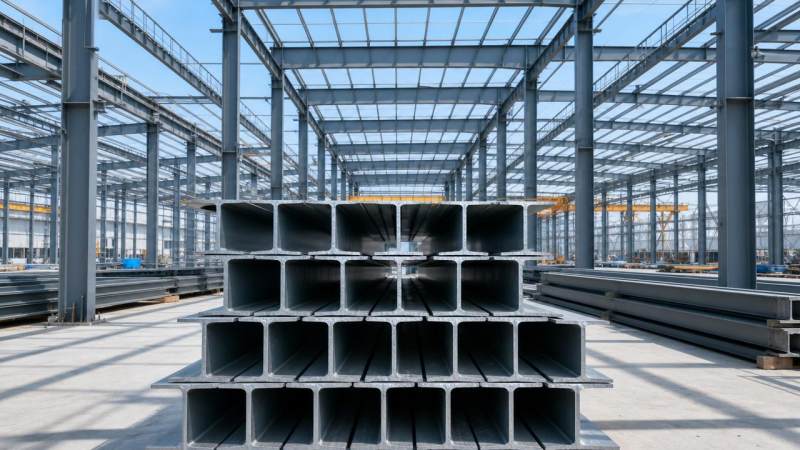
I section steel plays a critical role in industrial building frames, offering the strength, stability, and load-bearing performance needed for efficient construction.
As industrial projects become larger and more schedule-sensitive, material selection now affects cost control, structural safety, and delivery certainty more directly.
For global sourcing, the value of I section steel is no longer limited to mechanical strength alone.
Buyers now compare dimensional consistency, standards compliance, fabrication compatibility, and supplier reliability before confirming steel frame packages.
This shift is especially visible in warehouses, production halls, logistics centers, equipment platforms, and heavy-duty plant buildings.
In these applications, I section steel helps create efficient framing systems with balanced weight, strength, and installation speed.
The Market Signal Is Clear: Performance and Supply Stability Now Matter Equally
Industrial construction has changed over the past few years.
Projects are under pressure to reduce delays, manage freight volatility, and avoid quality disputes across multiple jurisdictions.
That is why I section steel is increasingly evaluated as part of a wider project risk strategy.
Reliable structural steel now supports not only the building frame, but also procurement planning and on-site coordination.
Another clear signal is the rise of standardized yet flexible sourcing.
Many industrial frame designs require standard grades, but also customized lengths, punching, cutting, or welding preparation.
This makes manufacturing capability a competitive factor, not just price.
What is driving this demand shift
Why Structural Requirements Are Becoming More Specific
In the past, many projects selected steel sections mainly by size and grade.
Today, the decision is more detailed because industrial buildings carry diverse operational loads and service conditions.
I section steel used in industrial frames may support cranes, mezzanines, machinery, pipelines, or roof systems with dynamic loads.
That means beam geometry, dimensional precision, surface condition, and fabrication suitability all influence final performance.
A practical example is the use of Hot Rolled H Beam in steel structure and bridging applications.
Available grades include Q235, Q345B, Q460C, SS400, S275JR, S355JR, A572, and A992 for different design needs.
Its flange thickness ranges from 8-64mm, while web thickness ranges from 5-36.5mm.
Flange width can reach 50-400mm, and web width can reach 100-900mm.
These options support mechanical manufacture, shipbuilding, automobile chassis, and industrial steel structure systems.
Processing functions such as bending, welding, punching, decoiling, and cutting also improve installation readiness.
Why these details matter in industrial framing
- Better dimensional accuracy helps reduce fit-up issues during assembly.
- Appropriate grade selection supports strength and deflection requirements.
- Processing compatibility lowers secondary fabrication time on site.
- Standard-certified steel simplifies design approval in export projects.
How the Trend Affects Project Execution Across Key Business Stages
The growing importance of I section steel affects several stages of an industrial project.
The effect begins before production and continues through fabrication, shipping, and final installation.
Design stage
Engineers increasingly prefer steel sections that align with international standards and predictable mechanical properties.
This reduces redesign risk when projects involve multinational review or external consultants.
Fabrication stage
Consistent I section steel supports faster cutting, drilling, welding, and surface preparation.
Less variation means fewer manual adjustments and lower scrap rates.
Logistics stage
Length planning, packaging stability, and clear marking now influence loading efficiency and customs handling.
Steel suppliers with export experience usually manage these details more effectively.
Installation stage
Well-controlled steel dimensions help crews complete alignment and connection work with fewer interruptions.
This contributes directly to faster frame erection and more predictable labor use.
What Deserves Closer Attention When Comparing I Section Steel Suppliers
As sourcing requirements become more demanding, supplier evaluation should go beyond quotations and basic product catalogs.
A qualified structural steel partner helps reduce commercial and technical uncertainty across the entire order cycle.
Key points worth checking
- Production capability for both standard and customized structural steel sections
- Quality control procedures covering chemistry, dimensions, and mechanical performance
- Compliance with ASTM, EN, JIS, and GB standards where required
- Export documentation accuracy and packaging experience
- Processing support for cutting, welding preparation, and punching
- Lead time stability for phased project deliveries
Hongteng Fengda operates as a structural steel manufacturer and exporter from China, supporting global construction and industrial projects.
The company supplies angle steel, channel steel, steel beams, cold formed steel profiles, and customized structural steel components.
Its manufacturing system focuses on stable production, strict quality control, and support for international specification requirements.
This matters when I section steel must fit long-term project schedules and repeat-order frameworks across different regions.
Practical Judgement for the Next Stage of Industrial Steel Procurement
The next phase of industrial construction will likely place even more emphasis on coordinated steel sourcing.
I section steel will remain important because industrial frames still depend on efficient load transfer and reliable member performance.
However, selection criteria will continue expanding beyond nominal size and price.
A sound approach is to compare I section steel not only as a material, but as part of total project execution quality.
That perspective helps reduce rework, protect timelines, and improve cost predictability for industrial building frames.
Turning Trend Insight Into a More Reliable Sourcing Decision
Industrial steel demand is becoming more precise, and I section steel stands at the center of that change.
Projects now need material strength, certification confidence, processing compatibility, and dependable delivery in one package.
For industrial building frames, that combination often determines whether construction stays efficient from drawing release to site installation.
If the goal is to lower sourcing risk while maintaining structural performance, it is worth reviewing supplier capability in detail.
Assess available grades, standards compliance, production strength, customization support, and export reliability before moving forward.
That next step can make I section steel procurement more stable, more efficient, and better aligned with long-term industrial project success.
Please give us a message


Please enter what you want to find