Understanding I beam weight per foot is essential when selecting structural steel for construction, estimating load capacity, and controlling project costs. Whether you are comparing prefab structural steel, sourcing from a stainless steel sheet supplier, or evaluating products like angle iron for shelving, this guide explains the basics in a simple, practical way for buyers, engineers, and project teams.
In steel procurement and project planning, weight is not just a catalog detail. It affects transportation, lifting methods, connection design, installation speed, and the overall material budget. For contractors, fabricators, distributors, and project managers, understanding how I beam weight per foot works helps prevent ordering errors and reduces on-site surprises.
For global buyers working with a structural steel manufacturer and exporter from China, the topic also matters during quotation comparison. A beam that looks similar in section size may differ significantly in actual mass per foot, steel grade, or standard. Those differences can change freight cost, fabrication requirements, and structural performance.
What I Beam Weight per Foot Actually Means
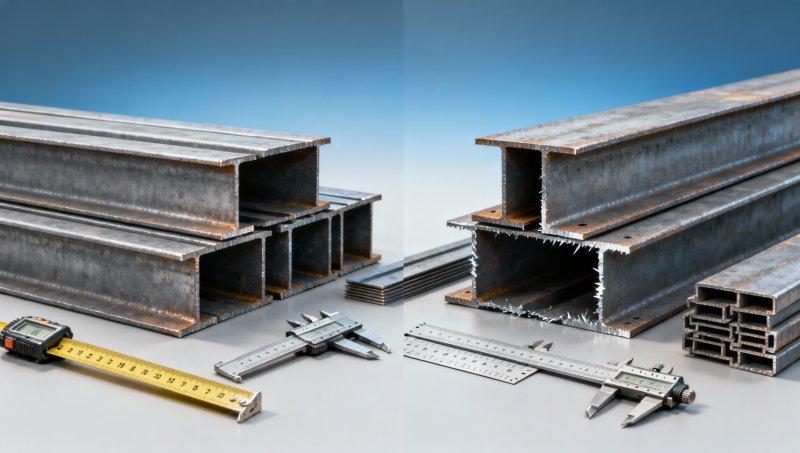
I beam weight per foot refers to how much one linear foot of a beam weighs, usually expressed in pounds per foot in the US market or kilograms per meter in many international markets. It is a basic but critical measurement used in estimating dead load, selecting lifting equipment, planning transport, and checking whether a section fits the structural design.
In simple terms, the deeper and thicker the beam, the heavier it becomes. But height alone does not tell the whole story. Flange width, web thickness, flange thickness, steel density, and the standard used for manufacturing all influence the final weight. Two beams with similar depth can differ by 10% to 30% in weight depending on section geometry.
For example, if a beam weighs 31 lb/ft and the required cut length is 20 ft, the total beam weight is about 620 lb before adding end plates, holes, weldments, or galvanizing. For project teams handling 50 to 200 pieces, this number becomes a major factor in crane planning, truck loading, and warehouse handling.
This measurement is also tied to structural behavior. A heavier beam section often provides greater load-carrying capacity or stiffness, although design suitability still depends on span, support conditions, load type, and code requirements. Weight per foot should therefore be treated as a practical indicator, not the only selection criterion.
Why the number varies across standards
Different regions use different beam series and standards such as ASTM, EN, JIS, and GB. A nominally similar section in one standard may have a different flange profile or thickness in another. That is why experienced procurement teams always confirm the exact designation, unit weight, grade, and section drawing before approving a purchase order.
Common factors that change beam weight
- Section depth and flange width, which directly increase cross-sectional area.
- Web and flange thickness, often the biggest reason one beam series weighs more than another.
- Steel standard and allowable tolerances, which can slightly affect theoretical and actual mass.
- Added processing such as drilling, welding, base plates, or coatings.
The table below shows a simplified comparison of how section dimensions influence typical beam weight trends. These are illustrative ranges used for decision support, not design approval values.
The key takeaway is that unit weight increases quickly as section size grows. Even a small change in flange thickness can create a large increase in total shipment weight when the project involves hundreds of meters of steel beams.
How to Calculate I Beam Weight per Foot in Practice
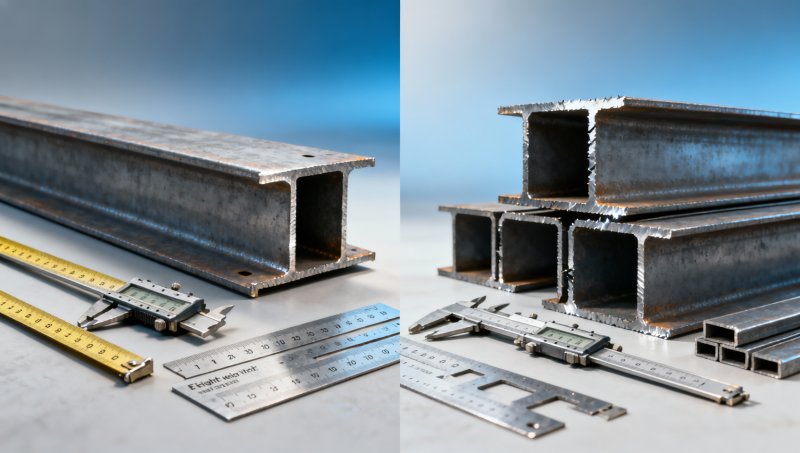
There are 2 practical ways to determine I beam weight per foot. The first is to use published section tables from the applicable standard. The second is to calculate the cross-sectional area and multiply it by steel density. For routine purchasing, standard tables are faster. For custom sections or OEM fabrication, area-based calculation is often necessary.
The basic formula is straightforward: weight = cross-sectional area × length × density. Carbon steel density is commonly taken as about 7.85 g/cm³, or roughly 490 lb/ft³. If the beam dimensions are in millimeters, the section area is normally converted to square centimeters or square meters before multiplying by length.
Suppose a section has a theoretical area of 38 cm². Since 1 meter of steel with an area of 1 cm² weighs about 0.785 kg, the beam weight per meter is approximately 38 × 0.785 = 29.83 kg/m. To convert kg/m to lb/ft, divide by 1.488. In this case, the result is close to 20.05 lb/ft.
In real procurement work, buyers should also separate theoretical weight from invoicing weight. Theoretical weight is used for engineering and quotation reference. Actual billing may depend on weighbridge results, tolerance policy, coating condition, or contract terms. For large export orders, even a 2% to 5% difference can affect freight and customs calculations.
A simple 4-step checking process
- Confirm the beam standard and exact section designation, not just the nominal size.
- Check the published unit weight in kg/m or lb/ft from the supplier or standard table.
- Multiply by total cut length, then add processing and coating allowances if applicable.
- Verify that logistics, lifting, and installation teams are using the same total weight basis.
Midway through many mixed steel packages, buyers may also compare other long products used in brackets, supports, and fabricated assemblies. For example, 45# Carbon Steel Round Bar is often selected for construction-related fabricated parts that require excellent strength and wear resistance. Typical supply options include hot rolled or cold rolled round bars, diameter 5-2500mm, and lengths such as 2m, 5m, 6m, or 12m, with finishes ranging from untreated and oiled to phosphated or galvanized.
That matters because beam packages are rarely purchased alone. A project may combine beams, channels, angle steel, cold formed profiles, and round bars under ASTM, EN, JIS, or GB requirements. Coordinating unit weight across all these items helps procurement teams estimate container loading, avoid over-ordering, and compare total installed cost rather than only the headline tonnage price.
Why Beam Weight per Foot Matters for Design, Cost, and Logistics
The most immediate reason to track I beam weight per foot is structural loading. Every beam contributes dead load to the building or support frame. In a multi-bay warehouse, industrial platform, or mezzanine system, a difference of 5 kg/m across 300 meters of beams adds 1,500 kg of permanent load before equipment or live load is considered.
Cost control is another major factor. Heavier beams usually cost more per piece because they contain more steel, but that is not the only impact. They can also increase cutting time, welding input, galvanizing charges, transport cost, and crane rental requirements. On international shipments, a heavier package may change the number of containers or affect port handling fees.
Installation planning also depends on unit weight. If a single beam exceeds the lifting capacity of a 3-ton forklift or requires a larger mobile crane, the site schedule may need adjustment. This is especially relevant for prefab structural steel, where efficient installation depends on accurate pre-delivery weight planning and coordinated unloading sequences.
From a quality and safety perspective, understanding weight helps teams verify whether delivered goods match the approved section list. If the actual mass is lower than expected, that may indicate a section mismatch, dimensional deviation, or documentation error. Quality control teams often use weight checks together with material certificates and dimensional inspection during receiving.
Key decision points for different stakeholders
Different roles focus on different consequences of beam weight. Engineers want structural adequacy. Procurement teams focus on cost per ton, lead time, and supplier consistency. Project managers care about delivery sequence and erection efficiency. Financial approvers usually compare whether a heavier section creates enough value to justify the budget increase.
The following table summarizes how unit weight affects common project decisions.
This is why experienced buyers do not compare beam offers by section depth alone. They compare the complete profile, unit weight, grade, applicable standard, fabrication scope, and delivery terms as one package.
How to Choose the Right Beam Weight for Your Project
Choosing the right I beam weight per foot starts with the use case. A light-duty frame for equipment support has different needs than a factory roof beam, bridge approach structure, or heavy industrial platform. In most projects, the best choice is not the lightest beam or the heaviest beam, but the section that balances strength, fabrication practicality, and total delivered cost.
Buyers should first confirm the required standard, grade, and section availability. For export sourcing, it is common to request ASTM, EN, JIS, or GB compliance depending on the destination market. Lead time also matters. Standard sections may ship in 2-4 weeks depending on quantity, while customized fabricated beams can take 4-8 weeks if drilling, welding, coating, or OEM packing are included.
Another practical point is consistency. If one supplier quotes a similar beam at a noticeably lower weight, that is not always an advantage. It may mean a different section series or a mismatch with the design drawing. Technical review should confirm dimensions, tolerances, material test certificates, and theoretical mass before commercial approval is given.
For distributors and project contractors, packaging and shipment format should also be checked. Beam lengths of 6 m, 9 m, or 12 m may fit production and container planning differently. Splitting one long beam into two shorter fabricated parts can reduce shipping constraints, but it may add connection work on site. Weight and length must be evaluated together.
A practical buyer checklist
- Confirm exact beam designation and standard, not a generic “I beam” description.
- Review unit weight in both kg/m and lb/ft if the project involves cross-border teams.
- Ask whether quotation is based on theoretical weight, actual weight, or fixed-piece pricing.
- Check allowable dimensional tolerances and coating additions before final approval.
- Align beam weight with lifting plan, installation method, and delivery schedule.
Typical selection risks to avoid
The most common mistakes are using nominal size only, mixing standards in the same bill of materials, and ignoring the difference between raw beam weight and fabricated beam weight. Another frequent issue is overlooking regional unit conversion. A misunderstanding between 31 lb/ft and 31 kg/m can create serious pricing and logistics errors.
Working with a supplier that offers stable production capacity, quality control, and export communication helps reduce those risks. For international structural steel sourcing, clear drawings, standard references, inspection requirements, and delivery milestones are often more valuable than a low initial price alone.
FAQ and Procurement Tips for Global Steel Buyers
Because I beam weight per foot influences engineering, procurement, and operations at the same time, buyers often ask very practical questions before confirming an order. The answers below reflect common industry practice and can support faster review by technical, commercial, and approval teams.
How accurate should the weight calculation be?
For early budgeting, an estimate within 3% to 5% is often acceptable. For fabrication release, logistics booking, and commercial settlement, the target should be much tighter and based on the exact section table, cut list, and processing scope. The more fabricated the beam package is, the more important itemized weight control becomes.
Is heavier always stronger?
Not automatically. Heavier beams often provide more section area and may improve load capacity or stiffness, but design performance depends on span, support conditions, lateral restraint, connection design, and load type. A properly selected medium-weight section can be more efficient than an unnecessarily heavy beam in many building applications.
What documents should buyers request from the supplier?
A practical package usually includes the section list, material grade confirmation, dimensional details, applicable standard, unit weight basis, quantity summary, and inspection documents. For export orders, buyers should also clarify packing method, shipment schedule, and whether third-party inspection is required before loading.
How can buyers reduce sourcing risk on mixed steel orders?
Use one approved specification sheet covering all main products, such as beams, channels, angles, cold formed sections, and related bars or fabricated components. Keep standard references consistent, define acceptable tolerances, and confirm one shared measurement basis for weight, usually kg/m or lb/ft. This reduces approval delays and invoice disputes.
For buyers seeking a reliable structural steel partner, Hongteng Fengda supports global projects with standard and customized steel products, modern manufacturing capability, and quality control aligned with major international standards. If you need help comparing beam sections, checking unit weight, or planning mixed-product sourcing for construction and industrial use, contact us to get a tailored solution, product details, and practical procurement support for your next project.
Please give us a message


Please enter what you want to find