Even small mistakes in an I beam weight chart can distort material budgets, freight planning, and bidding accuracy. For buyers, engineers, and project teams comparing structural steel beams for construction, understanding how an I beam weight calculator works is essential to avoid hidden cost risks. This guide explains the most common chart errors and how to verify beam data before purchasing.
Why do I beam weight chart errors create outsized cost problems?
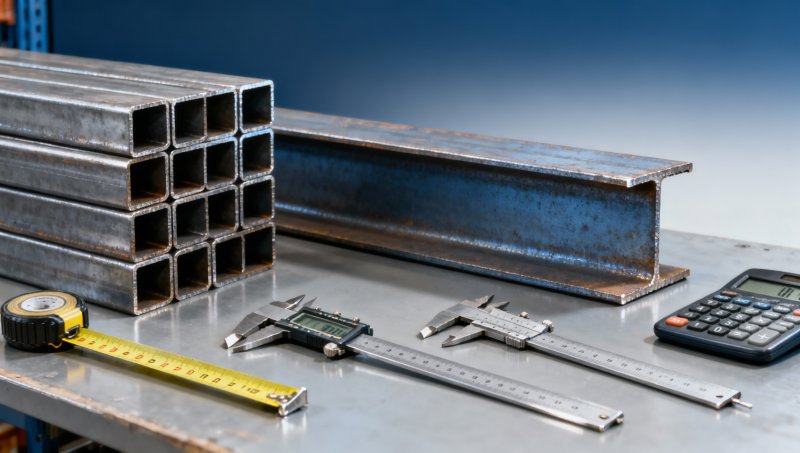
In steel procurement, a small deviation in beam weight is rarely just a technical detail. It can affect unit price comparisons, container loading plans, lifting arrangements, galvanizing cost, and total project budgeting. When an estimator uses an inaccurate I beam weight chart, the error often multiplies across 20, 50, or even 200 pieces, turning a modest variance per meter into a material financial gap.
For project managers and finance reviewers, this is especially important during tendering. A difference of only 1.5 kg/m to 3 kg/m on a medium section over 6 m to 12 m lengths can noticeably change total tonnage. That change then flows into freight rates, fabrication charges, and even site handling plans. In competitive bids, this can be the difference between a workable margin and an underquoted contract.
Operators and quality teams face a different risk. If the chart value does not match the actual section supplied, loading assumptions and structural checks may be misread. That does not automatically mean the beam is unsafe, but it does mean project teams may be working from the wrong baseline. In international sourcing, confusion between ASTM, EN, JIS, and GB beam series is one of the most common causes.
For distributors, resellers, and procurement departments, the key lesson is simple: a beam weight chart should never be treated as a generic copy-paste reference. It must be tied to section standard, nominal dimensions, steel density assumptions, and tolerance interpretation. Reliable suppliers help verify these details before quotation, not after delivery.
Where the cost distortion usually appears
- Material purchasing: quoted tonnage may be lower or higher than the actual shipped mass.
- Ocean freight and inland trucking: weight brackets and load planning can shift unexpectedly.
- Fabrication and coating: some processors price by ton, not by piece, so a wrong chart affects downstream service costs.
- Bid evaluation: a mistaken estimate can make one supplier appear cheaper even when the section basis is not equivalent.
What are the most common mistakes in an I beam weight calculator or chart?

Most I beam weight chart errors come from mixing standards, dimensions, or naming conventions. An I beam in one market may not match an H beam or a wide flange beam in another. Even if the overall depth looks similar, flange width, web thickness, flange thickness, and root radius can produce a very different theoretical weight per meter. This is why section designation alone is not enough.
Another frequent issue is using nominal dimensions as if they were exact measured values. In practice, structural steel sections are produced to standard tolerances. Theoretical mass is based on standard geometry and density, while actual mass can vary within permitted tolerance bands. If a buyer assumes the chart value is identical to the packed shipment weight, invoice reconciliation can become difficult.
Unit conversion also causes avoidable mistakes. Teams working across North America, Europe, the Middle East, and Southeast Asia may switch between kg/m, lb/ft, metric tons, and short tons. A correct beam weight chart can still lead to the wrong estimate if the spreadsheet converts 1 m to 3 ft instead of 3.28084 ft, or if total piece length is rounded too early.
The table below summarizes the errors that most often skew steel beam cost estimates and the practical impact each one can create during sourcing, engineering review, and project execution.
For technical evaluators, the best response is not simply to find a more detailed I beam weight calculator. It is to verify the section standard, dimensions, and quotation basis together. A reliable supplier should be able to confirm whether the price is based on theoretical weight, actual weighbridge weight, or agreed commercial tolerance, and do so before production starts.
A quick 4-point validation routine
- Confirm the beam designation and standard series, such as ASTM, EN, JIS, or GB.
- Check mass per meter against section dimensions, not name only.
- Verify all unit conversions in the quotation sheet and freight model.
- Ask whether billing is by theoretical weight, actual weight, or another agreed basis.
How should buyers verify beam data before sending RFQs or approving orders?
The safest time to catch an I beam weight chart error is before the RFQ is finalized. Once multiple suppliers quote against inconsistent assumptions, comparing offers becomes difficult. Buyers should ask for a section list that includes designation, standard, length, quantity, mass per meter, and total theoretical tonnage. This reduces the risk of one supplier quoting on a lighter or non-equivalent beam series.
For engineering and commercial teams, the review process should include at least 5 key checks: section standard, grade, dimensional tolerance, quantity by length, and commercial weight basis. On export orders, it is also practical to confirm packing form, such as loose bundles or marked pieces, because receiving teams often reconcile order weight against bundle tags and shipping documents.
When project procurement covers multiple metal materials, consistent data discipline matters even more. For example, a team procuring beams, channels, and corrosion-resistant sheet products may manage separate standards and properties at the same time. In such mixed-material projects, it is useful to keep every item tied to a verified technical sheet, including products such as 316 Stainless Steel Coil when stainless components are part of the broader package.
Hongteng Fengda supports this process by aligning quotation data with the applicable standard and application scenario. For global buyers, that means clearer matching between standard structural sections, OEM requirements, and project documentation. This is especially useful when delivery windows are tight, often in the 2–6 week planning range for rolling, processing, inspection, and export coordination depending on specification and order volume.
Which documents should be checked together?
- RFQ or inquiry sheet with exact beam designation, length schedule, and quantity breakdown.
- Supplier quotation showing mass per meter, total tonnage, and grade.
- Applicable standard reference, especially where similar section names exist across markets.
- Inspection or mill documentation confirming dimensions and identification marks.
Why this matters for finance approval
Finance teams usually do not review beam geometry, but they do review tonnage, shipping cost, and price variance across offers. If one quote shows 48 tons and another shows 52 tons for what appears to be the same job, the issue may not be commercial markup alone. It may be a beam weight chart inconsistency. A disciplined technical-commercial review shortens approval cycles and reduces post-order clarification.
How can you compare quotations without being misled by section weight differences?
A fair comparison requires more than unit price per ton. Buyers should compare at least 3 levels: section equivalence, total theoretical tonnage, and delivered commercial terms. If any of these are inconsistent, the cheapest offer on paper may become the most expensive in practice. This is a common problem when procurement teams collect 3–5 quotations from different regions using mixed catalogs or copied section lists.
The table below provides a practical quotation review structure. It is designed for procurement officers, project managers, and distributors who need to compare steel beam offers quickly while still catching hidden weight discrepancies. It also helps non-technical decision-makers understand why two offers with similar section names may not represent the same commercial value.
This comparison method is especially useful for international sourcing from China, where experienced manufacturers can provide standard sections, custom processing, and OEM support under one supply chain. For many projects, reducing sourcing risk is not only about obtaining a lower steel rate. It is about getting technically aligned quotations that remain stable from bid stage to shipment stage.
Hongteng Fengda works with buyers across North America, Europe, the Middle East, and Southeast Asia, where mixed standards and multi-item steel packages are common. A structured quotation review helps purchasing teams, quality staff, and decision-makers identify mismatches early and maintain better control over cost, compliance, and delivery planning.
A practical 3-stage comparison method
- Technical stage: confirm standard, grade, dimensions, and mass per meter.
- Commercial stage: compare tonnage basis, unit price, and trade terms.
- Execution stage: confirm lead time, inspection points, and shipment packing details.
What procurement, QC, and project teams should ask before placing an order
Before approval, every team should ask whether the I beam weight chart used for budgeting matches the exact beam that will be manufactured and exported. This question sounds basic, but it often prevents expensive confusion. In real projects, errors usually appear when engineering, procurement, logistics, and finance work from separate files updated at different times over 1–3 review cycles.
Quality and safety personnel should also confirm the inspection basis. That includes dimensional checks, identification marking, count verification, and documentation against the applicable standard. For projects with strict compliance needs, it is reasonable to align review checkpoints before mass production, at pre-shipment inspection, and at receiving. Three checkpoints are often enough to catch most chart-related commercial mismatches.
For users who are not steel specialists, the goal is not to calculate every beam manually. The goal is to know which data points must be present and consistent. A reliable supplier should explain section selection, clarify alternative options, and provide realistic lead time ranges instead of vague promises. In many export cases, shipment timing depends on stock status, rolling schedule, finishing scope, and port booking conditions.
When support comes from an experienced structural steel manufacturer, buyers can reduce sourcing risk by consolidating technical review and commercial communication. That is one reason global purchasers work with suppliers that understand angle steel, channel steel, steel beams, cold formed sections, and customized structural components together rather than as isolated product categories.
Checklist before order confirmation
- Is the beam section identified by exact standard and designation, not by a similar market nickname?
- Does the quotation show kg/m and total tonnage clearly for each line item?
- Are lengths, quantities, and cut requirements aligned with the project drawings or BOM?
- Has the supplier clarified lead time, inspection method, and export packing basis?
- Are ASTM, EN, JIS, or GB compliance needs stated before final production approval?
FAQ: common search questions
Many buyers ask whether a beam weight chart from one country can be used globally. The safe answer is no, not without checking the standard series. Similar dimensions do not guarantee the same mass per meter. Another common question is whether actual beam weight must match chart weight exactly. In practice, commercial and production tolerances matter, so the relevant point is whether the supply remains within the applicable standard and agreed billing basis.
A third frequent question concerns delivery timing. For standard sections, lead time may be shorter when stock or regular rolling schedules are available; for custom lengths, processing, or OEM structural components, project planning should allow additional time for confirmation, production, inspection, and shipping. Asking these questions early helps avoid rushed approvals based on incomplete beam data.
Why choose a supplier that helps verify data, standards, and delivery details?
When beam weights, standards, and quotation terms are verified together, procurement becomes faster and safer. That matters for information researchers comparing options, for engineers checking section suitability, for purchasing teams managing budget limits, and for business decision-makers approving project risk. The right supplier does more than quote a steel beam price. It helps prevent avoidable errors before they spread across the project chain.
Hongteng Fengda provides structural steel manufacturing and export support for global construction, industrial, and manufacturing projects. With experience in steel beams, angle steel, channel steel, cold formed profiles, and customized structural steel components, the team can assist with standard matching, section confirmation, OEM needs, and export coordination under ASTM, EN, JIS, and GB requirements where applicable.
If you are reviewing an I beam weight chart, comparing supplier offers, or checking whether a beam weight calculator result is suitable for your project, you can consult on specific points instead of relying on assumptions. Useful discussion topics include section standard confirmation, mass per meter verification, quotation basis, delivery cycle, packing method, sample availability, and customized processing requirements.
For faster decision-making, send your beam designation list, drawing references, target standard, required lengths, quantity schedule, and destination port. This makes it easier to receive a technically aligned quotation, practical lead time guidance, and a clearer sourcing plan that supports both project execution and cost control.
Please give us a message


Please enter what you want to find