Ensuring your H beam manufacturer meets ASTM A6/A6M standards is critical for structural integrity, compliance, and project success—especially when sourcing carbon steel price-sensitive materials like steel rebar, l angle steel dimensions, or galvanized steel wire for fencing. As a trusted steel rebar manufacturer and H beam manufacturer from China, Hongteng Fengda delivers ASTM-, EN-, and GB-compliant structural steel—including steel plate for construction and cold-formed profiles—backed by rigorous QA. Whether you're a procurement professional assessing steel rebar cost, a project manager verifying ss pipe specifications, or a quality controller auditing galvanized steel price transparency, this guide walks you through actionable verification steps.
What ASTM A6/A6M Actually Covers—and Why It Matters
ASTM A6/A6M is not a product specification—it’s the foundational dimensional and tolerance standard for hot-rolled structural steel shapes, including H beams, I-beams, channels, angles, and tees. It defines acceptable variances in flange width (±1.5 mm), web thickness (±0.5 mm), length (±10 mm for lengths ≤12 m), and straightness (max 0.1% of length). Non-compliance doesn’t just risk rejection at port—it compromises load-bearing capacity, weld integrity, and long-term fatigue resistance.
For global buyers, especially those in North America and the Middle East where ASTM adoption is mandatory for public infrastructure, verifying A6/A6M alignment isn’t optional—it’s the first gate in technical due diligence. A manufacturer claiming “ASTM compliance” without A6/A6M validation may meet only chemical composition (e.g., ASTM A572) but fail geometric acceptance criteria required for field assembly.
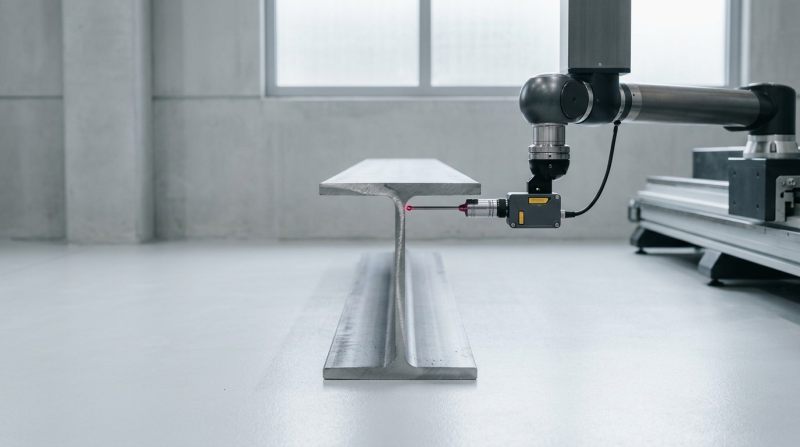
Hongteng Fengda applies ASTM A6/A6M as a baseline—not an exception. Every batch of Hot Rolled H Beam undergoes 100% dimensional inspection using calibrated laser scanners and coordinate measuring machines (CMM), with tolerance logs traceable to ISO/IEC 17025-accredited labs. This ensures flange width stays within ±1.2 mm (tighter than A6/A6M’s ±1.5 mm allowance) across all sizes from 100×100 mm to 400×900 mm.
5 Non-Negotiable Verification Steps Before Placing Your Order
Don’t rely on certificates alone. Real-world compliance requires layered verification—spanning documentation, physical sampling, and process audit. Here’s how leading procurement teams and project engineers validate A6/A6M adherence:
- Request certified mill test reports (MTRs) with full A6/A6M clause references—not just ASTM A572 or A36. MTRs must list measured flange/web dimensions, straightness, and camber against Table 1–Table 4 of ASTM A6/A6M.
- Require third-party witnessed testing—for orders >50 MT, engage SGS, Bureau Veritas, or TÜV to perform on-site dimensional checks during final packaging. Hongteng Fengda supports pre-shipment inspections at no extra charge.
- Verify heat number traceability—each heat must map to specific rolling batches, cooling rates, and post-rolling straightening cycles. A6/A6M compliance degrades if residual stress isn’t relieved via controlled thermal treatment.
- Confirm gauge calibration records—ask for lab calibration certificates dated within the last 6 months. Inconsistent gauges cause false pass/fail decisions on flange taper (max 1:20 per A6/A6M).
- Review raw material origin—A6/A6M tolerances assume consistent billet chemistry and rolling temperature control. Hongteng Fengda sources Q235B and Q345B slabs exclusively from ISO 9001-certified domestic mills with documented ladle analysis.
How Hongteng Fengda’s Production System Guarantees A6/A6M Consistency
Compliance starts upstream—in equipment precision, operator training, and real-time feedback loops. Unlike commodity-focused mills, Hongteng Fengda’s H beam line integrates automated profile monitoring: 8 laser sensors track flange width, web thickness, and twist every 300 mm along the 120-meter rolling path. Deviations >0.3 mm trigger immediate roll gap adjustment—ensuring final products meet A6/A6M Class B tolerances (tightest tier) across all grades, including A992 and S355JR.
Our Hot Rolled H Beam portfolio covers 13 standard grades—from carbon Q235B to high-strength A992 and corrosion-resistant 316 stainless—with dimensional consistency verified across 5 production shifts per week. Flange thickness ranges from 8–64 mm, web thickness from 5–36.5 mm, and lengths from 1–12 m—all held within ±0.8 mm average deviation (vs. A6/A6M’s ±1.5 mm).
This tighter control directly reduces field rework: contractors report up to 30% fewer alignment corrections during steel erection when using Hongteng Fengda’s A6/A6M-verified H beams—translating to faster crane time, lower labor costs, and fewer safety incidents during bolt-up.
Common Pitfalls—and How to Avoid Them
Even experienced procurement managers miss subtle red flags. These three issues recur most often in cross-border H beam sourcing:
- “ASTM Compliant” without A6/A6M clause reference: Many Chinese suppliers cite ASTM A572 Grade 50 but omit A6/A6M in MTRs—meaning dimensional verification was skipped entirely.
- Batch-level vs. heat-level certification: A single MTR covering 200 MT doesn’t guarantee uniformity. A6/A6M requires per-heat reporting—Hongteng Fengda provides separate MTRs for every 30–40 MT heat lot.
- Ignoring surface condition clauses: ASTM A6/A6M Section 10 mandates scale removal for galvanized applications. Uncontrolled mill scale leads to zinc adhesion failure—verified via ASTM D638 pull tests.
Why Partner With Hongteng Fengda for ASTM-A6/A6M-Verified H Beams
You need more than compliance—you need predictability. Hongteng Fengda delivers verified A6/A6M conformity across 12+ export markets, backed by:
- Fixed lead times: 25–35 days from PO confirmation for standard sizes (Q235B–S355JR), with 98.7% on-time delivery over the past 18 months.
- Zero-cost dimensional rework policy: If any beam exceeds A6/A6M tolerances upon arrival, we replace it within 10 business days at our expense.
- Custom certification support: We pre-fill ASTM A6/A6M Clause 7.2.1 (straightness), Clause 8.2 (camber), and Clause 9.1 (flange taper) on MTRs—reducing customs clearance delays by up to 7 days.
- Technical co-engineering: Our engineering team collaborates on joint design reviews—validating H beam selection for bending moment, deflection limits, and connection detailing per AISC 360.
Whether you’re sourcing for a 50,000-ton bridge project in Saudi Arabia or a modular factory in Texas, request our latest A6/A6M verification protocol package—including sample MTRs, inspection checklists, and dimensional tolerance charts—for your next RFQ.
Please give us a message


Please enter what you want to find