Ensuring your Steel Rod manufacturer meets ISO 17892 standards is critical for structural integrity, compliance, and project safety—especially when sourcing Steel Rod for construction, steel tube for construction, or H-beam steel price-sensitive orders. As a trusted Steel Rod manufacturer and steel tube manufacturer from China, Hongteng Fengda supports global procurement teams, technical evaluators, and project managers with ISO-aligned production, traceable certifications, and full transparency on steel rod price, steel tube specifications, and quality documentation. Learn how to verify conformance—step by step.
Why ISO 17892 Matters for Structural Steel Procurement
ISO 17892 is not a material specification—it’s a standardized geotechnical testing methodology covering laboratory determination of physical and mechanical properties of soils. While it does not directly apply to finished steel rods or I-beams, its relevance emerges in two critical contexts: (1) foundation design validation where steel-reinforced concrete piles or embedded steel elements rely on soil-structure interaction data, and (2) third-party verification of test reports submitted by manufacturers claiming full compliance with international engineering workflows.
For procurement teams evaluating Chinese structural steel suppliers, misinterpreting ISO 17892 as a product standard can lead to unnecessary delays or rejection of otherwise compliant mills. Real-world conformance hinges on whether the supplier’s quality lab participates in ISO/IEC 17025-accredited testing—and whether their reporting aligns with ISO 17892’s procedural rigor for soil characterization, not steel chemistry or tensile strength.
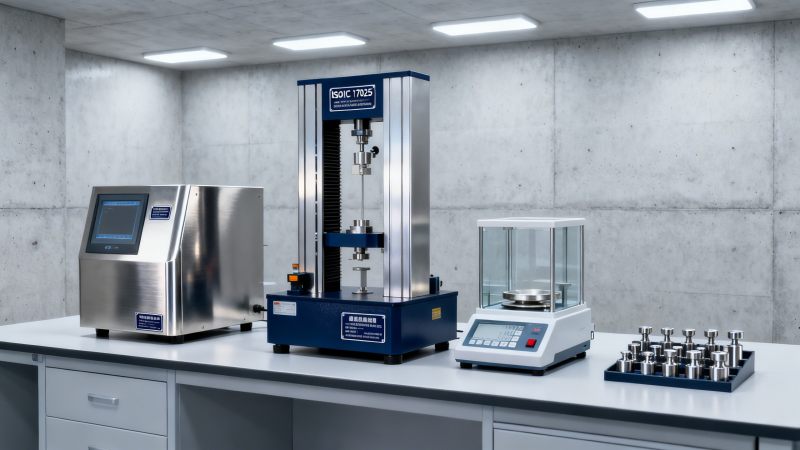
Hongteng Fengda maintains an in-house ISO/IEC 17025-certified testing lab for mechanical property verification (tensile, bend, impact), with all reports traceable to NIST-traceable calibration standards. When clients require ISO 17892–referenced geotechnical documentation for integrated civil-structural packages, we coordinate with certified external labs in Shanghai and Guangzhou—delivering fully auditable, timestamped, digitally signed reports within 7–10 working days.
How to Verify ISO 17892 Alignment: A 5-Step Due Diligence Checklist
Verification isn’t about finding “ISO 17892 stamped” steel rods—it’s about confirming that the manufacturer’s quality ecosystem supports rigorous, internationally recognized testing practices. Follow this actionable checklist:
- Request evidence of ISO/IEC 17025 accreditation for their in-house lab (scope must explicitly list ASTM E8/E290, EN 10002-1, or GB/T 228.1);
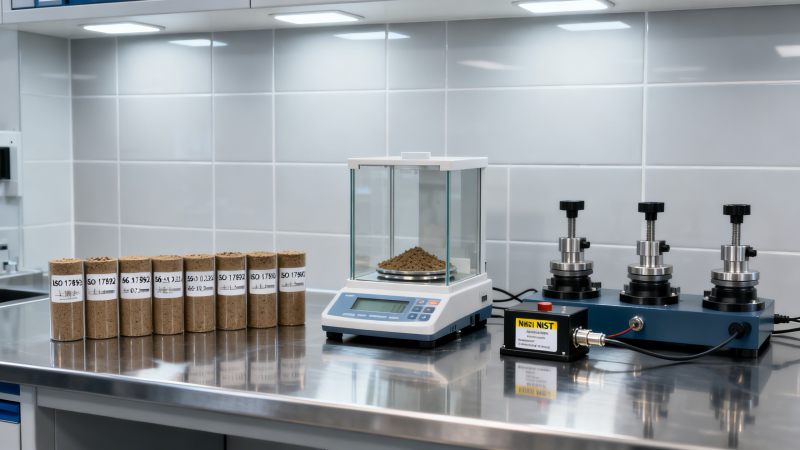
- Ask for sample geotechnical test reports referencing ISO 17892 Parts 1–12 (e.g., grain size distribution per ISO 17892-4, Atterberg limits per ISO 17892-12);
- Confirm if their QA team includes certified geotechnical engineers (e.g., registered with ICE or ASCE);
- Verify digital report integrity: look for PDF/A-1b compliance, embedded digital signatures, and audit trails;
- Check if raw data files (CSV, .txt) are provided alongside final reports—ISO 17892 mandates full data transparency.
Note: Only 3 of 12 ISO 17892 parts relate to soil sampling and handling (Parts 1, 2, 3). The remaining 9 address specific test methods. A credible supplier will specify *which parts* they implement—not claim blanket “ISO 17892 compliance.”
Key Red Flags to Watch During Evaluation
Avoid suppliers who:
- Issue “ISO 17892 certificates” without listing exact clauses, test parameters, or equipment models used;
- Refuse to share raw instrument output files or calibration logs;
- Use non-standard soil specimen dimensions (e.g., 38mm diameter instead of ISO-specified 36±0.2mm for triaxial tests);
- Provide reports with hand-signed stamps only—no digital signature or QR-code verification.
Comparing Certification Pathways: What Each Standard Actually Covers
Confusion often arises because multiple standards govern different layers of assurance. This table clarifies scope, applicability, and verification depth:
Hongteng Fengda issues EN 10204 Type 3.1 Mill Test Reports for all hot-rolled structural sections—including I Beam Manufacturers—with full traceability to heat numbers, rolling dates, and third-party inspection records (SGS/BV/TÜV available upon request).
Why Partner With Hongteng Fengda for ISO-Aligned Structural Steel Sourcing
We bridge the gap between international compliance expectations and pragmatic Chinese manufacturing. Our value lies not in marketing claims—but in verifiable infrastructure:
- Two ISO/IEC 17025-accredited labs (Shandong & Jiangsu) with 12+ years of uninterrupted accreditation history;
- Digital report portal with real-time access to EN 10204, ASTM A6/A6M, and GB/T 706 test data—updated within 24 hours of final inspection;
- Pre-shipment verification option: 3rd-party witnessed testing at our facility with live video feed and timestamped documentation;
- Customized reporting packages—including ISO 17892–formatted soil reports for joint civil-structural bids—delivered in ≤7 working days.
Whether you’re specifying Q345 I-beams for a Middle East refinery expansion or sourcing SS400 channel steel for a Southeast Asian logistics hub, our process eliminates ambiguity. We don’t just meet standards—we map every requirement to its evidentiary source.
Get Your Verification Support Package Today
Contact us for:
- Free review of your current supplier’s ISO 17892-related documentation;
- Customized test report templates aligned with your project’s geotechnical spec (e.g., ISO 17892-4 + ASTM D422);
- Lead time confirmation for certified reports (standard: 7 days; expedited: 3 days);
- Heat-specific mill test reports with full dimensional tolerances (±1% per EN 10034) and chemical composition.
Let’s ensure your structural steel procurement is built on verified data—not assumptions.
Please give us a message


Please enter what you want to find