Selecting the right steel purlin size is critical for stable roof support, load transfer, and long-term structural safety. For technical evaluators, the process involves more than checking span tables—it requires assessing roof loads, spacing, material grade, deflection limits, connection conditions, and applicable standards. This guide explains the key factors that influence steel purlin sizing and helps you make informed decisions for industrial, commercial, and construction projects where reliability, cost control, and compliance are essential.
How a steel purlin supports roof stability
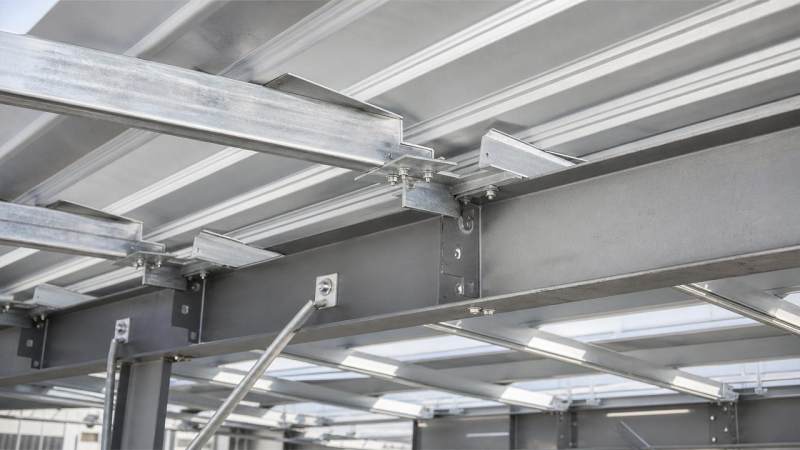
A steel purlin is a horizontal roof member that transfers loads from sheeting to primary frames, rafters, trusses, or beams.
It carries dead load, live load, wind uplift, and sometimes suspended services, depending on building use and roof layout.
Correct steel purlin sizing improves roof stiffness, reduces deflection, and helps prevent sheet damage around fasteners.
Common purlin profiles include C sections, Z sections, and cold formed channels. Each behaves differently under bending, shear, and lateral restraint.
A steel purlin rarely works alone. Its performance depends on spacing, bracing, connections, roof diaphragm action, and installation quality.
Basic sizing inputs for a steel purlin
The first step is defining the design environment. A reliable steel purlin selection starts with clear project data.
- Roof span between supporting frames or rafters.
- Steel purlin spacing along the roof slope.
- Roof sheet weight, insulation, ceiling, and accessories.
- Maintenance load, snow load, and rain accumulation risk.
- Wind pressure and uplift requirements.
- Material grade and section thickness.
- Deflection limit for roof cladding and serviceability.
- Connection type, lap length, and bracing arrangement.
Span and spacing are especially important. A longer span increases bending demand, while wider spacing increases load per steel purlin.
Material yield strength also matters. Higher-grade steel may reduce section weight, but local buckling must still be checked.
For cold formed sections, thickness, lip size, and effective width influence performance more than nominal depth alone.
Industry concerns affecting steel purlin decisions
Modern roof systems face tighter requirements for safety, cost, installation speed, and documentation.
A steel purlin must satisfy both structural design and practical construction needs.
Standards also shape the process. Projects may refer to ASTM, EN, JIS, GB, or local building codes.
A steel purlin should be verified against the governing code rather than selected only by visual similarity.
Load calculation and serviceability checks
Sizing normally begins by converting roof area loads into line loads on each steel purlin.
For example, multiply roof pressure by purlin spacing to estimate load per meter of member.
Then compare bending moment, shear force, and reactions with the selected steel purlin capacity.
Strength is only one part of the decision. Serviceability often controls roof performance.
- Check vertical deflection under dead and live loads.
- Check uplift behavior under wind suction.
- Review lateral torsional stability and restraint points.
- Confirm local buckling limits for thin cold formed sections.
- Assess web crippling near supports and concentrated loads.
Deflection limits vary by roof system. Metal roof sheets may require stricter limits than simple structural acceptance.
If the roof includes brittle finishes, suspended ceilings, or waterproof membranes, conservative deflection control is recommended.
Profile selection and material grade
C and Z sections are common because they offer efficient strength-to-weight performance in light steel roof systems.
A Z-shaped steel purlin is often used in continuous spans with overlaps at supports.
A C-shaped steel purlin is often selected for simple spans, wall girts, or framed openings.
Hot rolled channels may be preferred where impact resistance, heavier loads, or simpler connection detailing is required.
Material grade should match project requirements. Common choices include Q235, Q345, SS400, S235, S355, and ASTM A36 equivalents.
Corrosion protection is also part of sizing value. Galvanizing, painting, or project-specific coating may extend roof life.
Primary members supporting the steel purlin system
A roof system is only stable when purlins, rafters, beams, columns, and bracing work together.
For heavier industrial structures, primary support beams often carry reactions from multiple purlin lines.
Hongteng Fengda supplies the Structural Steel I Beam for industrial structure applications where reliable load transfer is required.
Available grades include Q195-Q235, Q345, SS355JR, SS400, A36, ST37-2, S235J0, S235J2, and St52.
Typical thickness ranges from 4.5mm to 15.8mm, with lengths from 6m to 12m or customized requests.
Flange width can range from 100mm to 400mm, while web width can range from 100mm to 900mm.
Processing options include bending, welding, decoiling, punching, and cutting, supporting coordinated fabrication around roof framing details.
Standards include JIS, ASTM, DIN, GB, and EN, helping align steel purlin systems with international project documentation.
Typical roof applications and sizing focus
Different building types place different demands on a steel purlin.
The following overview helps narrow early design attention before detailed engineering checks.
A steel purlin for a warehouse may prioritize economy, while one for a solar roof may require greater reserve capacity.
The best section is not always the lightest section. It is the safest economical choice for the full roof system.
Connection details and installation effects
Even a correctly calculated steel purlin can underperform if connections are weak or misaligned.
Bolts, cleats, holes, laps, and anti-sag rods all affect roof behavior.
Continuous purlin systems need sufficient overlap at supports to transfer bending and shear safely.
Simple-span systems need accurate end bearing, correct hole locations, and stable support during installation.
- Confirm bolt grade and diameter match design assumptions.
- Keep hole tolerances within approved fabrication limits.
- Install bracing before applying full roof loads.
- Avoid unapproved site cutting near high-stress zones.
- Protect coatings after drilling, welding, or handling damage.
Roof sheets can provide lateral restraint, but only when fastening patterns and sheet stiffness are suitable.
If this restraint is uncertain, the steel purlin should be designed with independent bracing provisions.
Practical sizing workflow
A structured workflow reduces errors and keeps the steel purlin selection transparent.
- Define roof geometry, slope, span, and support spacing.
- List all permanent, variable, wind, snow, and service loads.
- Convert area loads into line loads per steel purlin.
- Select an initial section based on span and spacing.
- Check bending, shear, bearing, and local buckling.
- Verify deflection under relevant service combinations.
- Review uplift, lap behavior, and connection capacity.
- Confirm material grade, coating, tolerances, and standards.
- Coordinate fabrication drawings with site installation needs.
This process should be supported by engineering calculations, manufacturer data, and applicable code requirements.
For export projects, documentation consistency is important. Grade, tolerance, coating, and inspection records should match contract requirements.
Common mistakes to avoid
Many roof problems start with small assumptions made during early sizing.
Avoid selecting a steel purlin only by depth without checking thickness, grade, and effective section properties.
Do not ignore wind uplift. In lightweight roofs, uplift can govern connections and continuous lap requirements.
Avoid increasing spacing only to reduce material quantity. Wider spacing may raise cladding costs or reduce roof performance.
Do not assume roof sheets always provide full restraint. Fastener layout, sheet profile, and installation quality must support that assumption.
Finally, avoid mixing standards casually. A steel purlin designed under one code may not satisfy another without verification.
Reliable supply for steel purlin projects
Accurate sizing must be matched by dependable manufacturing, stable tolerances, and timely delivery.
Hongteng Fengda provides structural steel products and customized solutions for construction, industrial, and manufacturing projects worldwide.
Product capabilities include angle steel, channel steel, steel beams, cold formed steel profiles, and customized structural components.
With production aligned to ASTM, EN, JIS, and GB standards, project teams can reduce sourcing risk and improve schedule certainty.
For a stable roof system, share span, spacing, load data, drawings, grade requirements, and coating needs before final selection.
A properly specified steel purlin supports safer roofs, efficient material use, and long-term building reliability.
To move forward, prepare project drawings and load requirements, then request a section review, quotation, and fabrication plan.
Please give us a message


Please enter what you want to find