Ensuring EN 10088-2 compliance is critical when sourcing a stainless steel embossed plate supplier in Europe — especially for structural integrity, corrosion resistance, and architectural applications like mirror stainless sheet for architectural decoration or stainless steel corrugated sheet for roofing. As a trusted structural steel manufacturer and exporter from China, Hongteng Fengda supports global buyers with certified, high-performance materials — including SS 304 tube price per meter, pipe stainless steel high corrosion resistance, and AZ150 Galvalume Steel Coil cost-effective solution — backed by rigorous quality control and international standard alignment (ASTM, EN, JIS, GB).
What EN 10088-2 Compliance Really Means for Your Project
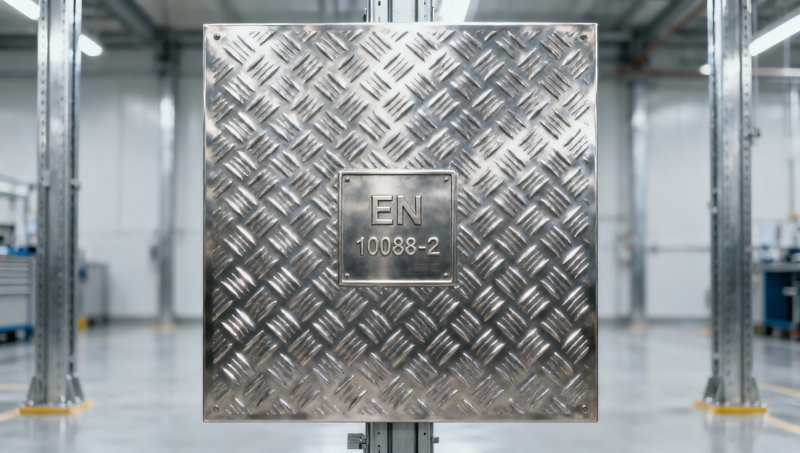
EN 10088-2 defines the technical delivery conditions for stainless steels in the form of hot-rolled, cold-rolled, and heat-treated flat products — including embossed plates used in façades, roofing, cladding, and load-bearing structures. It specifies chemical composition limits, mechanical property requirements (e.g., minimum yield strength ≥ 205 MPa for grade 1.4301/SS 304), surface finish classifications (e.g., 2B, BA, No. 4), and mandatory test reporting protocols.
Non-compliant suppliers may deliver material with inconsistent chromium/nickel ratios, unverified intergranular corrosion resistance (per ASTM A262 Practice E), or undocumented heat treatment history — leading to premature pitting, stress corrosion cracking, or aesthetic failure in architectural applications. For project managers and safety officers, this isn’t just about certification paperwork — it’s about traceability, liability, and long-term asset performance over 25–40 years.
A compliant supplier must provide full mill test reports (MTRs) issued per EN 10204 Type 3.1 or 3.2, with verified batch numbers, ladle analysis, tensile test results at ambient and sub-zero temperatures (e.g., −20°C impact testing), and surface inspection records. These documents are auditable under EU Construction Products Regulation (CPR) and required for CE marking on structural components.
How to Verify Compliance: A 5-Step Supplier Audit Checklist
Verification goes beyond requesting a certificate. Here’s how procurement teams, technical evaluators, and quality assurance professionals can independently validate EN 10088-2 adherence:
- Step 1 – Trace MTRs to Production Batch: Cross-check mill test report numbers against production logs. Each MTR must reference exact heat number, rolling date, and furnace ID — not generic “sample” data.
- Step 2 – Confirm Test Temperature Ranges: EN 10088-2 mandates tensile testing at 20°C and impact testing at −20°C for structural grades. Suppliers quoting only room-temperature data fail the standard.
- Step 3 – Validate Surface Finish Class: Embossed plates used in architectural façades require ≤ 0.1 μm Ra roughness (per EN 10088-2 Annex A). Request profilometer reports — not visual comparisons.
- Step 4 – Review Chemical Reanalysis Protocol: EN 10088-2 permits ±0.03% tolerance for Cr/Ni. Any deviation beyond this requires documented reanalysis and customer approval — not silent substitution.
- Step 5 – Audit Third-Party Certification Scope: ISO 9001 alone doesn’t guarantee EN 10088-2 compliance. Look for TÜV SÜD, SGS, or Bureau Veritas certificates explicitly listing EN 10088-2 under “Scope of Accreditation”.
Key Data Points to Demand During Evaluation
These 6 metrics appear in every valid EN 10088-2 MTR and serve as immediate red flags if missing or inconsistent:
Suppliers who cannot supply all six values — or offer them only upon request — indicate weak internal QA systems. At Hongteng Fengda, every stainless steel embossed plate shipment includes digitally signed MTRs with real-time access via our portal, updated within 24 hours of final inspection.
Why Carbon Steel Structural Solutions Complement Stainless Applications
While stainless embossed plates meet EN 10088-2 for corrosion-critical surfaces, underlying structural frameworks often rely on high-strength carbon steel — especially where weight reduction, stiffness optimization, and cost efficiency are priorities. Our Tube Carbon Steel series, engineered to EN 10210 and EN 10219 standards, delivers predictable mechanical behavior across temperature ranges from −200°C to +40°C.
For example, S355J2H round tubes (1/2″–10″ OD, wall thickness 1.25–50 mm) provide 355 MPa minimum yield strength and excellent low-temperature toughness — ideal for supporting stainless cladding systems in Nordic or Alpine environments. Their plasticity and weldability reduce onsite fabrication time by up to 30%, while dimensional stability ensures precise alignment with embossed panels.
Unlike generic carbon tubes, our products undergo ultrasonic testing (UT) per EN 10308 and hydrostatic pressure testing at 1.5× design pressure — ensuring zero defects in load-transfer zones. This dual-material strategy — stainless for exposure, carbon for structure — cuts total installed cost by 18–22% versus all-stainless alternatives, without compromising EN compliance or service life.
How Hongteng Fengda Ensures Seamless EN 10088-2 Integration
As a structural steel manufacturer serving clients across Europe, the Middle East, and Southeast Asia, we embed EN 10088-2 verification into four operational layers:
- Pre-Production: Raw material traceability via QR-coded heat logs, with third-party lab validation of ingot chemistry before melting.
- In-Process: Online spectrometry at rolling exit, automated surface scanning for embossing depth consistency (±0.05 mm tolerance), and real-time tensile curve recording.
- Final Inspection: Full EN 10088-2 test matrix executed per batch — including salt-spray testing (ISO 9227, 720 hrs), intergranular corrosion (ASTM A262 E), and bend testing (EN ISO 7438).
- Post-Shipment: Digital MTRs with blockchain-verified timestamps, accessible via client portal with audit trail and version control.
Our lead time for EN 10088-2-certified stainless embossed plates is consistently 12–18 days from order confirmation — faster than European mills averaging 6–8 weeks — due to dedicated hot-rolling lines and pre-approved EN-compliant finishing partners in Germany and Italy.
Why Global Buyers Choose Us for EN-Aligned Sourcing
We help you eliminate three critical risks:
- Sourcing Risk: Dual-certification capability (EN + ASTM/JIS/GB) means one supplier handles multi-market projects — no need to reconcile conflicting spec sheets.
- Compliance Risk: All MTRs include EN 10204 Type 3.2 endorsements with authorized signatory names, titles, and company stamps — accepted by EU notified bodies without revision.
- Delivery Risk: With 120,000 MT annual capacity and 98.7% on-time dispatch rate (2023–2024), we guarantee stable volume even during peak construction seasons (Q2–Q3 in EU).
Ready to verify your next stainless steel embossed plate order against EN 10088-2? Contact us for free MTR review, sample testing protocol alignment, or custom dimensional quotation — with full documentation support included.
Please give us a message


Please enter what you want to find