Welding often leaves an unsightly heat tint on tube stainless steel joints, compromising both aesthetics and corrosion resistance. For operators and fabricators, removing this discoloration is crucial to maintain the material's integrity and ensure long-term durability. In this comprehensive guide, we will walk you through the most effective methods to eliminate heat tint from your welded components. Whether you are working on-site or in the workshop, these proven techniques will help you restore the original finish and protect your structural steel projects from premature degradation.
The Metallurgical Reality of Heat Tint
To effectively remove heat tint, you first need to understand what it actually is. It is not merely a surface stain. When tube stainless steel is subjected to the high temperatures of welding, the protective passive layer of chromium oxide is disrupted. The heat causes chromium in the underlying metal to migrate to the surface and react with oxygen in the air.
The visible colors—ranging from light yellow and brown to deep blue and black—represent varying thicknesses of this new oxide scale. More importantly, the zone immediately beneath this scale becomes depleted of chromium. This chromium-depleted zone loses its corrosion resistance. If left untreated, it becomes the primary initiation site for pitting and crevice corrosion, especially in harsh environments. Therefore, removing the tint is not just about making the joint look good; it is about restoring the chemical passivity of the steel.
Mechanical Removal: Grit, Grind, and Polish
Mechanical methods are the most traditional approach to dealing with weld discoloration. This involves using abrasive flap discs, grinding wheels, or specialized polishing pads to physically grind away the oxidized layer until you reach the untouched, passive base metal beneath.
The primary advantage of mechanical removal is that it does not require handling hazardous chemicals. It is also highly effective for removing heavy slag or severe discoloration on thick-walled components. However, this method comes with significant drawbacks. Grinding removes base metal along with the oxide. If you are working with thin-walled tube stainless steel, aggressive grinding can compromise the wall thickness, affecting pressure ratings or structural load capacity.
Furthermore, mechanical abrasion alters the surface roughness. It can leave deep scratches that trap moisture and contaminants, ironically creating new sites for corrosion if the surface is not properly passivated afterward. You also risk embedding abrasive particles into the stainless steel, which can lead to rust spots later on. For these reasons, mechanical methods are generally reserved for heavy structural components where dimensional tolerances are less critical.
Chemical Pickling: The Traditional Acid Approach
Chemical pickling involves applying a paste or gel containing a mixture of nitric and hydrofluoric acids directly to the welded joint. These acids are highly aggressive and chemically dissolve the oxide scale, simultaneously removing the chromium-depleted layer and exposing fresh, passive stainless steel.
Pickling pastes are incredibly effective, even on the heaviest, darkest heat tint. They can reach into complex joint geometries and crevices where mechanical tools cannot. However, the operational risks are substantial. Hydrofluoric acid is extremely toxic and requires stringent personal protective equipment (PPE), including specialized respirators and heavy-duty chemical suits.
Additionally, chemical pickling requires careful control of application time. Over-pickling can result in a rough, etched surface finish that looks worse than the original tint. After the acids have done their job, the surface must be thoroughly neutralized and rinsed with copious amounts of water. The disposal of the acidic waste and rinse water is heavily regulated in most jurisdictions, making this method less favorable for on-site or environmentally conscious workshops.
Electrochemical Cleaning: The Modern Standard
For most modern fabricators working with tube stainless steel, electrochemical cleaning has become the preferred method. This process uses a mild, typically phosphoric acid-based electrolyte, a carbon brush, and a low-voltage DC power supply.
When the carbon brush, connected to the positive terminal, is applied to the weld joint through the electrolyte, the electrical current breaks down the oxide scale. The brush simultaneously wipes the dissolved oxides away. Because the process is electrochemical rather than purely chemical, it does not attack the base metal. You get a perfectly clean, silver-white finish without any loss of material thickness.
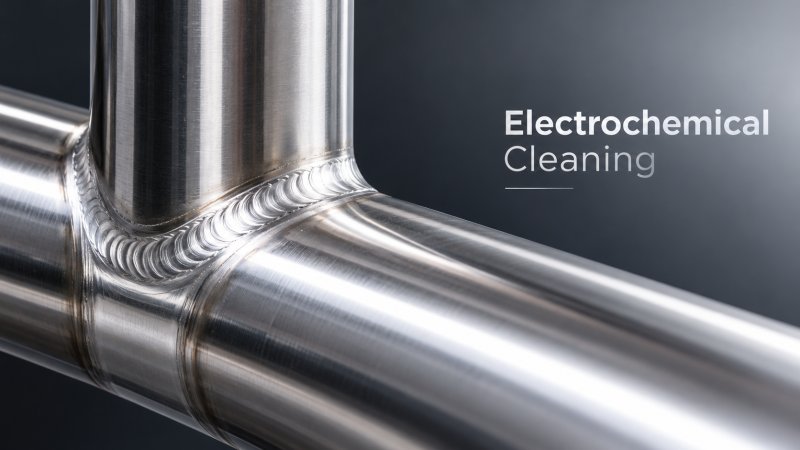
The benefits here are clear. It is vastly safer than hydrofluoric acid pickling, producing no hazardous fumes. It restores the passive layer instantly, meaning no secondary passivation step is required. It is also highly portable, making it ideal for on-site installation of stainless steel piping and structural frameworks. The only minor drawback is that it requires a power source and can be slower than chemical pastes for extremely heavy, thick oxide scales, but for standard welding tints, it is unmatched in efficiency and safety.
Prevention Through Welding Best Practices
The most effective way to deal with heat tint is to prevent it from forming in the first place. Post-weld cleanup consumes time and money, so optimizing your welding parameters is a critical cost-saving measure.
For tube stainless steel, the inside of the joint is just as vulnerable as the outside. When welding the root pass, the interior surface is exposed to atmospheric oxygen, resulting in severe sugaring and heat tint. Back purging with argon gas is mandatory. You must use purge dams to isolate the weld zone and maintain a steady, laminar flow of argon. If the flow rate is too high, it creates turbulence that actually draws air into the weld zone, defeating the purpose of the purge.
On the exterior, controlling heat input is vital. Using pulsed TIG welding allows you to maintain penetration while reducing the overall heat affected zone. Keeping the interpass temperature low—often below 150°C (300°F) depending on the specific grade—prevents the accumulation of heat that leads to heavy discoloration. Using the correct filler metal and ensuring proper shielding gas coverage on the front side will keep the exterior tint to a minimum, often reducing it to a light straw color that is easily cleaned.
Verifying Passivity and Surface Cleanliness
Visual inspection is not enough to confirm that heat tint and the underlying chromium-depleted zone have been completely removed. Fabricators must rely on standardized testing methods to verify surface passivity.
The water break test is a simple, non-destructive field method. You spray distilled water onto the cleaned surface. If the passive layer is intact, the water will sheet out evenly. If free iron or residual oxides are present, the water will bead up. For a more rigorous chemical verification, the ferroxyl test is used. This test detects the presence of free iron on the surface, which indicates contamination or incomplete cleaning. In highly critical applications, such as pharmaceutical or food-grade piping, electrochemical potentiokinetic reactivation (EPR) testing might be specified to quantify the exact degree of sensitization.
Integrating Material Solutions for Complex Structures
While restoring the finish on tube stainless steel is critical for specific zones, large-scale industrial and construction projects require a holistic approach to material selection. Different areas of a facility demand different properties. For instance, while stainless handles corrosive environments, heavy-duty walkways, machinery platforms, and equipment floors require slip resistance and structural rigidity.
In these applications, specifying a high-quality 235JR Patterned steel plate ensures safety and longevity. These composite patterned boards offer superior anti-skid ability and bending resistance compared to single pattern alternatives, effectively saving metal while enhancing overall performance. They are widely used in transportation, construction, and shipbuilding, providing a robust foundation that complements the precision of stainless steel piping and frameworks.
Partnering for Global Steel Supply
Managing this diversity of materials requires a supply chain that understands both precision and scale. Hongteng Fengda is a professional structural steel manufacturer and exporter based in China, providing reliable steel products and customized solutions for global construction, industrial, and manufacturing projects.
We specialize in angle steel, channel steel, steel beams, cold formed steel profiles, and customized structural steel components, supplying both standard specifications and OEM solutions. With modern manufacturing facilities and strict quality control, our products comply with major international standards, including ASTM, EN, JIS, and GB. Serving customers across North America, Europe, the Middle East, and Southeast Asia, Hongteng Fengda supports global buyers with stable production capacity, consistent quality, and dependable lead times. We help partners reduce sourcing risks, control costs, and complete projects efficiently, committing to being a trusted long-term structural steel partner.
Ultimately, whether you are fine-tuning your electrochemical cleaning parameters for a stainless steel joint or sourcing heavy-duty patterned plates for an industrial floor, the quality of your materials and your finishing processes dictate the lifespan of the structure. Pay attention to the metallurgical details, invest in proper surface restoration, and ensure your supply chain can deliver the exact specifications your project demands.
Please give us a message


Please enter what you want to find