Understanding galvanized steel sheet specifications is essential for selecting the right material for construction, fabrication, and industrial use. From coating thickness and base steel grade to dimensions and standards, each detail affects durability, cost, and performance. This guide explains how to read galvanized steel sheet specifications clearly, helping buyers, engineers, and project managers compare galvanized steel sheet for construction with confidence.
What Do Galvanized Steel Sheet Specifications Actually Mean?
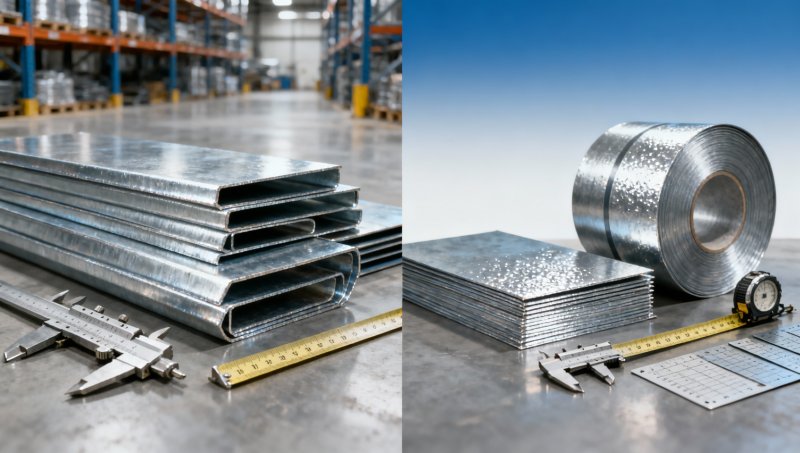
When you read a galvanized steel sheet specification, you are not looking at one single property. You are reading a combination of base steel grade, zinc coating weight or thickness, sheet thickness, width, length, surface condition, spangle type, and compliance standard. For most projects, 5 core factors determine suitability: mechanical strength, corrosion resistance, dimensional tolerance, forming performance, and compliance with the required standard.
In steel procurement, confusion often starts when buyers focus only on price per ton. A lower price may reflect a thinner zinc layer, wider thickness tolerance, or a lower-grade substrate. In construction, enclosure systems, ductwork, cable trays, and light structural components, these differences can directly affect service life, fabrication yield, and maintenance frequency over a period of 3–10 years or more depending on the environment.
For technical evaluators and quality teams, a specification must be read as a performance statement. For procurement and finance teams, it should also be read as a cost-risk statement. If the material enters humid, coastal, or industrial environments, coating class and standard compliance become more critical than simple nominal thickness. This is why project managers often review at least 4 checkpoints before approval: grade, coating, dimension, and standard.
A typical galvanized steel sheet description may include terms such as DX51D+Z, SGCC, ASTM A653, Z120, 0.8 mm x 1250 mm x coil, or cut-to-length sheet. Each element has a specific meaning. Once these are understood, comparing quotations from 2–4 suppliers becomes much more reliable and much faster.
The 6 specification elements buyers should decode first
- Base steel grade: Defines formability, strength, and intended processing route. Examples vary by ASTM, EN, JIS, and GB systems.
- Zinc coating designation: Often shown as Z60, Z120, Z180 or by similar weight classes, indicating corrosion protection level.
- Thickness and tolerance: A nominal 1.0 mm sheet is not the same as actual delivered thickness if tolerance control is loose.
- Width and length: Critical for nesting efficiency, scrap rate, and transport planning, especially in batch fabrication.
- Surface finish and spangle: Impacts appearance, paint adhesion, and downstream processing such as roll forming or stamping.
- Referenced standard: Confirms which testing, tolerances, and coating requirements the sheet must meet.
How to Read Grade, Coating, Thickness, and Size on a Datasheet
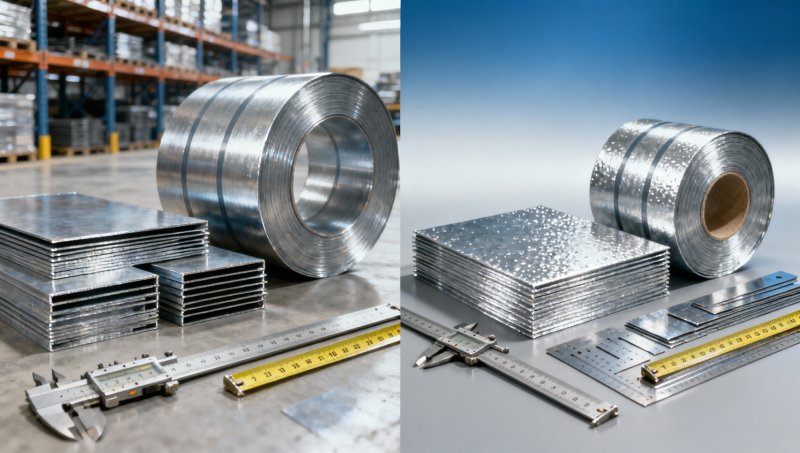
Most galvanized steel sheet specifications can be broken into a sequence. First comes the grade, then coating designation, then dimensions, and finally the standard or delivery condition. For example, if a sheet is marked DX51D+Z120, 1.2 mm x 1000 mm x 2000 mm, EN standard, it tells you the substrate family, zinc coating level, nominal sheet size, and compliance basis. This structure helps engineers and buyers compare like-for-like instead of mixing different performance levels.
Thickness needs special attention because many buyers compare only the nominal value. In practice, three thickness-related questions matter: What is the nominal thickness? What is the metallic coating excluded or included basis? What tolerance range is permitted? A 0.5 mm to 2.0 mm selection range is common in many industrial applications, but tolerance control can influence both forming behavior and final part consistency.
Coating designation is equally important. In many systems, the number reflects total coating mass on both sides, usually expressed in g/m². A higher coating class generally improves corrosion resistance, but it may also affect cost, weldability, and downstream finishing choices. For indoor dry service, lower coating classes may be workable. For outdoor exposure, infrastructure, or industrial humidity, buyers often consider mid to higher ranges based on project life and maintenance expectations.
Dimensions are not only about fit. Width and length affect yield, transport efficiency, and fabrication cycle time. A project that processes 500 sheets per month may save significant handling time by choosing optimized cut lengths rather than oversized stock. This is where an experienced steel supplier can help reduce waste before production even starts.
Quick reference table for reading galvanized steel sheet specs
The table below shows how common specification items should be interpreted during technical review and commercial comparison. It is useful for procurement teams, QA inspectors, and project engineers who need a fast screening method.
This type of breakdown helps prevent one of the most common sourcing errors: comparing two galvanized steel sheet offers that look similar in wording but differ in coating level, tolerance, or standard basis. For B2B purchases, that mismatch can create downstream claims, rework, or installation delays.
Which Standards and Compliance Points Should You Verify Before Ordering?
Galvanized steel sheet is used across construction, manufacturing, infrastructure, and equipment fabrication, so standards matter at both technical and commercial levels. In export business, buyers commonly request ASTM, EN, JIS, or GB references. The right standard depends on destination market, engineering drawings, and end-use requirements. Before issuing a purchase order, quality and project teams should confirm at least 5 items: grade equivalency, coating requirement, dimensional tolerance, surface quality, and inspection documents.
Not every project needs the same document package. Some buyers only need a mill test certificate and packing list. Others require third-party inspection coordination, traceable heat numbers, or project-specific marking. This is especially relevant for public infrastructure, OEM manufacturing, and cross-border distribution channels where acceptance is linked to tender documents or customer audit procedures.
For procurement teams under delivery pressure, standard alignment should be confirmed before production starts, not after the goods are packed. Changing from one standard family to another may affect chemistry range, coating designation terminology, or tolerances. That can lead to a new approval cycle of 7–15 days, especially if end customers need technical resubmission.
Hongteng Fengda works with international steel requirements and supports projects requiring ASTM, EN, JIS, and GB aligned supply. For buyers sourcing structural and processed steel products from China, this reduces communication gaps between technical departments, purchasing teams, and final approvers.
Common standard checkpoints for galvanized steel sheet procurement
Use the following matrix when reviewing supplier offers and approval documents. It helps avoid specification drift during quotation, sample confirmation, and mass order release.
The value of standard checking is not only compliance. It also protects budget approvals and construction schedules. When specifications are clarified early, finance and sourcing teams can compare offers on total delivered value instead of reacting to disputes later.
How Do Application Scenarios Change the Right Specification Choice?
Galvanized steel sheet for construction is not specified the same way as galvanized material for appliance parts, industrial cabinets, or fabricated brackets. The correct choice depends on environmental exposure, required forming process, expected lifespan, and downstream finishing. In practical terms, buyers should classify their use into 3 broad scenarios: indoor dry conditions, outdoor general exposure, and aggressive environments such as coastal or industrial pollution zones.
For roofing, wall panels, light framing, ducts, and cable support systems, coating level and dimensional stability are often the top concerns. For stamping and deep forming parts, substrate ductility and surface consistency become more important. For mechanical assemblies, flatness and thickness control may drive yield more than decorative appearance. That is why the same nominal 1.0 mm galvanized steel sheet can perform very differently in two factories.
In the middle of many steel sourcing programs, buyers also compare alternative product forms. For example, when a project combines sheets, structural sections, and fabricated components, it can be useful to standardize sourcing with one supplier. In related applications such as towers, transport infrastructure, machine parts, or steel structure components, products like DC01 Galvanized Round Steel may also be considered for complementary use where round sections, anti-corrosion treatment, and tensile strength in the 570–820 MPa range are relevant.
This broader sourcing view is important for distributors, project contractors, and OEM buyers. A supplier that can support galvanized sheet, structural profiles, and customized steel parts helps reduce vendor management effort, shortens technical communication chains, and improves delivery coordination across 2–3 production categories.
Scenario-based selection checklist
- Indoor equipment panels: prioritize formability, stable thickness, and surface quality for painting or assembly.
- Outdoor construction sheets: prioritize coating class, standard compliance, and sheet size efficiency for installation speed.
- High-humidity or marine-adjacent service: review whether standard galvanized coating is sufficient or if heavier coating and added protection are needed.
- Batch fabrication lines: confirm flatness, coil weight, cut length, and tolerance consistency to reduce stoppages and scrap.
A practical decision rule
If your project has a service-life expectation beyond 5 years in outdoor use, do not approve galvanized steel sheet based only on thickness and price. Add coating class, standard reference, and processing condition to the approval sheet. This simple rule helps non-technical approvers make better decisions without overcomplicating the review process.
What Should Procurement, QA, and Project Teams Compare Before Approving a Supplier?
A strong quotation for galvanized steel sheet should answer more than “How much per ton?” It should show whether the supplier can deliver the exact specification, hold tolerances consistently, prepare the right documents, and support the target lead time. For many B2B buyers, 6 review areas are enough for a reliable first-round comparison: technical match, coating confirmation, processing suitability, compliance documents, packaging, and lead time.
Lead time should be evaluated by order type. Standard stock or common specifications may move faster, while customized width, special coating requirements, or export packaging may require 2–4 weeks or longer depending on schedule and quantity. Procurement teams should always ask whether the quoted lead time includes production, inspection, packing, and shipping release. This is where many project timelines fail.
Hongteng Fengda supports global steel buyers with stable production capacity, consistent quality control, and customized solutions for structural and industrial applications. For companies that need both standard specifications and OEM-oriented steel products, supplier coordination becomes simpler when one manufacturing partner can align technical review, production planning, and export support under one process.
For distributors and commercial evaluators, the best supplier is not always the cheapest on paper. The right supplier is the one that reduces total sourcing risk. That includes fewer specification disputes, better packing for long-distance transport, and more predictable communication from sampling to batch delivery.
Supplier comparison table for galvanized steel sheet sourcing
The table below can be used during RFQ review, internal approval, or supplier benchmarking. It is especially useful when comparing 3 or more offers for the same galvanized steel sheet project.
A structured comparison protects everyone involved in the approval flow, from engineering and QA to procurement, management, and finance. It turns steel buying from a price-only task into a controlled decision based on technical fit and delivery reliability.
Common Mistakes, FAQ, and the Fastest Way to Get the Right Quote
Many issues with galvanized steel sheet orders come from incomplete descriptions. Buyers may write “galvanized sheet, 1.0 mm” and assume all suppliers will interpret it the same way. In reality, missing just 3 points—grade, coating class, and standard—can lead to major differences in corrosion resistance, forming behavior, and acceptance criteria. This is why experienced exporters ask detailed questions before confirming the quote.
Another mistake is treating all galvanized products as interchangeable. They are not. Coils, cut sheets, structural sections, and round steel serve different manufacturing needs. In broader anti-corrosion sourcing programs, related items such as galvanized round steel, beams, channels, and custom structural components may need to be aligned under one project specification to avoid compatibility and delivery issues.
A better process is to prepare a 4-step inquiry: define end use, confirm standard, list required dimensions and tolerances, and state document or inspection needs. This reduces back-and-forth, speeds quotation, and improves the quality of supplier comparison. For many standard export orders, this approach can shorten inquiry clarification from several rounds to 1–2 efficient exchanges.
FAQ
How do I know whether a higher zinc coating is worth the extra cost?
Compare the environment and expected service life first. For indoor dry use, a lower coating class may be sufficient. For outdoor construction, frequent condensation, or industrial exposure, a higher coating class usually offers better long-term value by reducing maintenance and replacement risk. The decision should be based on lifecycle cost, not only purchase cost.
What is the minimum information I should send when requesting a galvanized steel sheet quote?
Send at least 6 items: grade, coating designation, thickness, width, length or coil form, applicable standard, and quantity. If possible, also include end use, destination country, and any required documents. With these details, suppliers can provide a more accurate quote and realistic lead time.
Why do two suppliers quote different prices for what seems to be the same galvanized steel sheet?
The difference often comes from coating weight, actual thickness control, standard compliance, document scope, or packaging. One quote may also exclude testing, export packing, or stricter tolerance requirements. Always compare the technical line item, not just the product name.
Can one supplier support both standard structural steel and custom galvanized products?
Yes, and this can be useful for integrated projects. Hongteng Fengda supplies structural steel products, cold formed profiles, and customized steel components with support for international standards and export-oriented coordination. This helps contractors, distributors, and OEM buyers reduce sourcing fragmentation.
Why choose us for your steel sourcing plan?
If you are evaluating galvanized steel sheet specifications and want practical support instead of generic answers, Hongteng Fengda can help you confirm grade selection, coating requirements, dimension ranges, standard alignment, and related structural steel needs. We support buyers across North America, Europe, the Middle East, and Southeast Asia with stable production planning and export coordination.
You can contact us for specification confirmation, product selection, OEM dimensions, sample support, document requirements, delivery schedule review, and quotation comparison. If your project also involves structural sections, custom steel components, or related galvanized products, we can help you build a more efficient sourcing package with fewer communication gaps and clearer commercial control.
Please give us a message


Please enter what you want to find