Choosing the correct steel rod diameter is essential for safety, load performance, and cost control in construction and manufacturing projects. Whether you are comparing structural steel properties, planning structural steel erection, or sourcing from a reliable structural steel manufacturer, understanding diameter selection helps reduce risk and improve efficiency. This guide explains the key factors buyers, engineers, and project managers should consider before making a decision.
What Really Determines the Right Steel Rod Diameter?
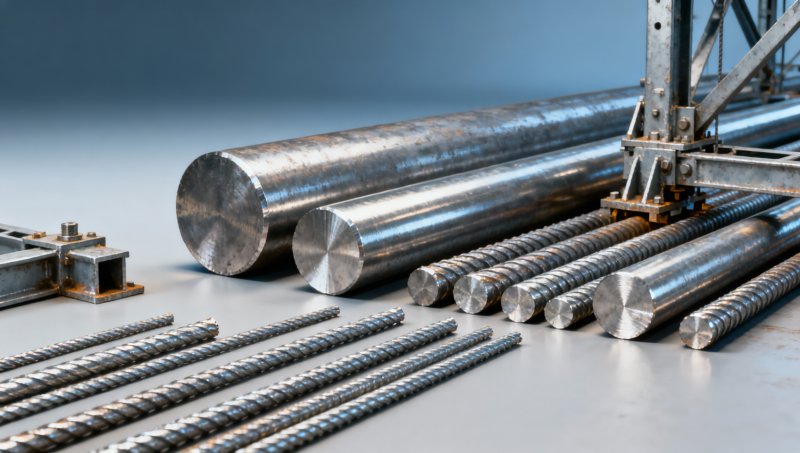
The right steel rod diameter is not chosen by guesswork or by simply copying a previous order. In most real projects, the correct size depends on five practical factors: load requirements, span or unsupported length, installation method, service environment, and compliance standards.
For engineers and technical evaluators, diameter affects tensile performance, stiffness, deformation control, and connection reliability. For buyers and project managers, it also affects procurement cost, transport weight, machining efficiency, and project risk. A rod that is too small may fail, bend, or wear too quickly. A rod that is too large may increase material cost, complicate fabrication, and create unnecessary weight.
In simple terms, the best diameter is the smallest size that safely meets strength, durability, and processing requirements under the actual working conditions.
Start with the Load, Not the Price
If you want to pick the right steel rod diameter, the first question is: what load must the rod carry? This includes static load, dynamic load, impact load, and any safety margin required by the project standard.
For example:
- Tension applications require checking tensile strength and elongation.
- Compression applications require attention to buckling risk, especially for long rods.
- Rotating or machined parts may need tighter tolerance and better roundness.
- Outdoor or marine use may require corrosion protection in addition to strength.
This is why selecting diameter based only on lower unit price can be misleading. A cheaper small-diameter rod may increase failure risk, while an oversized rod may waste budget over the full project volume. The correct approach is to define mechanical demand first, then compare suitable diameter ranges.
How Diameter Affects Strength, Stiffness, and Safety
Diameter changes more than just the physical size of the rod. It directly influences cross-sectional area, which affects load-bearing capacity. As diameter increases, the rod generally gains higher resistance to tension and bending. In many applications, a modest increase in diameter can significantly improve performance and reduce deformation.
This matters in construction, tower systems, transportation infrastructure, equipment parts, and steel structure components. If the rod is used in load-sensitive applications such as supports, fastener-related parts, or structural connectors, undersizing can create hidden safety issues that may only appear after installation.
Quality control teams and safety managers should also note that actual performance depends not only on nominal diameter but also on:
- material grade
- manufacturing consistency
- diameter tolerance
- out-of-roundness
- surface condition
- heat treatment condition
That is why professional sourcing decisions should consider both size and manufacturing quality, not just the catalog dimension.
Don’t Ignore Environment and Corrosion Exposure
In many projects, the environment is the reason a standard diameter choice fails too early. A steel rod used indoors in a dry setting faces very different conditions from one used in coastal air, industrial zones, highways, substations, or marine components.
Corrosion can gradually reduce the effective section of the rod, weakening load performance over time. In these cases, buyers often choose either a larger allowance or a corrosion-resistant treatment such as galvanizing. This is especially important in electric power towers, communication towers, railway systems, highway protection, street light poles, and building steel structure components.
A practical example in the middle of many sourcing decisions is Galvanized Round Steel. For projects exposed to weather or demanding service environments, galvanized round steel can offer long anti-corrosion life, a durable glossy surface, and wider environmental adaptability. Available diameter options such as 16-250mm or customized sizes allow procurement teams to match structural needs with corrosion protection requirements. When technical specifications also call for tensile strength in the 570-820 MPa range, tolerance control, and international standards such as ASTM, EN, JIS, or GB, this type of product becomes a practical option for balancing safety and lifecycle cost.
Questions Buyers and Engineers Should Ask Before Finalizing Diameter
Before confirming an order, it is worth reviewing a few essential questions:
- What is the exact application of the rod?
- Will it carry tensile, compressive, or combined loads?
- Is there a required standard or drawing specification?
- What is the working environment: indoor, outdoor, coastal, industrial, or marine?
- Are machining, threading, bending, stamping, or automatic lathe processing required?
- What tolerance and straightness requirements must be met?
- Is surface treatment necessary for service life expectations?
- Will customized length or diameter reduce processing waste?
For procurement and business evaluation teams, these questions help avoid a common sourcing problem: ordering a rod that is technically available but operationally unsuitable. For project owners, early clarification reduces rework, delays, and hidden lifecycle costs.
When Standard Sizes Are Enough and When Customization Makes Sense
Standard diameters work well when the design requirements are conventional, replacement cycles are frequent, or supply speed is the top priority. They are often easier to source, compare, and ship.
Customization becomes more valuable when:
- the rod must fit a specific assembly or OEM drawing
- the project has unique loading or installation constraints
- downstream machining needs optimized stock size
- material waste needs to be reduced
- special tolerance or heat treatment is required
For example, in industries such as metal stamping parts processing, electronic industry components, medical equipment, office equipment, household appliances, fasteners, and precision accessories, choosing a more suitable diameter can improve yield, reduce machining time, and lower defect rates.
That is why experienced structural steel manufacturers often support both standard and OEM solutions. The value is not only in supplying steel, but in helping customers choose dimensions that fit the real application.
How to Make a Safer and More Cost-Effective Final Decision
If you need a practical decision path, follow this order:
- Define the application and load condition.
- Confirm relevant standards, drawings, and safety factors.
- Evaluate environmental exposure and corrosion risk.
- Check whether standard diameter ranges meet both performance and fabrication needs.
- Review tolerance, roundness, surface treatment, and heat treatment requirements.
- Compare total cost, not just raw material price.
- Verify supply reliability, production consistency, and export standard compliance.
This process helps technical teams avoid underdesign, while helping purchasing teams avoid overbuying. In cross-border sourcing, it also helps decision-makers assess whether a supplier can provide stable quality, customized specifications, and dependable delivery.
Conclusion
Picking the right steel rod diameter is ultimately a decision about performance, durability, and project efficiency. The best choice is not the biggest rod or the cheapest rod, but the diameter that safely matches the real load, environment, fabrication process, and service life target.
For engineers, this means validating strength and application fit. For buyers and managers, it means controlling risk and total cost. For quality and safety teams, it means ensuring that the selected rod performs consistently in actual use. When these factors are evaluated together, diameter selection becomes a smart technical and commercial decision rather than a simple size comparison.
Please give us a message


Please enter what you want to find