Why Stainless Steel Actually Rusts in the Field
It is a common misconception that stainless steel never rusts. Out in the field, maintenance teams frequently encounter surface rust and have to explain to clients that the material itself isn't failing. The reality is that stainless steel relies on a microscopic, invisible layer of chromium oxide to resist corrosion. When this passive layer is compromised, rust forms.
The number one culprit in industrial and coastal environments is chloride. Whether it is salt spray, de-icing salts, or even certain types of insulation materials, chlorides attack the passive layer and cause pitting. But there is another silent killer on construction sites: carbon steel cross-contamination. When workers cut or grind standard structural steel nearby, microscopic iron particles fly through the air and settle on the pipe stainless surfaces. These carbon particles rust quickly, and as they corrode, they break down the underlying stainless passive layer. If you do not identify and eliminate the contamination source, cleaning the rust away is just a temporary fix.
Another common issue we see is galvanic corrosion. If the pipe stainless comes into direct physical contact with carbon steel or other less noble metals in the presence of an electrolyte like rain or condensation, a galvanic cell is formed. This accelerates the corrosion of the less noble metal, but the resulting rust stains and localized pitting can severely damage the stainless surface. Always check that isolation pads, gaskets, or protective coatings between dissimilar metals are intact during your inspections.
The Right Way to Clean Pipe Stainless Surfaces
Cleaning stainless piping requires a specific approach. The biggest mistake maintenance personnel make is using generic industrial cleaners or abrasive tools that contain chlorides or carbon steel.
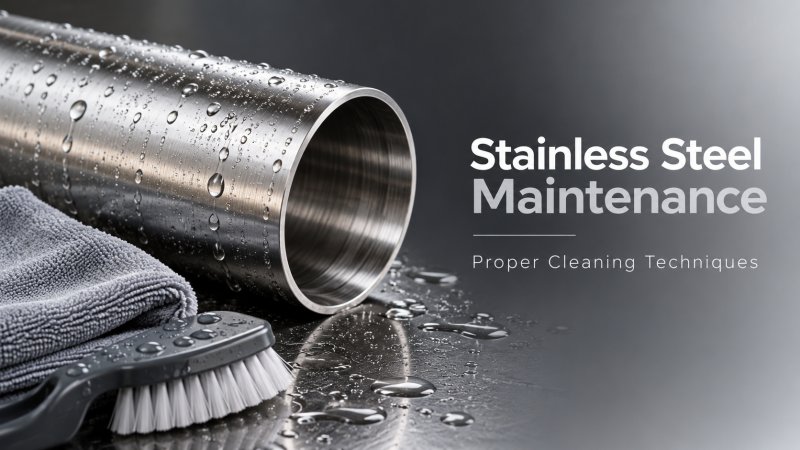
For routine cleaning, stick to mild soap and water or dedicated stainless steel cleaners. Use a soft cloth, sponge, or a non-abrasive nylon pad. Always wipe in the direction of the polish grain if the pipe has a brushed finish; wiping across the grain can trap dirt and create micro-scratches where corrosion can start.
When dealing with stubborn stains or light surface rust, you need a specialized approach. Use a paste or liquid cleaner containing phosphoric acid. Apply it, let it sit for a few minutes to break down the oxides, and then gently wipe it away. Never use a standard carbon steel wire brush or a regular steel wool pad. Doing so will embed carbon steel particles into the stainless surface, guaranteeing future rust spots. If you must use a mechanical abrasive, ensure it is strictly reserved for stainless steel, like a clean stainless wire brush or a specialized non-metallic scouring pad.
Also, never leave chemical cleaners on the surface longer than recommended. If residues are not completely rinsed off, they can concentrate under heat or sunlight, ironically accelerating the very corrosion you are trying to prevent. Thorough rinsing is just as important as the cleaning agent itself. If you are working with hard water, the minerals left behind after evaporation can cause water spots. Always rinse thoroughly with clean water, and if possible, use deionized water for the final rinse. Dry the surface immediately with a clean microfiber cloth.
Weld Areas and Passivation: The Weak Points
In any pipe stainless system, the welds and the heat-affected zones are the most vulnerable areas. The high temperatures from welding deplete the local chromium content and destroy the passive layer, often leaving behind heat tint or scale.
Post-weld cleaning is non-negotiable. You must remove the weld slag and the heat tint. Start by brushing the weld with a dedicated stainless steel wire brush. Then, apply a stainless steel pickling paste to dissolve the oxide scale and restore the chromium balance. Pickling pastes typically contain hydrofluoric and nitric acids, which are highly corrosive and toxic. Operators must wear full PPE, including acid-resistant gloves, face shields, and aprons. Apply the paste, wait for the recommended time, and rinse it off completely with copious amounts of water.
After pickling, a passivation treatment is highly recommended. Passivation uses chemicals, often citric acid nowadays for environmental and safety reasons, to remove free iron from the surface and accelerate the formation of a new, robust chromium oxide layer. Remember, passivation does not make the steel immune to corrosion; it simply restores its natural defense mechanism.
Evaluating Material Alternatives for Harsh Environments
Sometimes, if the maintenance costs for stainless piping become too high, or if the environment is exceptionally aggressive, it is time to step back and re-evaluate material choices for the broader structural system. Corrosion protection is an engineering trade-off.
In applications like external cladding, ventilation ducts, or non-critical structural supports where direct contact with strong corrosive media is unlikely, projects might benefit from alternative coated materials. For instance, in cold forming applications, engineers sometimes specify DX52D Galvalume Steel Coil to balance cost and longevity. This low-carbon steel offers excellent formability, with a yield strength not exceeding 260 MPa, a tensile strength ranging between 300 and 360 MPa, and an elongation after fracture of no less than 28%. It can withstand significant plastic deformation without fracturing, making it ideal for complex profile rolling.
The real advantage lies in its coating. Available in widths from 500-1500mm and thicknesses from 0.12mm-4mm, the 55% aluminum-zinc alloy coating provides superior long-term corrosion resistance, often outperforming standard galvanized coatings by 2 to 6 times. Because the density of 55% aluminum is smaller than that of zinc, the same weight and thickness of the plating layer yields an area that is 3% or larger than a galvanized steel sheet. Backed by ISO 9001, SGS, and BV certifications, it offers a reliable alternative for specific structural components. However, selecting the right material always requires matching the specific corrosion category of the project environment with local design standards.
Building a Proactive Maintenance Schedule
Reactive maintenance is expensive. A structured, proactive schedule is the best way to protect your investment.
Conduct monthly visual inspections, paying special attention to crevices, joints, and areas where water might pool. These are the prime locations for crevice corrosion. Check for any signs of carbon steel dust accumulation from nearby construction activities.
Schedule routine cleaning quarterly, adjusting the frequency based on the actual dirt and pollution levels in your specific environment. If you are in a coastal or heavy industrial zone, monthly cleaning might be necessary.
Annually, schedule a comprehensive assessment of the passive layer's condition. You can use commercial test kits to check for free iron on the surface. If the passivation has degraded, plan for a full re-passivation treatment during a scheduled shutdown to minimize operational disruption.
Keep a detailed log of every maintenance action. Record the date, the cleaning agents used, the areas inspected, and any anomalies found. Over time, this data will help you identify corrosion trends and adjust your maintenance intervals before a minor issue turns into a major failure.
Maintaining a pipe stainless system is not about finding a single magic product. It requires a clear understanding of how the material interacts with its environment, disciplined cleaning practices, and a willingness to adapt. Integrate these checks into your daily operational routine, and you will keep the system running safely and efficiently for decades.
Please give us a message


Please enter what you want to find