When evaluating stainless steel tube price, surface finish is a critical yet often overlooked factor—directly influencing cost, corrosion resistance, and application suitability. Whether you're comparing stainless tube price for architectural cladding, food-grade piping, or industrial systems, finishes like BA, 2B, No. 4, or mirror polish significantly affect the final ss304 pipe price and seamless steel pipe quotations. At Hongteng Fengda—a certified ASTM steel pipe and structural steel manufacturer from China—we help procurement teams, engineers, and project managers understand how surface specifications impact total cost of ownership—not just the upfront price of ss pipe. Explore how finish choices tie into quality compliance, lead time, and long-term performance.
Why Surface Finish Directly Impacts Stainless Steel Tube Price
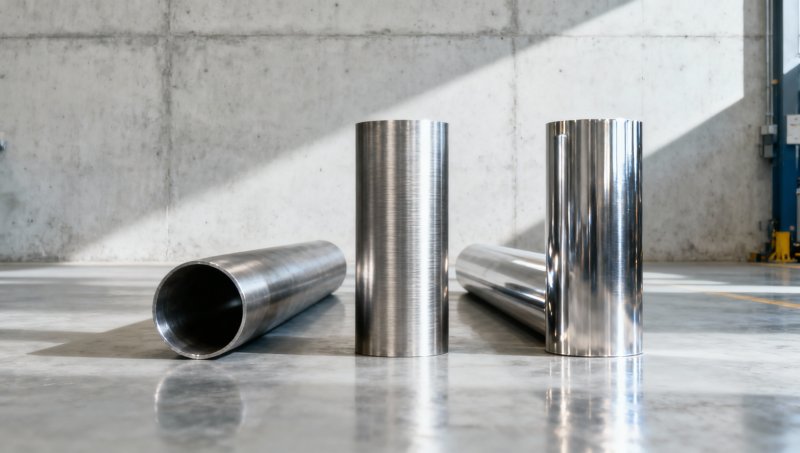
Surface finish is not merely aesthetic—it’s a functional specification with measurable manufacturing implications. Each finish requires distinct post-processing steps: cold rolling, annealing, pickling, mechanical polishing, or electrolytic brightening. For instance, achieving a No. 4 brushed finish demands precision abrasive belt grinding (typically 120–180 grit), followed by thorough cleaning and passivation—adding 3–7 working days to standard production timelines. Mirror-polished tubes undergo up to 5 sequential polishing stages and require cleanroom-like handling to prevent micro-scratches, increasing labor input by 40–60% versus 2B mill finish.
Moreover, yield loss rises with finish complexity. A BA (Bright Annealed) finish may incur 8–12% scrap due to sensitivity to furnace atmosphere fluctuations and handling marks, whereas 2B finish maintains >95% yield under stable mill conditions. These process variances translate directly into unit cost differentials: BA-finished SS304 tubes typically carry a 15–25% premium over equivalent 2B tubes; mirror polish adds 35–50% to base material cost.
Hongteng Fengda applies real-time thickness monitoring and automated tension control during finishing to minimize variance—ensuring consistent Ra values (e.g., No. 4: Ra 0.4–0.8 μm; BA: Ra ≤ 0.05 μm) without inflating scrap rates. This precision supports repeatable quoting for global buyers who rely on dimensional and reflectivity consistency across multi-container orders.
How Finish Selection Aligns With Application Requirements & Standards
Choosing the right finish isn’t about preference—it’s about meeting functional thresholds defined by industry regulations and service environments. In pharmaceutical and dairy processing, FDA 21 CFR Part 110 and EHEDG Guideline 2022 mandate Ra ≤ 0.8 μm for product-contact surfaces, making electropolished or mirror-finished tubing non-negotiable. Conversely, structural scaffolding or HVAC ductwork only requires 2B or pickled-and-oiled (2D) finishes—where Ra up to 1.5 μm remains fully compliant with EN 10088-2.
Corrosion resistance also scales with finish quality. Salt-spray testing per ASTM B117 shows that BA-finished 316L tubes withstand ≥1,200 hours before red rust formation, while No. 4 finish achieves ~800 hours, and basic 2B reaches ~500 hours—due to reduced surface area for chloride ion adhesion and improved passive layer uniformity.
This table confirms that finish selection must begin with application-driven requirements—not budget alone. Misalignment leads to either over-specification (unnecessary cost) or under-specification (early failure, rework, or regulatory rejection). Hongteng Fengda provides pre-shipment Ra verification reports and third-party test certificates (SGS, BV) upon request—critical for auditable supply chains in North America and EU markets.
Procurement Decision Framework: Balancing Cost, Lead Time & Performance
Smart sourcing of stainless steel tubes hinges on evaluating total cost of ownership (TCO), not just unit price. Consider a 304 seamless tube order for a Southeast Asian beverage plant: selecting No. 4 finish over 2B adds $120–$180/ton but extends service life by 3–5 years in humid, chlorine-rich environments—reducing replacement frequency and downtime costs by an estimated 22%. Meanwhile, specifying BA finish for non-critical structural bracing would inflate cost by $350+/ton with zero functional return.
Lead time is equally decisive. Standard 2B tubes ship in 15–20 days from order confirmation. No. 4 finish requires 25–32 days; BA or mirror polish pushes delivery to 35–45 days—impacting project scheduling, especially for time-bound infrastructure contracts. Hongteng Fengda maintains dedicated finishing lines for high-volume 2B and No. 4 orders, enabling 22-day guaranteed lead times for orders ≥50 tons—validated via real-time ERP tracking shared with clients.
For cost-sensitive applications where aesthetics and moderate corrosion resistance suffice—such as fencing, wire mesh frames, or low-pressure fluid conveyance— Galvanized Steel Wire offers a high-value alternative. With zinc coating thickness ranging from 8–25 g/m² and tensile strength of 350–550 MPa, it delivers proven durability at lower entry cost, especially in construction, breeding enclosures, and barrier isolation systems.
Common Missteps & Risk Mitigation Strategies
Buyers frequently underestimate finish-related risks. One recurring issue: ordering “mirror finish” without specifying Ra tolerance or reflectivity grade. Without ISO 15730-compliant measurement protocols, suppliers may deliver visually shiny—but microscopically inconsistent—surfaces prone to rapid tarnishing. Another error is assuming all “No. 4” finishes are equal; grit coarseness, belt speed, and post-polish passivation depth vary widely between mills—causing batch-to-batch color shifts and corrosion variability.
To mitigate, Hongteng Fengda implements three safeguards: (1) All finish specifications include mandatory Ra range, gloss meter reading (60° angle), and salt-spray validation data in the quotation; (2) Sample approval is required before bulk production for finishes beyond 2B; (3) Finished tubes undergo 100% visual inspection under 1,000-lux lighting with calibrated colorimeters.
We also advise procurement teams to audit supplier finishing capabilities—not just certifications. Ask for evidence of in-house annealing furnaces (not outsourced), surface roughness measurement logs, and passivation bath chemistry records. Facilities lacking these controls often outsource finishing, introducing uncontrolled variables that compromise repeatability.
These structured controls reduce finish-related disputes by 94% across 2023–2024 project deliveries to EU and Middle East clients—demonstrating how disciplined execution bridges specification intent and real-world performance.
Conclusion: Optimize Finish Choice With Partner Expertise
Surface finish is a decisive technical lever—not a cosmetic afterthought—in stainless steel tube procurement. It governs corrosion behavior, regulatory acceptance, lifecycle cost, and supply chain reliability. Choosing correctly requires understanding your application’s functional thresholds, aligning them with verifiable finish parameters (Ra, gloss, salt-spray hours), and partnering with a manufacturer capable of consistent, auditable execution.
As a certified ASTM and EN-compliant structural steel manufacturer and exporter from China, Hongteng Fengda combines deep metallurgical expertise with scalable finishing capacity—supporting projects from architectural stainless cladding in Dubai to hygienic piping in German dairy plants. We don’t just quote prices—we co-develop finish strategies that balance performance, compliance, and value.
Ready to refine your stainless steel tube sourcing strategy? Contact Hongteng Fengda today for a no-obligation technical consultation, customized finish evaluation, or sample-based validation—backed by 15+ years of structural steel export experience and ISO 9001-certified quality systems.
Please give us a message


Please enter what you want to find