Steel Roofing is built to handle tough weather, but many people still ask the same practical question: how well does it really perform in wind and rain? The short answer is that a well-designed steel roof can perform exceptionally well, provided the material grade, panel profile, fastening system, and installation details are all correct. In exposed climates, Steel Roofing often delivers better long-term reliability than many conventional roof coverings.
This matters because weather resistance is never based on one feature alone. Wind uplift, driving rain, drainage speed, seam tightness, corrosion protection, and roof geometry all work together. A checklist approach makes evaluation easier and helps avoid expensive mistakes before purchase or installation.
Why Steel Roofing Performs Well in Harsh Weather
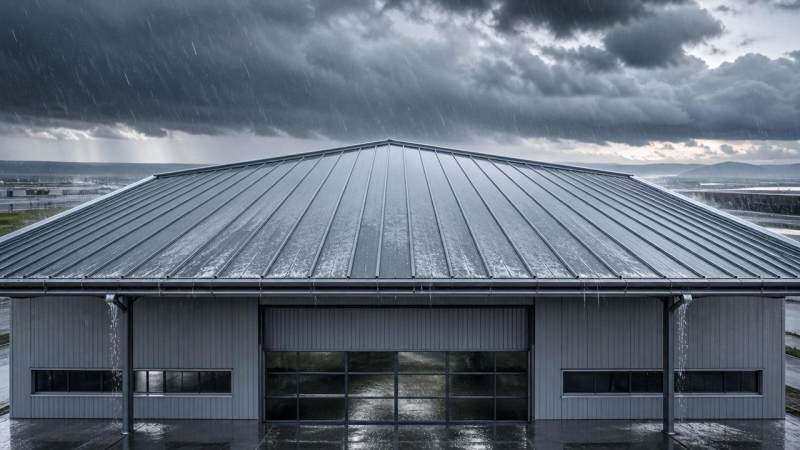
Steel Roofing performs well in storms because steel offers high strength relative to its weight. Properly formed panels resist deformation, while secure fasteners and tested overlaps reduce the chance of panel lift during strong gusts.
In heavy rain, the smooth surface helps water shed quickly. Unlike porous materials, steel does not absorb moisture. When combined with the right slope, flashing, and drainage layout, Steel Roofing limits water intrusion and reduces standing water risk.
Coatings also play a major role. Galvanized or coated steel improves corrosion resistance, especially in wet climates, coastal regions, and industrial environments. Long service life depends not only on the steel itself, but also on how the protective layer performs over time.
Checklist: What to Examine Before Choosing Steel Roofing
Use the following checklist to judge whether a roof system is likely to perform well in wind and rain. Each point affects field performance, maintenance needs, and service life.
- Check the panel profile first. Deeper ribs and well-engineered seams usually improve stiffness, water shedding, and wind uplift resistance on exposed roofs.
- Confirm the base steel grade and thickness. Thicker material and suitable strength levels help panels resist distortion, oil canning, and storm-related fatigue.
- Verify coating type and coating mass. In rainy or corrosive environments, galvanized or equivalent protective systems are essential for long-term durability.
- Review fastening details carefully. Fastener spacing, clip design, screw quality, and substrate engagement directly affect uplift performance in high winds.
- Inspect joint and seam design. Poor side laps, weak standing seams, or inadequate sealant placement can allow wind-driven rain to penetrate.
- Measure roof slope against rainfall intensity. Even strong Steel Roofing performs better when the pitch supports fast drainage and prevents backflow.
- Examine flashing at edges and penetrations. Valleys, ridges, skylights, vents, and eaves often fail before field panels do.
- Ask for wind and weather testing data. Tested systems provide more confidence than generic claims about storm resistance.
- Plan the underlayment and insulation layer. Secondary barriers help control condensation, noise, and water entry during extreme events.
- Match the roof system to the local climate. Coastal salt, snowmelt, hot sun, and monsoon rain each require different detailing priorities.
How Wind Affects Steel Roofing
Wind does not act evenly across a roof. Corners, edges, and ridges usually face the highest uplift pressures. That is why failures often begin at perimeter zones rather than in the center of the roof plane.
A high-performing Steel Roofing system addresses these pressure zones with closer fastener spacing, stronger clips, reinforced edge details, and substrate compatibility. Panel length and thermal movement must also be considered. If long panels cannot move properly, stress may transfer to fasteners and seams.
Key wind-resistance factors
- Use tested uplift-rated assemblies instead of mixing unrelated components on site.
- Strengthen eaves, corners, and ridges where suction loads are usually highest.
- Select clips and fasteners compatible with the support structure and design loads.
For buildings in industrial and construction applications, supporting accessories also matter. Products such as Galvanized Expanded Metal Sheet are often used in related structural or enclosure applications where strength, corrosion resistance, and customization are required. With galvanized steel grades such as DX51D+Z, S250GD+Z, and S350GD+Z, and zinc layers from 60-275g/m², these materials help support durable building systems in demanding environments.
How Rain Affects Steel Roofing
Rain performance depends less on impact and more on water management. Steel Roofing generally sheds rain quickly, but only if the panel layout, end laps, drainage paths, and flashing details are well planned.
Heavy rain becomes more challenging when wind pushes water uphill or sideways. In those conditions, seam geometry, sealants, and closure details become critical. A roof can use excellent steel and still leak if transitions around penetrations are weak.
Key rain-performance factors
- Maintain proper slope so runoff moves fast and does not pond near laps or penetrations.
- Install sealants only where specified, because overuse or poor placement can create future failure points.
- Keep gutters, valleys, and downpipes sized for peak rainfall instead of average rainfall.
Performance in Different Project Scenarios
Coastal and marine climates
Salt-laden air increases corrosion pressure. Here, Steel Roofing should use appropriate protective coatings, compatible fasteners, and careful maintenance of cut edges and scratches.
Material selection is more important than appearance alone. Even minor detailing errors can shorten roof life when moisture and salt combine over many years.
Storm-prone inland regions
In high-wind zones, uplift resistance becomes the first filter. Panel profile, attachment frequency, and tested edge details should all be reviewed before installation begins.
A lighter roof can be an advantage structurally, but only when the connection design is strong enough to transfer storm loads safely into the building frame.
Industrial and agricultural buildings
Large-span buildings often face high exposure and demanding maintenance conditions. Steel Roofing works well here because it can cover broad areas efficiently and support long service cycles.
Where moisture, ventilation, or chemical exposure is present, corrosion control should be reviewed together with supporting steel products and enclosure details.
Commonly Overlooked Risks
Ignoring thermal expansion is a common mistake. Steel moves with temperature change, and that movement can stress seams, clips, and penetrations if not designed correctly.
Mixing incompatible metals is another risk. Galvanic corrosion may develop when roof components and fasteners are not properly matched for the environment.
Poor installation often causes more failures than poor material. Misaligned panels, overdriven screws, missing closures, and rushed flashing work can reduce the weather resistance of Steel Roofing significantly.
Neglecting inspection after major weather events also creates hidden problems. Small seam openings or damaged flashings can become major leaks during the next storm.
Practical Steps for Better Results
- Start with local wind and rainfall data, then match the roof system to the actual exposure level.
- Choose steel grade, coating, and panel profile based on service environment, not only initial budget.
- Use tested assemblies and confirm the fastening schedule before procurement.
- Pay extra attention to edges, penetrations, sealants, and drainage details during installation.
- Schedule regular inspections and clean drainage components to maintain rain performance over time.
For projects requiring broader steel support, Hongteng Fengda supplies structural steel products and customized solutions for global construction and industrial use. With production aligned to ASTM, EN, JIS, and GB standards, the company supports consistent quality, stable lead times, and dependable export service.
Conclusion
Steel Roofing can perform extremely well in wind and rain when the system is chosen and installed correctly. Strength, coating quality, seam design, fastener layout, slope, and flashing all shape real-world performance.
Use a checklist instead of relying on assumptions. Review weather exposure, demand tested details, and focus on installation quality. That approach gives Steel Roofing the best chance to deliver the durability, low maintenance, and weather protection it is known for.
Please give us a message


Please enter what you want to find