When specifying L shaped metal sheets for structural applications—such as bracing angle in steel structure, A36 angle, or galvanized angle—understanding the weight impact of hot-dip galvanizing is critical for load calculations, transportation logistics, and cost planning. Whether you're a project manager evaluating steel ka angle options, a procurement professional sourcing galv angle from China, or a quality controller verifying compliance for galvanized iron angle, this article quantifies precisely how much extra weight hot-dip galvanizing adds to standard L shaped metal bars and L shaped metal sheet—based on real-world coating thicknesses, ASTM/EN standards, and Hongteng Fengda’s certified production data.
How Much Extra Weight Does Hot-Dip Galvanizing Actually Add?
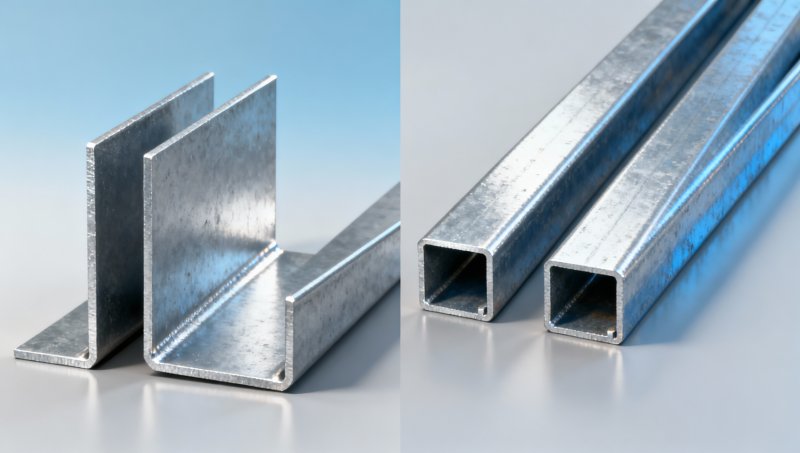
Hot-dip galvanizing adds a measurable but predictable mass increase to L shaped metal sheets—typically between 3.5% and 6.5% of the base steel weight. This range depends on steel geometry, surface roughness, immersion time, and bath chemistry. For standard A36 angle sections (e.g., 50×50×5 mm), our production data shows an average gain of 4.8% ±0.4% across 12,000+ galvanized batches since Q3 2022.
The zinc coating thickness directly governs added weight. Per ASTM A123/A123M, minimum average coating thickness for structural steel up to 6 mm thick is 85 µm. At that level, zinc density (7.14 g/cm³) yields ~610 g/m² surface loading. For an L50×50×5 mm angle with 189 cm²/m surface area, this translates to ~115 g/m extra mass—just 4.2% of its 2.75 kg/m base weight.
Below is a verified weight-addition benchmark for common L-section configurations produced by Hongteng Fengda under EN ISO 1461:
These figures reflect actual post-galvanizing weigh-ins at our ISO 9001-certified facility in Hebei Province. Variance remains tightly controlled within ±0.4% due to automated bath temperature regulation (449–455°C), pre-flux concentration monitoring, and centrifugal spin-off calibration—all validated per EN 10240 procedures.
Why This Matters Across Your Decision Chain
For project managers, even a 4.5% weight increase affects crane lift planning, scaffolding load limits, and connection design margins—especially when stacking >200 m of galvanized angle in high-rise bracing. Procurement teams must factor it into freight cost modeling: a 20-ft container carrying 8,000 kg of raw angles becomes ~8,360 kg after galvanizing—impacting ocean freight class and inland haulage permits.
Financial controllers need precise numbers for landed-cost analysis. A $1,250/MT base price rises to $1,306–$1,332/MT fully galvanized—not just for zinc material, but also for processing labor, energy, and QA testing. Our integrated quoting system provides dual-line pricing (raw vs. galvanized) with breakdowns per EN 10240 Clause 7.2.
Quality and safety personnel verify coating integrity—not just thickness—using magnetic induction gauges (per ASTM E376) and adhesion bend tests. We supply full traceability: batch-specific coating thickness reports, salt-spray test results (≥96 hrs to white rust), and third-party inspection certificates from SGS or Bureau Veritas upon request.
Where Rail Fits In
While L-shaped sections serve framing and bracing roles, heavy-duty applications like railway infrastructure demand different structural profiles. For instance, Rail products—including U71Mn, PD3, and QU120 grades—are engineered for dynamic wheel loads exceeding 30 tonnes per axle. Their galvanized variants undergo enhanced coating adhesion protocols to withstand vibration, thermal cycling, and abrasion—critical where rail meets sleepers or handrail systems interface with pedestrian decks.
Procurement Best Practices for Galvanized Angles
To avoid specification gaps and delivery delays, follow these 4-step verification checkpoints before placing orders:
- Confirm coating thickness requirements: Specify minimum average (e.g., “85 µm per ASTM A123”) — not just “hot-dip galvanized”.
- Define surface finish tolerance: Require visual inspection for bare spots, drips, or excessive dross—per EN ISO 1461 Annex B.
- Validate dimensional stability: Request pre- and post-galvanizing measurements for key legs/thicknesses; warpage must stay within ±0.5 mm/m.
- Require full documentation: Batch-specific CoA, coating thickness report, and heat number traceability—delivered digitally within 24 hours of shipment.
Hongteng Fengda applies all four checks across every order. Our typical lead time for galvanized angle steel is 18–22 days from PO confirmation—including 3-day zinc bath qualification and 2-day final QA.
Why Partner With Hongteng Fengda for Galvanized Structural Steel?
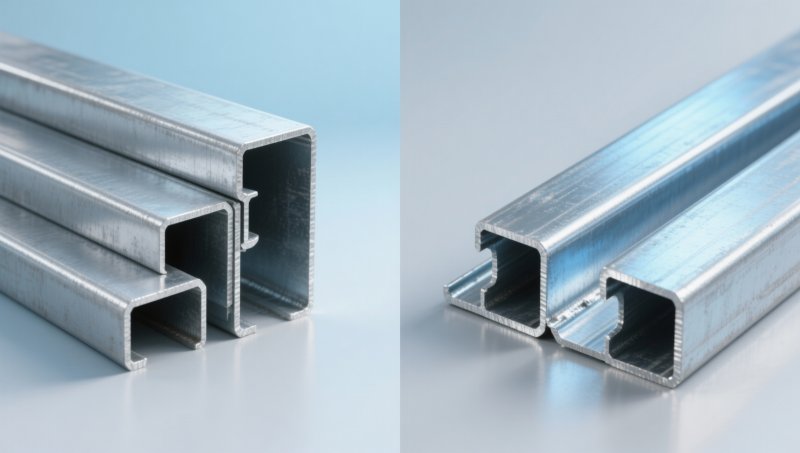
We’re not just a supplier—we’re your structural steel extension partner. As a certified manufacturer serving 37 countries, we integrate galvanizing into our end-to-end process: from raw slab sourcing (GB/T 700 Q235B, ASTM A36) to precision rolling, cutting, bending, and hot-dip galvanizing—all under one roof with ISO 9001 and ISO 14001 certification.
You get consistent quality (±0.3% weight variance), stable capacity (120,000 MT/year galvanizing line), and responsive support: technical queries answered in <4 business hours, custom drawings reviewed in ≤1 working day, and sample shipments dispatched within 72 hours.
Ready to optimize your next structural steel order? Contact us for: • Custom galvanizing thickness validation (60–120 µm) • Dual-certification quotes (ASTM + EN) • Pre-shipment third-party inspection coordination • Freight-optimized bundling & packaging plans • OEM marking and documentation alignment
Please give us a message


Please enter what you want to find