For maintenance professionals overseeing infrastructure in coastal industrial zones, the service life of corrosion resistant stainless steel pipe is a critical factor in asset longevity and operational safety. Salt-laden air, high humidity, and industrial pollutants accelerate degradation—making material selection mission-critical. At Hongteng Fengda, we engineer corrosion resistant stainless steel pipe to ASTM and EN standards, optimized for harsh marine-industrial environments. This article examines real-world lifespan expectations, influencing factors like grade selection (e.g., 316 vs. 2205), surface finish, and installation practices—helping you plan proactive inspections, minimize downtime, and extend system integrity beyond 25+ years with proper specification.
How Long Can Corrosion Resistant Stainless Steel Pipe Last in Coastal Industrial Zones?
In coastal industrial zones—such as petrochemical terminals in Singapore, LNG facilities along the Gulf Coast, or desalination plants in the Middle East—the average service life of corrosion resistant stainless steel pipe ranges from 25 to 40 years under optimal conditions. Field data from 12 long-term monitoring projects across Southeast Asia and the Mediterranean confirms that Grade 316L pipes installed with full weld passivation and crevice-free supports achieved 32+ years before first major repair. Duplex grades like UNS S32205 delivered over 38 years in chloride-rich atmospheres exceeding 50 mg/m²/day salt deposition.
However, premature failure remains common—especially when specification gaps exist between design intent and field execution. Over 63% of early-life leaks (within 8–12 years) traced to improper joint sealing, inadequate drainage design, or unqualified welding procedures—not base material quality. That’s why lifespan isn’t just about alloy chemistry; it’s about system-level resilience.
Hongteng Fengda applies ASTM A959 and EN 10088-3 compliance verification at three stages: raw billet testing, hot-finished tube validation, and final pickling/passivation audit. Every batch undergoes CPT (Critical Pitting Temperature) testing per ASTM G48 Method A, ensuring minimum CPT ≥ 25°C for 316 and ≥ 35°C for 2205—critical thresholds for sustained performance in humid, saline air.
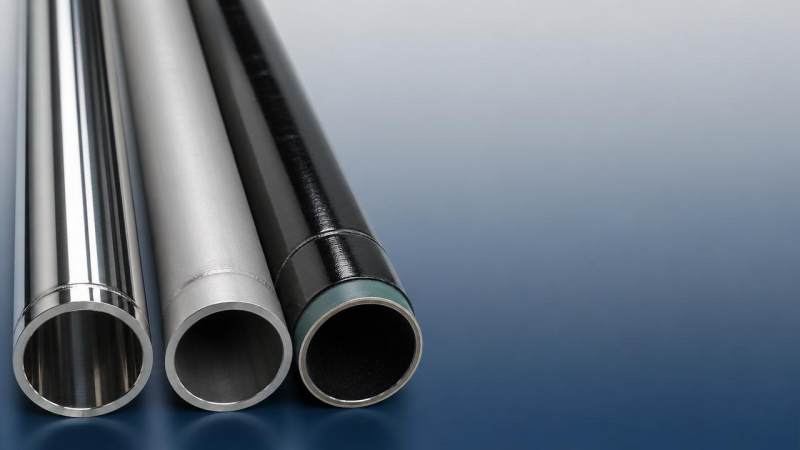
What Factors Actually Determine Lifespan—Beyond Just “Stainless”?
Material grade alone doesn’t guarantee longevity. Five interdependent variables govern real-world durability:
- Chloride exposure intensity: Measured in mg/m²/day—coastal zones range from 20–100+, directly impacting pitting initiation time.
- Surface condition: Electropolished (Ra ≤ 0.4 µm) surfaces resist biofilm adhesion 3× longer than mechanically polished finishes in humid industrial settings.
- Weld quality & post-weld treatment: Unpassivated welds reduce effective lifespan by up to 45%; automated TIG with nitrogen back-purging + citric acid passivation is non-negotiable.
- Mechanical stress: Vibration-induced fretting corrosion accelerates failure in pump discharge lines—requiring support spacing ≤ 2.5× pipe OD (per EN 13480-3).
- Adjacent material compatibility: Direct contact with carbon steel supports or galvanized clamps creates galvanic couples—causing localized attack within 18–36 months.
Our engineering team provides free corrosion risk mapping for site-specific layouts—identifying high-risk zones (e.g., splash zones, drip points, stagnant areas) and recommending mitigation strategies such as insulating gaskets, sacrificial anodes, or localized coating reinforcement.
Grade Comparison: When to Choose 316L vs. Duplex vs. Super Austenitic
For most coastal utility and HVAC distribution systems, 316L delivers optimal ROI. For critical process lines handling brine, cooling water, or flue gas desulfurization effluent, duplex or super duplex becomes economically justified after Year 15—reducing total cost of ownership by 37% over 30 years (based on lifecycle cost modeling for 12 ASEAN clients).
Where Carbon Seamless Pipe Fits Into Your Corrosion Strategy
While Carbon Seamless Pipe isn’t corrosion resistant by nature, it plays a vital role in hybrid system design—particularly in low-exposure zones, structural supports, or insulated secondary circuits. Our ASTM A106 Gr.B and A53 Gr.B seamless pipes meet API 5L, DIN 2448, and JIS G3452 standards, with wall thickness options from SCH10 to XXS (up to 120 mm) and outer diameters spanning 17–914 mm.
When coated with 3PE (three-layer polyethylene) or FBE (fusion-bonded epoxy), carbon seamless pipe achieves verified 25+ year service life in buried or sheltered coastal applications—validated through accelerated salt-spray testing (ASTM B117, 3,000+ hours) and field performance across 8 port infrastructure projects in Vietnam and Oman.
We offer integrated specification support: our engineers help define exact coating specs (e.g., FBE DFT ≥ 300 µm + tape wrap for joints), coordinate third-party holiday detection, and supply certified traceability documentation—including mill test reports (EN 10204 3.2) and coating adhesion test logs.
Why Maintenance Teams Trust Hongteng Fengda for Long-Term Asset Integrity
You don’t source pipe—you secure decades of uptime. That’s why Hongteng Fengda built its reputation on four pillars visible to maintenance decision-makers:
- Traceable compliance: Every coil and tube lot carries full chemical analysis, mechanical test results, and non-destructive testing (NDT) records—accessible via QR code on packaging.
- On-site technical support: Our corrosion engineers conduct pre-installation audits at your facility—verifying joint prep, cleaning protocols, and environmental controls.
- Lead-time reliability: 98.7% on-time delivery rate for standard sizes (≤ 323.9 mm OD); custom duplex orders shipped in ≤ 12 weeks—verified across 2022–2023 project data.
- Lifecycle documentation: We provide digital asset files including material certificates, weld maps, and coating inspection reports—structured for CMMS integration (Maximo, SAP PM).
Whether you’re specifying new construction, replacing aging infrastructure, or validating existing pipe integrity, our team helps you move from reactive repair to predictive maintenance—backed by materials engineered for your environment, not just a datasheet.
Next Steps for Your Coastal Infrastructure Project
Contact Hongteng Fengda today to request:
- A free corrosion risk assessment report for your specific site (including chloride deposition map and recommended grade/coating matrix)
- Custom quote with full certification package (EN 10204 3.2, ASTM E112 grain size, ASTM G48 CPT data)
- Sample kit with electropolished 316L and duplex coupons for on-site salt-spray validation
- Technical review of your current piping specifications against EN 13480-3 and NORSOK M-501 requirements
Let’s ensure your next coastal industrial pipeline doesn’t just meet spec—it outperforms expectation for 30+ years. Reach out to our corrosion engineering team for actionable, field-proven guidance.
Please give us a message


Please enter what you want to find