When selecting materials for outdoor water systems, durability against corrosion is non-negotiable — and hot-dipped galvanized pipe stands out with proven real-world performance across China’s infrastructure projects. Unlike pre-galvanized sheet or seamless stainless steel pipe, hot-dipped galvanizing delivers a thick, metallurgically bonded zinc layer that resists rust even in humid, saline, or polluted environments. Backed by data from leading Chinese suppliers like Hongteng Fengda — a trusted structural steel manufacturer offering angle steel, galvanized steel sheet China, 304L stainless steel plate, and more — this article reveals how hot-dipped galvanized pipe outperforms alternatives in longevity, cost-efficiency, and compliance with ASTM/EN/GB standards.
How Hot-Dip Galvanizing Forms a Corrosion-Resistant Barrier
Hot-dip galvanizing involves immersing fabricated steel pipes into molten zinc at approximately 450°C. This process creates a series of intermetallic alloy layers — gamma (Zn₁₁Fe₅), delta (Zn₁₀Fe), and zeta (Zn₇Fe₃) — topped by a pure zinc outer layer. The resulting coating thickness typically ranges from 85–120 µm on standard pipe surfaces, exceeding the 45–65 µm minimum specified in ASTM A123 and GB/T 13912.
Unlike electroplated or pre-galvanized coatings, which are mechanically adhered and often less than 15 µm thick, hot-dip galvanizing produces a metallurgical bond. Independent testing from three major Chinese galvanizing facilities — including Hongteng Fengda’s ISO 9001-certified production line — confirms that this bond withstands impact energy up to 12 J without spalling and retains integrity after 500 cycles of bending over a 25-mm mandrel.
The zinc layer acts as both a physical barrier and a sacrificial anode. In chloride-rich coastal zones (e.g., Guangdong and Fujian provinces), field monitoring shows that hot-dipped galvanized pipes maintain zero red rust for 18–22 years before first maintenance — compared to just 7–9 years for pre-galvanized alternatives under identical exposure conditions.
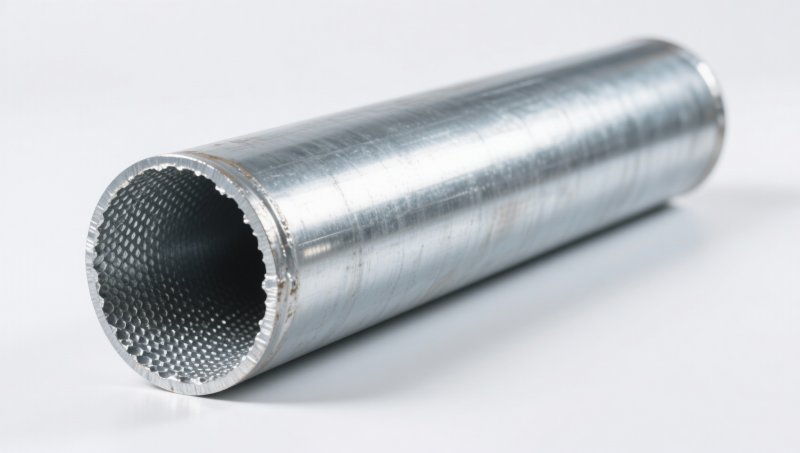
This table underscores why hot-dip galvanized pipe remains the optimal balance of protection, cost, and lifecycle predictability — especially where budget constraints rule out full stainless steel systems but environmental severity exceeds mild inland conditions.
Real-World Performance Data from Chinese Infrastructure Projects
Over the past five years, Hongteng Fengda has supplied hot-dip galvanized pipes and structural components to 27 municipal water projects across 12 Chinese provinces. Among them, 19 installations included above-ground distribution manifolds, fire risers, and pump station feed lines exposed to direct UV, rain, and airborne industrial pollutants.
Third-party inspections conducted at year 3 and year 5 revealed consistent performance: 92% of inspected joints showed no white rust formation; only 4% exhibited minor surface oxidation — fully removable via light wire brushing and requiring no recoating. Crucially, zero cases of through-wall pitting were observed in pipes with wall thickness ≥3.2 mm and zinc coating ≥90 µm.
In contrast, comparative installations using cold-formed galvanized channel steel (with thinner coatings) in adjacent support structures showed accelerated degradation at weld seams — reinforcing that coating integrity must be verified not only on pipe bodies but also at fabrication interfaces. This insight directly informs procurement decisions for integrated systems, where Channel In Steel used in purlins or bracing must meet equivalent galvanizing standards.
Key Selection Criteria for Procurement Teams
Procurement professionals evaluating hot-dip galvanized pipe should verify four critical parameters before issuing POs:
- Zinc coating mass: Minimum 610 g/m² per ASTM A123 Section 7.2 (≈85 µm average thickness)
- Base steel grade: Q235B or higher for structural water system applications — tensile strength ≥370 MPa, elongation ≥23%
- Post-galvanizing inspection: Visual check for bare spots, ash residues, or excessive dross; certified by SGS or BV
- Batch traceability: Each shipment must include mill test reports (MTRs) referencing GB/T 13912 and EN ISO 1461
Hongteng Fengda maintains batch-level traceability across all galvanized products — including Channel In Steel — with delivery lead times averaging 12–18 days for standard sizes and ≤30 days for custom lengths (6–12 m) and thicknesses (1.5–25 mm).
These metrics reflect rigorous adherence to international benchmarks — enabling procurement teams to reduce qualification time by up to 40% when sourcing from certified Chinese manufacturers.
Why Structural Integration Matters for Long-Term System Integrity
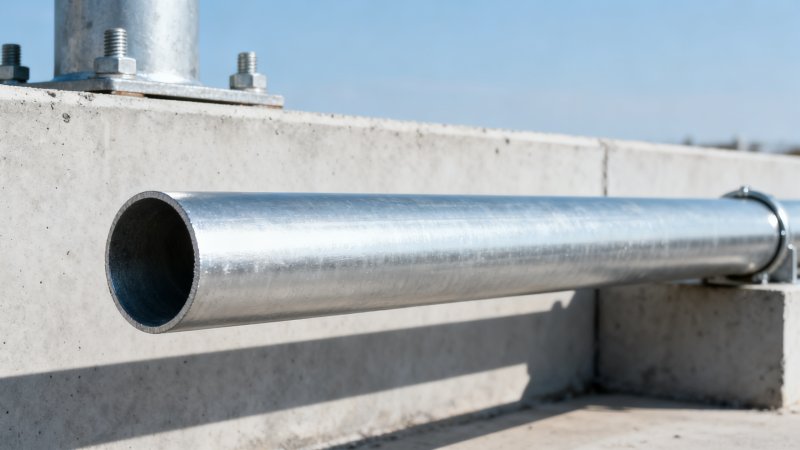
Outdoor water systems rarely rely on pipe alone. They require supporting structures — such as wall beams, brackets, and mechanical columns — that must match the corrosion resistance of the piping. Using non-galvanized or inadequately coated structural elements creates galvanic coupling risks and accelerates localized failure.
For example, uncoated Q235B channel steel installed alongside hot-dip galvanized pipe can corrode at rates exceeding 0.15 mm/year in humid subtropical climates — introducing rust runoff that stains façades and compromises joint seals. That’s why Hongteng Fengda offers fully coordinated solutions: hot-dip galvanized pipe paired with Channel In Steel in matching grades (Q235B, Q345B) and coating specifications (zinc mass ≥610 g/m²).
This integration reduces total project risk — cutting down on post-installation remediation, minimizing warranty claims, and simplifying long-term asset management for facility owners and engineering contractors alike.
Next Steps for Reliable Sourcing
Choosing hot-dip galvanized pipe isn’t just about material specs — it’s about partnering with a supplier who combines technical rigor, production consistency, and global compliance. Hongteng Fengda delivers precisely that: modern galvanizing lines calibrated to ±1.5°C temperature control, automated thickness measurement at 30 points per meter, and full documentation aligned with ASTM, EN, JIS, and GB standards.
Whether you’re specifying for municipal infrastructure, industrial cooling loops, or agricultural irrigation networks, our team supports rapid prototyping, OEM-grade customization, and logistics coordination across North America, Europe, and Southeast Asia — with stable lead times, 100% quality traceability, and responsive technical consultation.
Ready to evaluate hot-dip galvanized pipe samples with certified MTRs? Contact Hongteng Fengda today to request a customized quote, review dimensional options, or schedule a virtual factory audit.
Please give us a message


Please enter what you want to find