Concrete cracking can reduce durability, safety, and long-term performance if it is not properly controlled during placement and service. For users and site operators, steel wire mesh offers a practical reinforcement method that helps distribute stress, limit crack width, and improve the stability of slabs, pavements, and precast concrete elements. Understanding how it works can help teams choose the right mesh specification, install it correctly, and achieve more reliable concrete performance on construction and industrial projects.
Why does concrete crack, and where does steel wire mesh help?
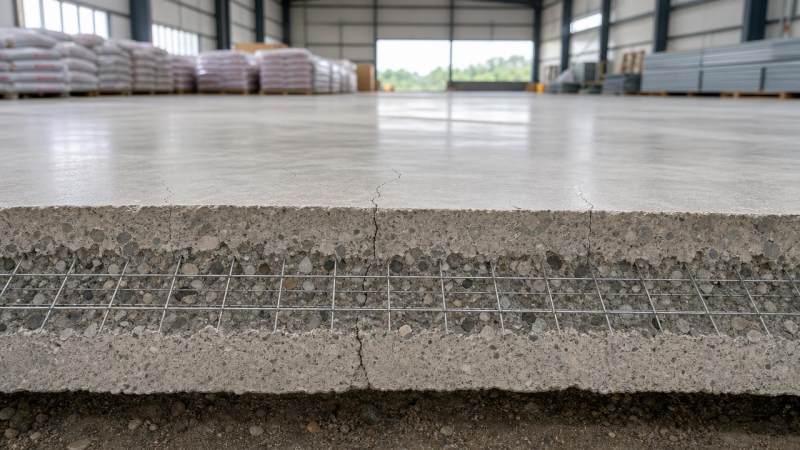
Concrete is strong in compression, but relatively weak in tension. When shrinkage, temperature change, wheel loads, settlement, or restraint creates tensile stress, cracks may appear before operators expect them.
Steel wire mesh does not stop every crack from forming. Its main value is controlling crack opening, holding concrete sections together, and distributing stress across a wider area.
Common cracking causes on job sites
- Plastic shrinkage occurs when surface water evaporates quickly, especially under wind, heat, or low humidity during early finishing.
- Drying shrinkage develops over time as hardened concrete loses moisture and tries to contract against internal or external restraint.
- Load-induced cracking appears when forklifts, machinery bases, vehicle traffic, or stored materials exceed the slab’s design assumptions.
- Subgrade movement can bend slabs unevenly, making reinforcement placement and support conditions critical for long-term performance.
For operators, the important point is practical: steel wire mesh gives the slab a continuous reinforcement network, reducing random crack growth and improving serviceability.
How steel wire mesh controls crack width in real concrete work
Steel wire mesh works by providing tensile resistance after concrete begins to crack. The welded intersections transfer stress between wires and nearby concrete.
When a microcrack starts, the mesh bridges both sides of the opening. This helps prevent the crack from widening into a service problem.
Key working mechanisms
- Stress redistribution: steel wire mesh spreads local tensile forces across multiple wires instead of leaving one area to carry the full strain.
- Crack bridging: wires cross developing cracks and restrict separation between concrete segments under shrinkage or loading.
- Panel stability: welded mesh helps maintain slab continuity, particularly around corners, openings, edges, and construction joints.
- Serviceability improvement: controlled cracks are usually easier to seal, maintain, and monitor than uncontrolled wide cracks.
This is why steel wire mesh is widely used in industrial floors, warehouse slabs, pavements, residential foundations, drainage covers, and precast panels.
Which concrete applications need mesh reinforcement most?
The right reinforcement decision depends on traffic, slab thickness, exposure, joint layout, and expected service life. Steel wire mesh is especially useful where crack control matters more than visible appearance alone.
The table below summarizes typical use cases where operators often evaluate steel wire mesh during planning, procurement, or site execution.
Steel wire mesh is not a substitute for slab design, curing, or joint cutting. It performs best when reinforcement, concrete mix, and site control work together.
How should users choose steel wire mesh specifications?
Users often face unclear specifications, limited budgets, and urgent delivery schedules. A practical steel wire mesh selection should start from the slab’s function, not only the lowest unit price.
Important parameters include wire diameter, spacing, panel size, steel grade, surface condition, weld strength, and compliance with project standards such as ASTM, EN, JIS, or GB.
Procurement evaluation checklist
- Confirm whether the mesh is for shrinkage control, light-duty slabs, heavy industrial floors, precast panels, or pavement work.
- Check wire diameter and spacing against structural drawings, because small changes can affect steel area significantly.
- Ask for dimensional tolerance, weld consistency, and packaging method to reduce installation delays and site waste.
- Review corrosion exposure, storage conditions, and whether surface treatment or specific steel grade is required.
The following table gives a practical selection framework for comparing steel wire mesh options before issuing a purchase order.
A clear specification reduces argument during delivery inspection. It also helps suppliers quote accurately and avoid replacing unsuitable steel wire mesh at the job site.
Installation details operators should not overlook
Even correctly specified steel wire mesh can underperform if it lies on the subgrade after concrete is poured. Placement height is one of the most common site mistakes.
For many slabs, mesh must be positioned near the upper third or designed reinforcement zone, depending on engineering requirements and expected shrinkage behavior.
Practical site control points
- Use proper chairs, spacers, or support bars so the steel wire mesh remains at the intended elevation during concrete placement.
- Provide sufficient lap length between panels according to project details, especially where crack control continuity is needed.
- Avoid walking mesh down into the base; assign workers to check height continuously during pouring and screeding.
- Coordinate reinforcement with saw-cut joints, dowels, embedded plates, drains, and machine anchor locations.
Good installation is visible in fewer random cracks, easier maintenance, and more stable slab edges. Poor placement may make steel wire mesh look ineffective when the real issue is execution.
How does mesh compare with rebar, fiber, and no reinforcement?
Operators often compare steel wire mesh with rebar, steel fiber, synthetic fiber, or unreinforced concrete. Each option has a reasonable place, depending on load and crack-control targets.
The comparison below helps purchasing and site teams avoid choosing reinforcement only by material cost, without considering labor, inspection, and long-term maintenance.
Steel wire mesh is often selected when users need a balance between predictable crack control, manageable installation, and controlled procurement cost.
Why steel quality and related site materials matter
Concrete reinforcement performance depends not only on mesh design but also on steel consistency, fabrication accuracy, and compatible site materials used around equipment or traffic zones.
In industrial projects, operators may combine reinforced concrete with steel plates, beams, channels, and custom components for platforms, walkways, bases, and machinery areas.
For example, Hongteng Fengda can also supply A36 Patterned steel plate for anti-skid floors around equipment, construction access, transportation, machinery, shipbuilding, and decorative steel applications.
Relevant patterned plate parameters for project coordination
When steel wire mesh is used in a slab, surrounding steel floor plates may need compatible dimensions, grades, and standards for smooth procurement planning.
Combining mesh reinforcement and compatible steel components through one experienced supplier can reduce specification gaps, shipment coordination problems, and rework risk.
Common mistakes when using steel wire mesh
Many cracking problems are not caused by the concept of reinforcement itself. They come from wrong assumptions, rushed placement, or incomplete procurement communication.
Mistake 1: treating mesh as a cure for poor curing
Steel wire mesh controls crack width, but curing controls moisture loss and early strength development. Operators still need proper curing duration, surface protection, and timing control.
Mistake 2: selecting mesh only by price per sheet
A cheaper panel may have unsuitable spacing, poor dimensional consistency, or inconvenient size. Total cost includes handling, cutting, rejected material, and slab maintenance.
Mistake 3: forgetting overlaps and edge details
Cracks often develop at discontinuities. Steel wire mesh should be detailed carefully at edges, corners, penetrations, and transitions to reduce weak zones.
FAQ: practical questions before buying steel wire mesh
Does steel wire mesh prevent all concrete cracks?
No. Concrete may still crack due to shrinkage, restraint, or loading. Steel wire mesh is used to limit crack width and preserve slab continuity.
Is mesh better than rebar for every slab?
Not always. Steel wire mesh is practical for crack control and moderate reinforcement needs. Rebar is often better for structural load-bearing members or heavy foundations.
What should operators inspect on delivery?
Check panel size, wire diameter, spacing, weld condition, surface rust level, quantity, packaging condition, and documents required by the project standard.
How early should steel wire mesh be ordered?
Order timing depends on specification, quantity, export route, and customization. For international projects, confirm drawings, standards, packaging, and lead time before concrete scheduling.
Why choose Hongteng Fengda for steel reinforcement sourcing?
Hongteng Fengda is a structural steel manufacturer and exporter from China, serving construction, industrial, and manufacturing projects with standard and customized steel solutions.
Our supply capability covers angle steel, channel steel, steel beams, cold formed profiles, customized components, and related steel products for global buyers.
For users evaluating steel wire mesh, we can support specification discussion, grade matching, export documentation, packaging planning, delivery coordination, and cost comparison.
If your project requires ASTM, EN, JIS, or GB compliance, clarify the drawings and application conditions early so the material proposal fits approval and installation needs.
Contact Hongteng Fengda to discuss mesh parameters, product selection, delivery schedule, customized steel components, certification requirements, sample support, and quotation details for your next concrete or structural steel project.
Please give us a message


Please enter what you want to find