How 316 Stainless Marine Coil Resists Pitting in Seawater—Beyond the Molybdenum Headline
If you’ve ever reviewed material submittals for offshore platforms, coastal desalination plants, or floating solar support structures, you know the question isn’t whether 316 stainless steel *can* handle seawater—it’s whether it can handle *real-world* seawater. Not lab-stable 3.5% NaCl, but tidal zones where chloride concentration swings from 18,000 ppm at low tide to over 45,000 ppm during evaporation-driven concentration, all while temperature, pH, and dissolved oxygen fluctuate hourly. That’s where many technical evaluations stall—not on compliance with ASTM A240, but on interpreting what “pitting resistance” actually means under dynamic conditions.
The short answer is: 316 stainless marine coil resists pitting not by being inert, but by being *self-repairing*—when its passive layer is locally disrupted, chemistry and microstructure work together to re-form it faster than aggressive ions can penetrate. But that repair only works reliably if three interdependent factors align: composition control, surface condition, and electrochemical context. Let’s unpack each—not as textbook theory, but as variables engineers encounter when reviewing mill test reports or qualifying coils for a specific project zone.
The Role of Molybdenum—and Why Its Range Matters
Yes, molybdenum (Mo) is critical. But quoting “2–3% Mo” without context misses the point. In practice, Mo’s effectiveness depends heavily on how uniformly it’s distributed across the coil’s cross-section—and whether it’s balanced against nitrogen (N), which synergizes with Mo to stabilize the passive film. Too little N (<0.08%), and Mo’s benefit diminishes under cyclic chloride exposure. Too much (>0.12%), and you risk nitride precipitation during hot rolling, creating local galvanic sites.
That’s why reputable producers—including structural steel manufacturers like Hongteng Fengda who supply 316 stainless marine coil for integrated projects—don’t just meet ASTM A240’s Mo range. They control melt chemistry tightly, use argon-oxygen decarburization (AOD) refining, and verify homogeneity via spectrographic mapping across multiple coil positions. It’s not about hitting a number—it’s about eliminating weak links before the coil leaves the mill.
Chloride Fluctuation Isn’t Just Concentration—It’s Kinetics
Pitting initiation in seawater rarely follows textbook “critical pitting temperature” (CPT) curves. Those assume steady-state conditions. Real marine environments impose transient stresses: a splash zone wet/dry cycle may expose the surface to concentrated brine for minutes, then rinse it with dilute seawater—repeatedly. Each dry phase accelerates localized acidification beneath salt crusts; each wet phase introduces fresh oxidants that drive anodic dissolution.
Here, surface finish matters more than many realize. A bright-annealed, pickled coil with Ra < 0.4 µm resists salt adhesion better than a mill-finished one—even if both meet EN 10088-2 tolerances. Why? Because rougher surfaces trap micro-pools during drying, extending time-in-concentrated-brine. That’s one reason why marine-grade coils supplied for high-risk applications often undergo additional electropolishing or passivation verification—not just for aesthetics, but for kinetic resilience.
Where Structural Integration Changes the Equation
Now consider how 316 stainless marine coil interfaces with other structural elements. In coastal substations or floating dock frames, it’s rarely used alone. It’s welded to carbon steel supports, bolted to galvanized brackets, or riveted to aluminum decking. At those junctions, galvanic coupling becomes a dominant pitting driver—often more aggressive than bulk seawater exposure.
That’s where material selection must extend beyond the coil itself. For example, when designing lightweight roof systems or mechanical columns exposed to splash zones, engineers increasingly pair corrosion-resistant cladding with load-bearing cores made from high-strength, galvanized cold-formed profiles. One such option—used across Southeast Asian port expansions and Middle Eastern solar farms—is the Z-beam. Its geometry provides torsional rigidity while minimizing trapped moisture, and its galvanized coating (per ASTM A653 or EN 10346) creates a controlled sacrificial interface—slowing galvanic attack on adjacent stainless components.
Crucially, this isn’t about substituting stainless with carbon steel. It’s about recognizing that pitting resistance isn’t solely a material property—it’s a system behavior. And system design starts with understanding how your coil will be cut, bent, welded, and assembled—not just how it performs in a beaker.
Standards Are Necessary—but Not Sufficient
ASTM A240 and EN 10088-2 define chemical limits, tensile properties, and intergranular corrosion testing. They’re essential baselines—but they don’t simulate tidal cycling, biofilm formation, or sediment abrasion. That’s why forward-looking projects now request supplementary data: ASTM G48 Method A (ferric chloride pitting test) at 22°C and 50°C, or ASTM G150 critical pitting temperature testing with potentiostatic hold. Some specify ASTM E1290 for detection of micro-pits after cyclic immersion.
As a structural steel manufacturer and exporter from China, Hongteng Fengda routinely provides these extended test reports—not as marketing extras, but because global clients in North America and Europe require them for third-party review. It’s not about ticking boxes; it’s about ensuring the coil’s performance envelope matches the project’s actual environmental envelope.
What to Verify Before Specifying
Before finalizing a spec, ask for:
- Heat-specific spectrographic analysis—not just batch certificates—showing Mo and N distribution across width and thickness;
- Surface roughness measurement (Ra) per ISO 4287, taken post-pickling and verified at coil head/middle/tail;
- Evidence of final annealing atmosphere control (e.g., dew point < –40°C) to prevent chromium depletion;
- If welding is planned: matching filler wire certification (e.g., AWS A5.9 ER316L) and procedure qualification records.
None of these are “nice-to-haves.” They’re the difference between a coil that passes inspection and one that survives 15 years in a Gulf Coast LNG terminal.
Final Thought: Resistance Is Contextual
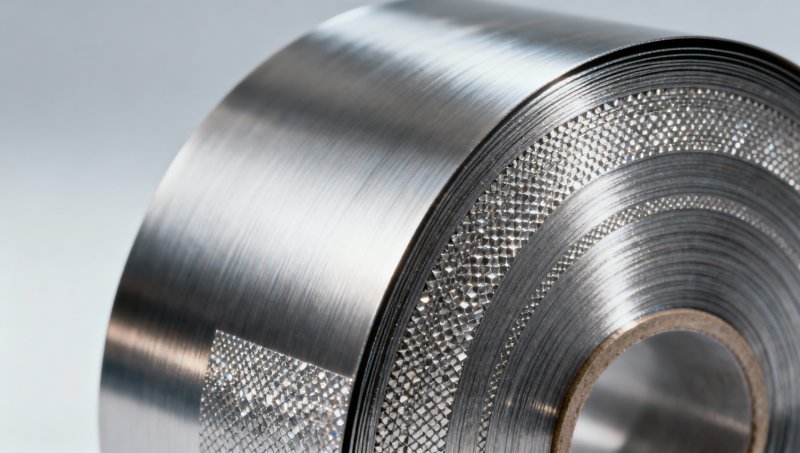
There’s no universal “pitting resistance score” for 316 stainless marine coil—only resistance *in context*. That context includes chloride dynamics, thermal history, surface state, joint design, and maintenance access. When evaluating suitability, start with the environment’s worst-case kinetic profile—not its average salinity. Then match the coil’s verified capabilities to that profile, not to a generic datasheet.
For engineers sourcing from Asia, working with a partner like Hongteng Fengda means accessing not just compliant material, but production traceability, extended testing transparency, and structural integration insight—because the right coil doesn’t just resist pitting. It enables robust, maintainable, long-term structural solutions.
Please give us a message


Please enter what you want to find