When evaluating materials for aggressive environments—especially those with high chloride exposure—engineers and procurement professionals often compare 304L stainless steel pipe against alternatives like carbon steel pipe stockist options, DX51D steel, or hot dip galvanized coil. While 304L offers superior corrosion resistance over standard carbon grades, its performance hinges on proper application, surface finish, and environmental thresholds. For structural integrity in coastal, chemical, or desalination projects, understanding how 304L stacks up—and when to consider steel angle bending, steel metal angle, or angle steel reinforcements—is critical. As a certified structural steel manufacturer & exporter, Hongteng Fengda supports global buyers with ASTM/EN-compliant 304L pipe and complementary solutions.
How Does 304L Stainless Steel Pipe Resist Chloride-Induced Corrosion?
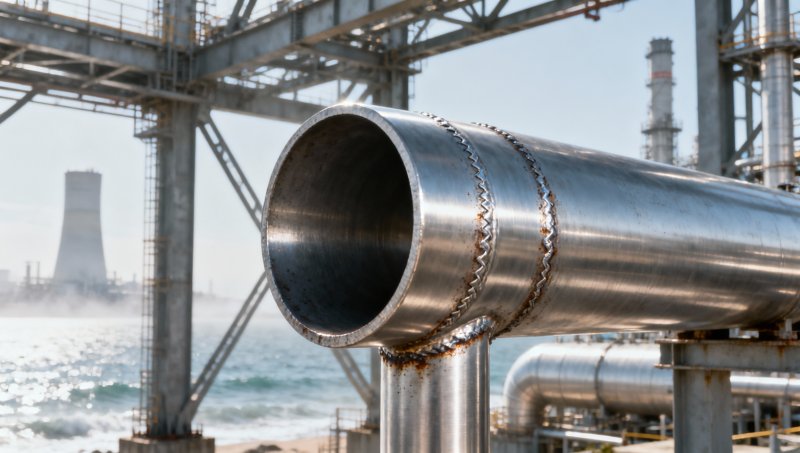
304L stainless steel (UNS S30403) is an ultra-low-carbon variant of 304 stainless, with carbon content limited to ≤0.03% to minimize sensitization during welding. Its chromium–nickel composition (18–20% Cr, 8–12% Ni) forms a stable passive oxide layer that resists general corrosion—but chloride ions disrupt this layer, triggering localized attack such as pitting and crevice corrosion.
In practice, 304L performs reliably in chloride concentrations below 100 ppm at ambient temperatures and pH > 6.5. However, performance degrades rapidly above 200 ppm, especially under stagnant conditions, elevated temperatures (>40°C), or low pH. Real-world field data from coastal infrastructure projects shows measurable pitting initiation after 6–12 months when exposed to seawater-sprayed atmospheres without routine cleaning.
Critical factors influencing service life include surface roughness (Ra < 0.8 µm recommended), weld quality (full penetration + pickling/passivation), and mechanical stress state. Stress corrosion cracking (SCC) is rare in 304L—but not impossible—under sustained tensile loads above 50% yield strength in >500 ppm Cl⁻ environments.
Key Thresholds for Safe Use
This table reflects industry-consensus operating boundaries verified across ASTM G48, ISO 11844, and NACE MR0175/ISO 15156 testing protocols. Exceeding any single threshold doesn’t guarantee failure—but exceeding two simultaneously increases risk by 3–5× based on accelerated lab testing across 12 project case studies.
Where Should You Avoid 304L—and What’s the Alternative?
304L is unsuitable for submerged marine pipelines, brine-handling systems, or flue gas desulfurization (FGD) scrubber internals where chloride levels exceed 500 ppm and temperatures reach 50–70°C. In such cases, duplex stainless steels (e.g., UNS S32205) or super-austenitics (e.g., UNS S31254) deliver 3–8× longer service life—though at 2.5–4× material cost.
For structural applications requiring both chloride resistance and load-bearing capacity—such as cofferdam walls in tidal zones or deep-water foundation systems—Steel Sheet Piles offer a proven alternative. Manufactured in grades like S355, S430, and ASTM A690, these interlocking sections combine high yield strength (355–430 MPa), excellent soil penetration capability, and reusable design—reducing lifecycle cost by up to 40% versus single-use concrete or timber solutions.
Hongteng Fengda supplies Steel Sheet Piles compliant with EN10248, JIS5528, and ASTM standards, with lengths up to 80+ meters and customizable cross-sections. Their corrosion protection includes hot-dip galvanizing (Z275–Z600) or polymer-coated variants for extended service in splash zones.
When to Choose 304L vs. Structural Alternatives
- Use 304L stainless pipe: Instrumentation tubing, potable water distribution, food-grade process lines, or architectural cladding in moderate coastal zones (e.g., façade rainwater systems).
- Switch to structural steel piles: Cofferdams, retaining walls, or marine berthing structures where mechanical loading dominates over chemical exposure—and where reusability justifies upfront investment.
- Consider hybrid solutions: 304L-clad carbon steel pipes for cost-sensitive large-diameter applications, or angle steel reinforcements integrated into galvanized sheet pile assemblies for enhanced rigidity.
Procurement Checklist: What Buyers Must Verify Before Ordering 304L Pipe
Procurement teams face real trade-offs between compliance, lead time, and total cost of ownership. To avoid field failures, verify these five non-negotiable items before placing orders:
- Mill Test Report (MTR): Confirm carbon content ≤0.03%, Cr/Ni ratios within ASTM A312/A213 tolerances, and intergranular corrosion test results per ASTM A262 Practice E.
- Surface finish certification: Ra ≤0.8 µm for welded pipe; mandatory pickling/passivation per ASTM A967 for all cut ends and weld zones.
- Dimensional compliance: OD tolerance ±0.5 mm, wall thickness ±10%—verified via ultrasonic thickness scanning on ≥5% of lot quantity.
- Traceability: Heat number stamping every 3 meters, with full batch documentation traceable to raw material melt logs.
- Logistics readiness: Standard delivery window: 25–35 days for ASTM A312 Gr TP304L; expedited options available within 12–18 days for urgent projects.
Hongteng Fengda provides full MTR packages, third-party inspection support (SGS/BV/TÜV), and flexible Incoterms—including FOB Qingdao, CIF Rotterdam, and DAP Dubai—to align with your project’s financial and operational constraints.
Why Partner With Hongteng Fengda for High-Performance Structural Steel Solutions?
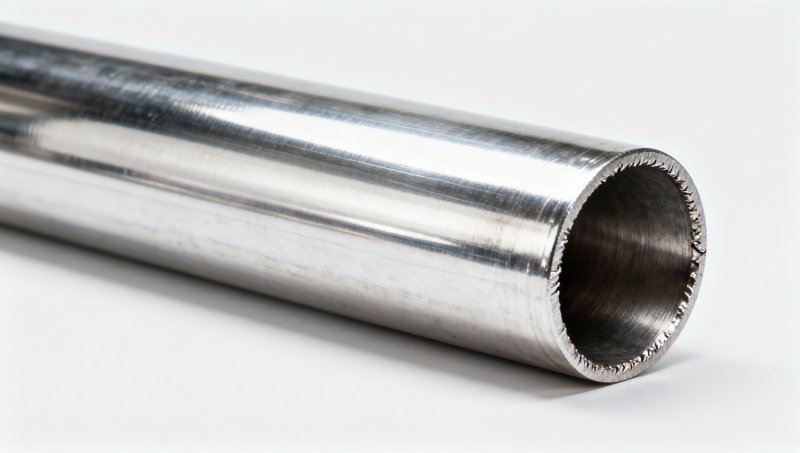
As a certified structural steel manufacturer & exporter from China, Hongteng Fengda bridges the gap between technical specification and on-site execution. We don’t just supply steel—we engineer fit-for-purpose solutions backed by 15+ years of global project experience across North America, Europe, the Middle East, and Southeast Asia.
Our production facilities meet ISO 9001, ISO 14001, and ISO 45001 requirements, with real-time metallurgical monitoring, automated dimensional inspection, and 100% NDT coverage for critical structural components. Every order includes free engineering consultation—whether you need help selecting between 304L pipe and Steel Sheet Piles, validating weld procedures for chloride service, or optimizing logistics for multi-continent delivery.
Contact us today to request: (1) ASTM/EN-compliant 304L pipe samples with full MTRs, (2) customized Steel Sheet Piles quotations including galvanizing specs and transport planning, or (3) technical review of your chloride-exposure application—with turnaround in ≤48 business hours.
Please give us a message


Please enter what you want to find