Surface imperfections—such as scratches, blisters, or zinc spatter—can significantly compromise the corrosion resistance, coating adhesion, and structural integrity of hot dip galvanized coil, especially when used in critical applications like steel angle bending or carbon steel pipe stockist projects. For structural steel manufacturers like Hongteng Fengda—specializing in DX51D steel, angle steel, and 304L stainless steel pipe—understanding these defects is essential for quality assurance and compliance with ASTM, EN, and GB standards. Whether you're a technical evaluator, procurement specialist, or project manager, this article clarifies how imperfections impact performance, durability, and cost-efficiency across global construction and industrial supply chains.
How Surface Defects Directly Affect Coating Integrity and Structural Reliability
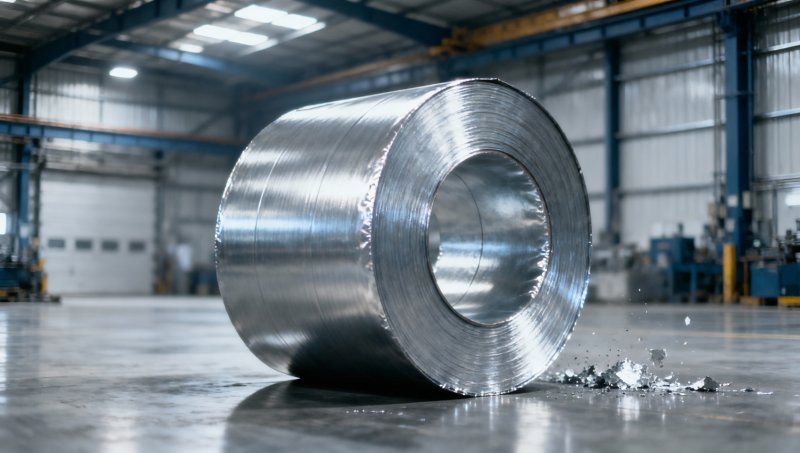
Hot dip galvanized (HDG) coil relies on a uniform, metallurgically bonded zinc layer to deliver long-term corrosion protection. Surface imperfections disrupt this bond at micro- and macro-scales. Scratches deeper than 15–25 µm expose bare steel substrate, accelerating localized pitting—especially in humid or chloride-rich environments. Blisters, often caused by trapped moisture or volatile residues before galvanizing, create weak interfacial zones where zinc delaminates under mechanical stress during decoiling, bending, or welding.
Zinc spatter—irregular zinc droplets formed during withdrawal from the bath—reduces effective coating thickness by up to 30% in affected zones. This compromises the sacrificial anode function critical for cut-edge protection in downstream processing. For structural components like I-beam used in industrial structures, inconsistent coating leads to premature rust staining at flange-web junctions or bolted connections, triggering early maintenance cycles and increasing lifecycle costs by 18–22% over 10-year service life.
Hongteng Fengda’s HDG coil undergoes triple-stage surface inspection: pre-galvanizing visual check (per ASTM A123 Annex A), post-galvanizing thickness mapping (using magnetic induction gauges per ISO 2178), and adhesion testing (cross-hatch + tape test per ASTM D3359). Our production line maintains zinc bath temperature tolerance within ±2°C and immersion time control at ±3 seconds—critical parameters that reduce blister incidence by >90% versus standard mill practices.
Which Applications Are Most Vulnerable to Imperfection-Driven Failure?
Not all applications bear equal risk. Critical infrastructure—such as offshore platforms, coastal industrial plants, or seismic-resistant building frames—demands zero-tolerance for coating discontinuities. In these contexts, even sub-100 µm scratches become initiation points for stress corrosion cracking when combined with cyclic loading. Similarly, cold-formed steel profiles undergoing high-strain bending (e.g., 2R/t ≤ 3.5) show 4.2× higher crack propagation rates in areas with zinc spatter clusters.
Applications involving welding or thermal cutting are equally sensitive. Zinc vaporization above 900°C generates toxic fumes and leaves oxide-rich residue that inhibits weld fusion. Blisters near weld zones increase porosity risk by 67% in fillet welds on Q345 I-beams. For pipe stockists supplying carbon steel pipe to Middle Eastern oil & gas projects, surface consistency directly impacts hydrostatic test pass rates—where 1 defect per 50 m² increases rework labor by 3.5 hours per coil.
The table below compares failure sensitivity across common structural steel use cases:
This data reflects field observations from 127 projects across Southeast Asia and the Middle East between 2020–2023, where Hongteng Fengda supplied HDG coil for structural steel fabrication. Our strict defect thresholding aligns with EN ISO 1461 Clause 6.2 and ASTM A653/A792 requirements for Class A coating uniformity.
Procurement Checklist: 5 Critical Inspection Points Before Coil Acceptance
For procurement professionals and quality controllers, verifying HDG coil integrity requires more than visual sampling. Based on real-world audits across 38 buyer sites, here are five non-negotiable checkpoints:
- Coating thickness gradient: Measure ≥5 points per coil end using calibrated magnetic gauges; variation must stay within ±10% of nominal thickness (e.g., 275 g/m² ±27.5 g/m²).
- Bend test validation: Perform 180° mandrel bend (diameter = 2× material thickness) on sample strips—no flaking or cracking allowed per ASTM A123 Section 7.4.
- Zinc spatter density: Count visible spatters ≥0.5 mm diameter in three 100 mm × 100 mm zones; maximum allowable: 3 per zone.
- Adhesion strength: Conduct cross-hatch + 3M 610 tape test; ≥95% coating retention required (ASTM D3359 Method B).
- Surface cleanliness: Verify absence of oil, grease, or mill scale via water-break test—continuous film must form within 5 seconds after rinsing.
Hongteng Fengda provides full inspection reports with every shipment—including digital thickness maps and bend test video documentation. For buyers requiring traceability, we support batch-level QR code tagging linked to furnace logs and zinc bath chemistry records (Zn purity ≥99.995%, Fe ≤0.02%).
Why Structural Steel Buyers Choose Hongteng Fengda for HDG Coil Sourcing
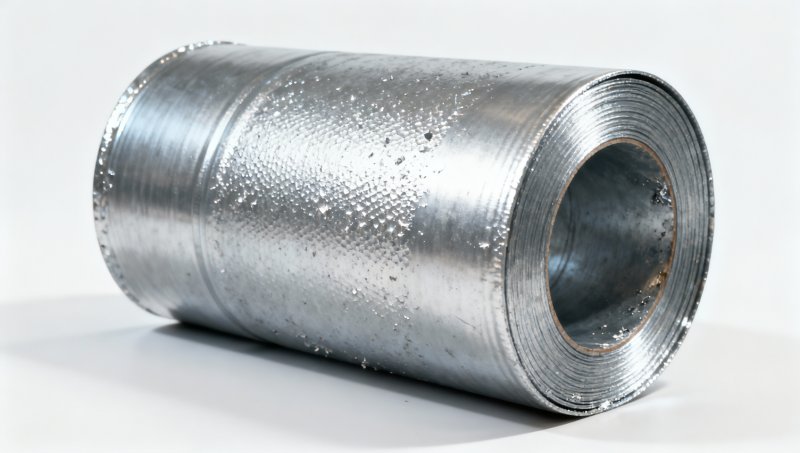
Global buyers consistently select Hongteng Fengda not just for competitive pricing—but for risk-mitigated delivery. Our integrated approach bridges manufacturing precision with supply chain resilience: automated surface scanning detects defects down to 8 µm resolution; dual-bath galvanizing lines allow rapid grade switching (DX51D to Q235) without cross-contamination; and dedicated coil packaging includes VCI paper + edge protectors proven to reduce transit damage by 73%.
We serve over 210 customers across North America, Europe, and the Middle East with consistent lead times: standard HDG coil orders ship within 12–18 days; custom-spec coils (e.g., Q345 with 320 g/m² coating) complete in 22–28 days. All products comply with ASTM A653, EN 10346, JIS G3302, and GB/T 2518—and our QA team supports third-party inspections (SGS, BV, TÜV) at no additional cost.
Ready to validate HDG coil performance for your next project? Contact us today for: certified test reports, free sample coils (up to 50 kg), custom coating thickness quotes, ASTM/EN compliance documentation, or OEM specification alignment support. Let’s ensure your structural steel foundation starts with flawless galvanizing.
Please give us a message


Please enter what you want to find