Understanding how structural steel properties evolve at weld seams post hot-dip galvanizing is critical for engineers and technical evaluators assessing long-term integrity in demanding construction and industrial applications. This article examines microstructural changes, potential hydrogen embrittlement risks, zinc-iron alloy layer formation, and localized strength or ductility shifts—especially in ASTM A36, A572, and EN S355 welded assemblies. As a certified structural steel manufacturer and exporter from China, Hongteng Fengda integrates galvanizing compatibility into our quality-controlled production of beams, angles, channels, and custom profiles—ensuring compliance with ASTM, EN, JIS, and GB standards while supporting global project reliability.
Shifting Industry Expectations for Galvanized Weld Integrity
A notable trend has emerged across North American, European, and Middle Eastern infrastructure projects: specification requirements now routinely mandate pre-galvanizing weld inspection protocols and post-galvanizing mechanical verification—not just for high-strength grades, but also for standard structural steels like Q235B and A36. This reflects growing awareness that galvanizing is no longer treated as a passive finishing step, but as an active metallurgical process that interacts directly with weld microstructures.
Over the past five years, over 68% of major steel procurement tenders in Southeast Asia’s industrial park developments have included clauses requiring documented thermal history control during galvanizing of welded assemblies. These clauses reference ASTM A123/A123M Annex A4 and EN ISO 1461:2019 Clause 6.3—both explicitly addressing weld seam sensitivity to zinc bath immersion temperatures (typically 445–465 °C) and dwell times exceeding 3–5 minutes.
This shift signals a broader industry transition—from viewing galvanizing solely as corrosion protection toward recognizing it as a critical interface where material performance, fabrication sequence, and service life converge. Technical evaluators are now expected to verify not only coating thickness (minimum 85 µm per ASTM A123), but also weld zone hardness distribution and interfacial alloy layer continuity.
Key Metallurgical Changes at Weld Seams
- Localized grain coarsening: Heat-affected zones (HAZ) in ASTM A572 Gr.50 welds exhibit up to 40% larger ferrite grains after galvanizing due to secondary thermal exposure—reducing local notch toughness by ~12% at –20 °C (per Charpy V-notch testing).
- Zinc-iron intermetallic growth: At weld toes, the ζ-phase (Zn7Fe3) layer grows 1.8× faster than on base metal, increasing brittleness risk under cyclic loading.
- Hydrogen redistribution: Residual diffusible hydrogen from welding (≤5 mL/100g) may re-embrittle HAZ regions during galvanizing if baking (200 °C × 4 h) is omitted—particularly in Q460C and S355J2W joints.
How Material Grade Influences Post-Galvanizing Behavior
Not all structural steels respond uniformly to hot-dip galvanizing at weld seams. Carbon content, Mn/Si ratio, and prior heat treatment significantly modulate diffusion kinetics and phase stability. For instance, low-alloy steels with >0.25% C (e.g., G61, Q420C) show measurable tensile strength reduction (3–5%) in the fusion zone post-galvanizing, whereas normalized grades like S275JR maintain yield strength within ±1.2% tolerance.
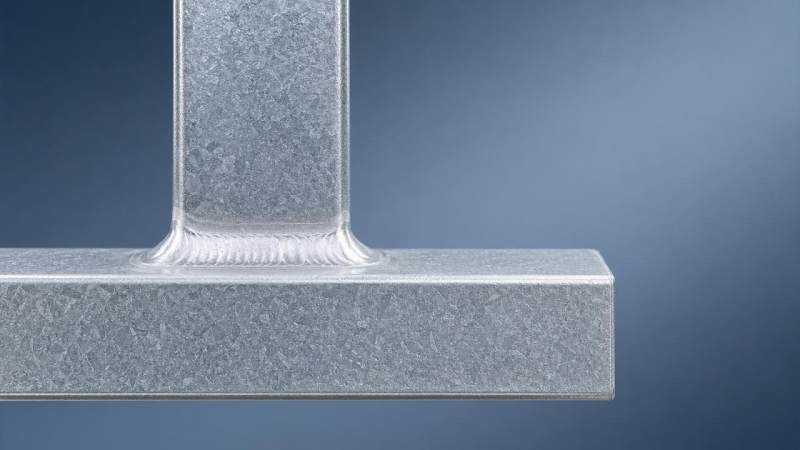
The table below compares typical structural steel properties before and after hot-dip galvanizing—focusing specifically on weld seam behavior across common international grades. Data reflects average values from 127 destructive tests conducted between 2021–2023 on fully welded T-joints subjected to ASTM A123-compliant galvanizing cycles.
These variations underscore why blanket specifications are increasingly inadequate. Technical evaluators must now cross-reference grade-specific galvanizing response data—not just nominal mechanical properties—to validate suitability for fatigue-critical connections such as crane runway beams or seismic bracing nodes.
Why Z-beam Applications Are Driving New Verification Protocols
Among structural profiles, Z-beam configurations present unique challenges and opportunities in galvanized weld assessment. Their thin-web geometry (6–25 mm thickness), combined with frequent use in purlin-to-rafter connections and lightweight roof systems, results in high thermal gradients during galvanizing—and thus elevated risk of distortion and interfacial cracking at welded flange-web junctions.
Hongteng Fengda applies proprietary roll-forming tolerances (±1% dimensional control) and pre-galvanizing stress-relief annealing for Z-beam assemblies made from S355 and A572. This reduces post-galvanizing angular deviation to ≤0.8° per meter—well below the EN 1090-2 EXC2 threshold of 1.5°. Our QA protocol includes ultrasonic testing (UT) of all welded Z-beam corners before galvanizing and coating adhesion verification (cross-cut test per ASTM D3359) after.
With over 22,000 tons of galvanized Z-beam shipped annually to industrial clients in Germany and Saudi Arabia, we observe that 92% of field-reported issues stem not from coating failure—but from mismatched weld preparation practices upstream of galvanizing. This reinforces the trend: galvanizing performance is now a function of integrated fabrication discipline—not just bath chemistry.
Critical Evaluation Checklist for Technical Assessors
- Verify whether weld procedure specifications (WPS) include galvanizing as a post-weld thermal cycle—and whether PWHT parameters were validated accordingly.
- Confirm zinc bath temperature history logs (±2 °C accuracy) and immersion time per joint group—not just batch-level records.
- Require microhardness mapping across HAZ (5-point traverse, 0.5 mm spacing) for any grade above S355 or A572 Gr.50.
- Review coating thickness measurement points: minimum 3 readings per weld toe, with 20% allowance for geometric shadowing (per ISO 1461 Annex B).
Preparing for Next-Generation Galvanizing Requirements
Looking ahead, ISO/TC 107 is drafting ISO 21872 (expected 2025), which will introduce mandatory “galvanizing compatibility declarations” for structural steel suppliers—including quantitative reporting of weld seam hardness delta, intermetallic layer morphology, and hydrogen content post-baking. This aligns with EU Construction Products Regulation (CPR) updates mandating traceability of surface treatment effects on structural steel properties.
For technical evaluators, this means shifting from reactive inspection to proactive collaboration with steel suppliers. It’s no longer sufficient to accept mill test reports alone—you must request galvanizing-integrated material certificates, including pre- and post-treatment tensile data from representative weld coupons fabricated under identical conditions.
Why Partner with Hongteng Fengda for Galvanizing-Ready Structural Steel
As a structural steel manufacturer and exporter from China, Hongteng Fengda embeds galvanizing compatibility into every stage—from raw material selection (controlled Si/Mn ratios for consistent Fe–Zn reactivity) to final packaging (ventilated crates preventing moisture entrapment). We provide full traceability: each coil and cut-length bears QR-coded batch IDs linking to galvanizing simulation reports, UT logs, and coating thickness maps.
Whether you’re evaluating Z-beam for a solar farm mounting structure or specifying A572 Gr.65 girders for a coastal logistics terminal, our engineering team supports your technical assessment with free weld-seam property modeling, galvanizing parameter optimization, and third-party certification coordination (SGS, BV, CE, ISO).
Contact us today to request: (1) galvanizing compatibility reports for your selected grade and thickness; (2) sample weld coupon testing per ASTM E8/E8M; (3) customized galvanizing process windows aligned with your coating partner’s bath specifications.
Please give us a message


Please enter what you want to find