Structural steel grades affect on-site weldability long before the arc is struck. The grade determines the steel’s chemical composition, strength level, delivery condition, and sometimes its thickness range. Those factors influence whether a joint can be welded with routine practice or needs tighter control of consumables, heat input, preheating, interpass temperature, and cooling rate.
A higher-strength section is not automatically difficult to weld, and a familiar grade is not automatically low risk. The practical question is whether the supplied material, joint design, weather conditions, and welding procedure work together. When they do not, common outcomes include hydrogen cracking, lack of fusion, excessive distortion, reduced toughness, or a weld that appears acceptable but does not meet the required mechanical performance.
What “weldable” really means for structural steel grades
In structural work, weldability is not simply the ability to melt two pieces of steel together. A steel grade is suitably weldable when it can produce a sound joint with the required strength, ductility, and toughness using a realistic welding procedure.
That definition matters on site because fabrication conditions are rarely as controlled as they are in a workshop. Plate and beam surfaces may carry moisture, primer, rust, or contamination. Ambient temperature may be low. Joint access can be restricted, and the actual thickness at a connection can be much greater than the nominal thickness of the member. These conditions make the grade’s response to heat and cooling especially important.
Structural steel grades are usually specified through a recognized standard, such as ASTM, EN, JIS, or GB. The grade designation alone is useful, but it is not the complete welding instruction. A compliant material certificate, including the relevant heat analysis and mechanical properties, is often the information that allows the welding procedure to be selected correctly.
Chemical composition has the strongest effect on cracking risk
Carbon is a central factor in weldability. As carbon content rises, the heat-affected zone beside the weld can harden more readily during cooling. A hard heat-affected zone is more vulnerable to hydrogen-assisted cracking, particularly when the joint is restrained or the steel is thick.
Other alloying elements also matter. Manganese, chromium, molybdenum, nickel, vanadium, and similar elements can improve strength or other properties, but they may also increase hardenability. In practical terms, hardenability describes how easily steel forms a harder microstructure after being heated and cooled. Faster cooling, such as welding onto a cold thick flange in windy weather, makes this issue more significant.
For this reason, fabricators often use carbon equivalent as a working indicator of weldability. Carbon equivalent combines the effect of carbon and certain alloying elements into one comparative value. It does not replace a qualified welding procedure, but it helps indicate whether routine welding is likely to be suitable or whether low-hydrogen practice, preheat, and closer heat control are needed.
A common mistake is to compare only the specified minimum yield strength. Two grades with similar strength may have different chemical limits, delivery conditions, or certificate values. They can therefore require different treatment in the field.
Strength grade changes the procedure, not just the load capacity
Higher-strength structural steel can reduce member size or provide greater capacity, but welding must preserve the intended properties of the connection. Selecting a stronger base material while using an unsuitable filler metal can create a weak joint or an overly hard weld deposit. Selecting a filler solely because it has the highest strength can also be unhelpful, especially where toughness, ductility, or crack resistance is the controlling requirement.
Matching is not always exact. Some procedures use undermatching filler metal when the joint design and engineering requirements permit it, while others require matching or overmatching strength. The correct choice depends on the applicable design requirement, joint type, loading condition, and welding procedure qualification. It should not be decided from the nominal grade name alone.
Higher-strength grades may also have narrower acceptable heat-input ranges. Too little heat can increase cooling speed and raise cracking risk. Too much heat can affect heat-affected-zone properties, increase distortion, or reduce the performance expected from certain thermomechanically processed steels. A procedure developed for ordinary structural sections should therefore not be assumed suitable for every high-strength member.
Thickness and joint restraint can make the same grade behave differently
The same structural steel grade can be straightforward to weld in a thin angle or cold-formed profile and much more demanding in a heavy beam flange or built-up connection. Thickness acts as a heat sink. A thick section removes heat from the weld area rapidly, which can increase cooling rate and make a susceptible heat-affected zone harder.
Joint restraint is equally important. A short attachment weld on a freely moving member is not comparable to a full-penetration connection between heavy, rigid components. Restrained joints develop high stresses as the weld cools and shrinks. If hydrogen is present and the heat-affected zone is hard enough, cracking may occur after the weld has cooled rather than during welding. That delay is one reason visual inspection immediately after welding may not reveal the full risk.
Preheating is used to slow cooling and reduce moisture at the joint. It is not a universal requirement and should not be treated as a substitute for poor preparation. The required temperature depends on the actual grade, verified composition, material thickness, restraint, hydrogen level, and procedure. Heating every joint without control can introduce other problems, including inconsistent workmanship and unnecessary distortion.
Hydrogen control is often the deciding factor on site
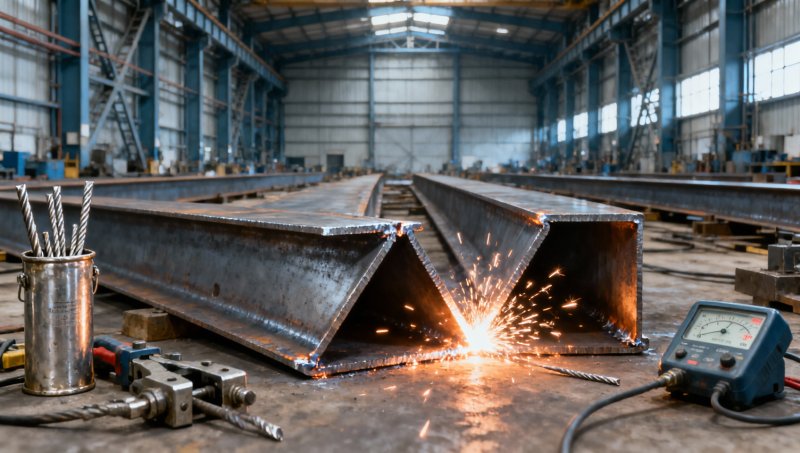
Hydrogen-assisted cracking requires a combination of susceptible steel, diffusible hydrogen, tensile stress, and an unfavorable cooling condition. Site welding can supply hydrogen through damp electrodes, poorly stored flux, wet surfaces, condensation, contaminated shielding gas systems, or inadequate cleaning.
Low-hydrogen consumables are valuable only when they remain dry and are handled according to their supplier instructions. Opening a package and leaving consumables exposed in humid conditions can defeat the purpose of specifying a low-hydrogen product. The same applies to welding over wet steel or trying to burn through visible moisture and coatings.
Surface preparation is therefore part of weldability control, not merely appearance. Remove water, ice, heavy rust, oil, paint, galvanizing residue where relevant, and other contamination from the weld zone. If galvanized steel must be welded, coating removal and fume control require separate planning. The base grade may be weldable, but the coating changes both the preparation and the working conditions.
Do not confuse standard compliance with automatic field suitability
A material may meet its specified structural standard and still need project-specific welding review. Standards define grade requirements, but welding conditions are governed by the combination of material, thickness, process, joint geometry, consumables, and performance requirements.
One potentially costly error is relying on a commercial description such as “mild steel,” “high tensile steel,” or “equivalent grade.” These labels do not provide enough information to establish a welding procedure. Material substitution is particularly risky when an alternate grade has a different chemical composition, toughness class, or delivery condition, even if its nominal strength appears similar.
Before cutting or welding, confirm the purchase documentation against the drawings and procedure requirements. The material certificate should be traceable to the actual members. Where the project calls for a particular grade, toughness level, or tested condition, retain that identification through fabrication and erection. Once material is mixed in a laydown area, grade control becomes much harder.
A practical check before welding structural members
For routine work, a short pre-weld review prevents most avoidable grade-related problems:
- Confirm the exact structural steel grade, product form, thickness, and material certificate for the member at the joint.
- Check whether the approved welding procedure covers that grade, thickness range, joint configuration, welding position, and process.
- Use the specified filler metal and maintain its storage condition, especially for low-hydrogen consumables.
- Assess restraint, ambient temperature, wind, moisture, and the likelihood of rapid cooling.
- Apply preheat and interpass controls when required by the procedure, and measure rather than estimate the temperature.
- Prepare the joint thoroughly and verify root opening, alignment, backing arrangement, and access before welding begins.
- Use an appropriate sequence to limit distortion and residual stress, particularly on long welds and heavy connections.
- Carry out the required inspection after the joint has cooled, with awareness that some cracking mechanisms can be delayed.
This sequence does not replace an approved welding procedure specification. It makes sure the procedure is being applied to the material that is actually present on site.
Cold-formed and fabricated profiles need separate attention
Cold-formed structural profiles may have localized cold work from forming. The steel can still be suitable for welding, but weld location, thickness, and connection detail deserve attention. Welding close to heavily formed corners or thin material can increase distortion, burn-through risk, and local property changes. Intermittent welds, smaller balanced welds, or alternative connection details may be more appropriate where permitted by the design.
Fabricated beams, channels, angles, and custom components add another traceability question: the parent material of each part may be supplied in different heats or thicknesses. A clear fabrication record helps ensure the correct procedure and inspection level follow the component through delivery and installation.
When sourcing angle steel, channel steel, beams, cold-formed profiles, or custom structural components, the useful procurement information is not limited to section dimensions. Hongteng Fengda can supply structural steel products to major ASTM, EN, JIS, and GB standards, so project teams can align grade, required documentation, and fabrication needs before material reaches the site. Early alignment is particularly valuable when a connection has demanding welding, toughness, or traceability requirements.
Where weldability problems are commonly misdiagnosed
Cracks are sometimes blamed on “bad steel” when the actual cause is a mismatch between the steel grade and the welding practice. Conversely, a well-executed weld cannot compensate for material that differs from the specified grade or lacks the required documented condition.
Another frequent misdiagnosis is treating distortion as only a welder technique issue. Grade is not usually the direct cause of distortion, but member thickness, stiffness, weld size, joint layout, and heat input all interact. Overwelding a connection to feel safer often adds heat, shrinkage, cost, and distortion without improving the required performance.
The most dependable approach is to treat weldability as a system. Start with verified material identity, then match the welding procedure, filler metal, heat control, and joint preparation to the actual connection. That approach is more reliable than selecting structural steel grades only by strength or assuming that every certified structural section can be welded in the same way.
Please give us a message


Please enter what you want to find