Cold drawn wire rod is becoming a bigger quality lever
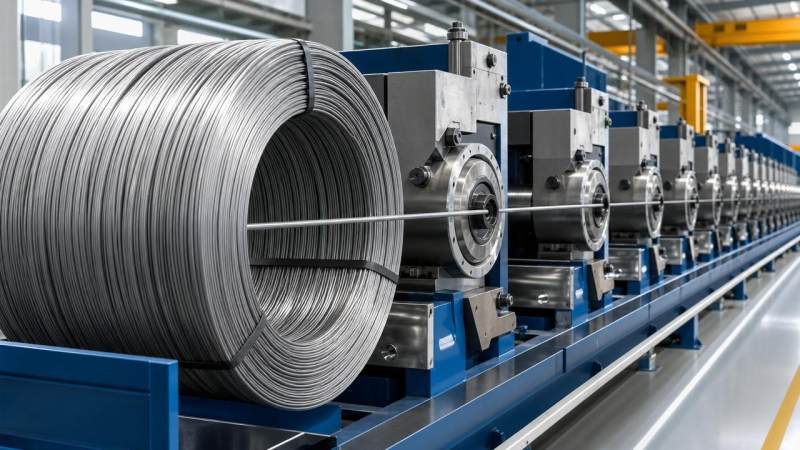
How does Galvanized cold drawn soft hard steel wire rod for cold drawn wire influence the strength, ductility, surface finish, and consistency of final wire products?
That question matters more today because wire applications demand tighter tolerances, cleaner surfaces, and fewer production interruptions.
In steel processing, the starting wire rod now determines more than basic chemistry.
It shapes drawability, coating behavior, fatigue life, and end-use reliability.
For construction, industrial fastening, mesh, springs, and general fabrication, Galvanized cold drawn soft hard steel wire rod for cold drawn wire affects both output efficiency and final product confidence.
When the rod quality is stable, drawing lines run smoother, breakage drops, and wire properties stay closer to target.
When the rod quality varies, every downstream step becomes harder to control.
Quality expectations are shifting from basic supply to process stability
The steel market has moved beyond simple diameter and strength checks.
Current users expect Galvanized cold drawn soft hard steel wire rod for cold drawn wire to support continuous drawing, predictable tensile development, and consistent coating performance.
This shift comes from faster production lines and stricter end-product standards.
Wire used in nails, fencing, reinforcement accessories, binding wire, and formed parts must now perform with fewer defects.
As a result, surface cleanliness, microstructure uniformity, and decarburization control are receiving more attention.
Galvanized cold drawn soft hard steel wire rod for cold drawn wire is no longer judged only by purchase cost.
It is judged by its effect on total conversion cost and field performance.
Why this trend is forming across wire processing
Several technical and commercial factors are driving stronger focus on wire rod quality.
- Higher drawing speeds increase sensitivity to rod surface flaws and lubrication problems.
- Tighter tensile and elongation targets require more uniform metallurgical structure.
- Galvanized and coated wire needs smoother substrates for better adhesion and appearance.
- Reduced downtime has become essential as energy and labor costs rise.
- Export projects often require compliance with ASTM, EN, JIS, or GB related expectations.
These factors explain why Galvanized cold drawn soft hard steel wire rod for cold drawn wire now plays a strategic role in both quality control and production planning.
Key technical drivers behind final wire behavior
The strongest impact appears in four performance areas
1. Strength development becomes more predictable
Cold drawing increases tensile strength through work hardening.
However, the starting rod determines how evenly that strengthening occurs.
Galvanized cold drawn soft hard steel wire rod for cold drawn wire with balanced composition and clean structure allows more uniform strain distribution.
That leads to steadier final strength values and fewer out-of-range coils.
2. Ductility retention improves or declines at the rod stage
Final wire must often bend, twist, knot, or form without cracking.
If the wire rod contains segregation, excessive decarburization, or inconsistent hardness, ductility losses appear quickly during reduction.
Good Galvanized cold drawn soft hard steel wire rod for cold drawn wire preserves a better balance between strength and flexibility.
3. Surface finish directly affects usability and downstream coating
Smooth rod surfaces help produce smoother final wire surfaces.
That matters in visible products, welded assemblies, and galvanized applications.
Pits, seams, rust, and scale can transfer through the drawing process.
Those defects may trigger coating irregularities, reduced corrosion protection, or poor appearance.
4. Consistency is what protects production efficiency
Many processing losses come from variation rather than absolute low quality.
When Galvanized cold drawn soft hard steel wire rod for cold drawn wire is consistent from coil to coil, operators can standardize die schedules, lubrication settings, and line speeds.
That lowers scrap, shortens adjustment time, and improves throughput.
The influence spreads across multiple business links
The effect of wire rod quality does not stop at the drawing machine.
It influences planning, maintenance, quality inspection, and field performance.
- Production: fewer line stops, better speed stability, and lower die consumption.
- Quality control: easier tensile tracking, coil traceability, and defect analysis.
- Logistics: more reliable lead times because fewer coils need rework.
- End use: better fatigue resistance, bending response, and corrosion life.
This is why stable steel sourcing has become part of risk control.
Hongteng Fengda, as a structural steel manufacturer and exporter from China, supports global projects with controlled production, international standard awareness, and dependable delivery performance.
Material selection trends also show a wider performance mindset
The same market logic appears in flat steel and stainless applications.
Buyers increasingly compare formability, strength balance, surface finish, and processing response, not just base price.
For example, 201 Stainless Steel Coil is often chosen for tabletops, kitchenware, decoration, vehicles, springs, and screens where forming performance matters.
Its tensile strength reaches at least 520MPa, yield strength at least 275MPa, and elongation about 55% to 60%.
Available finishes include BA, 2B, NO.1, NO.4, 4K, HL, and 8K.
This reflects a broader steel trend: material performance during processing is now a core selection factor.
What deserves closer attention before choosing wire rod
To improve final wire quality, several checkpoints deserve priority.
- Check surface defects, rust condition, and coating uniformity before drawing.
- Confirm chemistry and mechanical property consistency across batches.
- Review diameter tolerance and coil compactness for feeding stability.
- Assess decarburization limits where fatigue or forming is critical.
- Match soft or hard condition to reduction ratio and end-use requirement.
- Verify supplier capability for ASTM, EN, JIS, or GB aligned production.
These checks help ensure Galvanized cold drawn soft hard steel wire rod for cold drawn wire performs as expected under real operating conditions.
A practical way to judge future suitability
The next step is to evaluate rod quality through final wire results
The market direction is clear.
Galvanized cold drawn soft hard steel wire rod for cold drawn wire should be evaluated by its effect on conversion stability, usable yield, and service performance.
Better rod means stronger process control, fewer failures, and more reliable end products.
For steel applications where quality variation creates hidden cost, this is a practical place to improve results.
Review current wire defects, compare batch consistency, and align rod specifications with actual reduction and end-use demands.
That approach delivers measurable value in both production and project performance.
Please give us a message


Please enter what you want to find