In bridge construction, precise structural steel pipe dimensions directly determine load-bearing capacity, safety margins, and long-term durability. As a leading Chinese manufacturer and exporter of industrial steel pipes, Hongteng Fengda delivers high-precision structural steel pipe, metal wall angle, steel L angle, and custom metal angle iron with holes—engineered to meet ASTM, EN, and GB standards. Whether you’re a project manager assessing design feasibility, a procurement specialist comparing specs, or a safety engineer validating compliance, understanding how dimensional tolerances impact structural integrity is critical. This article explores the technical relationship between pipe geometry and load performance—backed by real-world fabrication insights from a trusted supplier of angle steel, channel steel, and cold-formed steel profiles worldwide.
How Pipe Geometry Influences Structural Performance in Real Bridge Designs
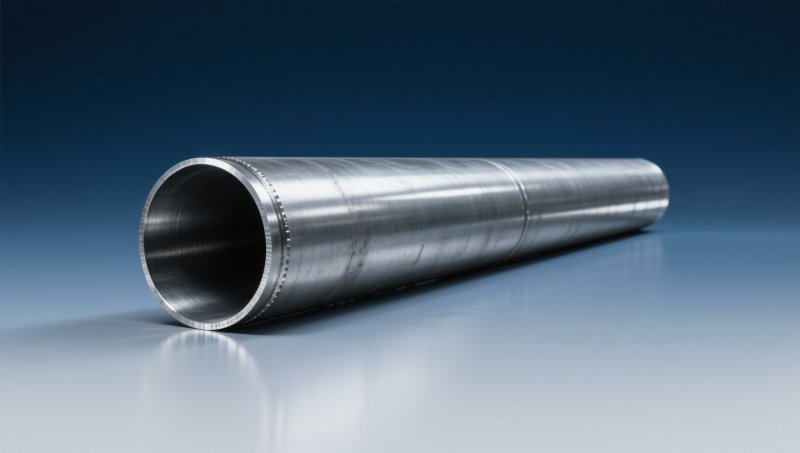
Structural steel pipe dimensions—including outer diameter (OD), wall thickness (t), and length—are not interchangeable variables. They collectively define moment of inertia (I), section modulus (S), and radius of gyration (r), which govern buckling resistance, flexural stiffness, and axial compressive strength. For example, increasing wall thickness from 8 mm to 12 mm in a 325 mm OD pipe boosts its compressive capacity by up to 47%—but adds ~35% weight per meter, affecting crane logistics and foundation loading.
Real-world bridge applications demand tight dimensional control: ±0.5 mm tolerance on OD and ±0.3 mm on wall thickness are typical for Grade Q355 steel used in piers and arch ribs. Deviations beyond these ranges trigger rework or rejection during third-party inspection—especially under EN 10219-2 or ASTM A500 verification protocols. At Hongteng Fengda, every coil batch undergoes ultrasonic thickness scanning and laser-based OD measurement before packaging.
Critical failure modes linked to dimensional inconsistency include local buckling at splice joints (when mismatched wall thickness causes stress concentration), torsional instability in curved girders (due to ovality >0.8% OD), and premature fatigue cracking in welded connections (exacerbated by uneven heat-affected zones from variable material thickness).
Key Dimensional Parameters & Their Load-Bearing Impact
These parameters interact dynamically: a 406 mm OD × 12 mm wall pipe may support 1,850 kN axial load in pinned-pinned configuration (L = 8 m), yet drop to 1,290 kN if straightness exceeds 2.0 mm/m—demonstrating why dimensional control is non-negotiable in structural certification.
Why Standardized Cold-Rolled Coil Matters for Pipe Fabrication Consistency
Pipe dimensional accuracy starts upstream—in the base material. Steel Cold Rolled Coil with tight thickness tolerance (±0.05 mm for 3.0 mm gauge) ensures uniform roll-forming behavior across production batches. At Hongteng Fengda, our Q355 carbon steel coils—available in thicknesses from 0.12–12 mm and widths up to 2000 mm—undergo tension-leveling and surface defect scanning before cold forming, minimizing edge wave and center buckle that cause out-of-roundness in final pipes.
Unlike hot-rolled alternatives, cold-rolled coil offers superior flatness (≤0.3 mm deviation over 2 m) and consistent yield strength (355–470 MPa), enabling predictable springback compensation during pipe bending. This reduces post-fabrication straightening time by ~30% and cuts welding distortion risk—critical when assembling multi-span truss bridges requiring ±1.0 mm alignment precision.
For projects specifying ASTM A500 Grade C or EN 10219 S355JRH, traceability matters: each coil carries MTC documentation verifying chemical composition (C ≤ 0.22%, Mn 1.2–1.6%), tensile test results, and bend test pass records. We maintain full lot traceability from coil receipt to finished pipe delivery—supporting audit readiness for ISO 9001 and bridge authority inspections.
Procurement Checklist: 5 Dimensional Criteria You Must Verify Before Ordering
Selecting structural steel pipe isn’t about nominal size—it’s about verified dimensional compliance. Procurement teams should require documented evidence for all five criteria below before releasing purchase orders:
- OD & Wall Thickness Verification Report: Certified measurements from ≥3 locations per pipe end, not just mill certificates.
- Straightness Test Data: Measured per EN 10219-2 Annex A using calibrated laser scanners—not visual estimation.
- Ovality Assessment: Max deviation from perfect circle ≤0.8% of OD, confirmed via coordinate measuring machine (CMM).
- Weld Seam Uniformity: For ERW pipes, weld reinforcement height ≤0.5 mm and no undercut deeper than 0.2 mm.
- End Squareness: Cut perpendicularity ≤1.5°, verified with digital protractor on ≥10% of batch.
Hongteng Fengda includes all five reports in standard documentation packages—and provides pre-shipment video inspection upon request. This eliminates field rejections due to dimensional nonconformance, saving typical projects 7–12 days in schedule recovery time.
Why Global Bridge Projects Choose Hongteng Fengda for Dimension-Critical Steel Supply
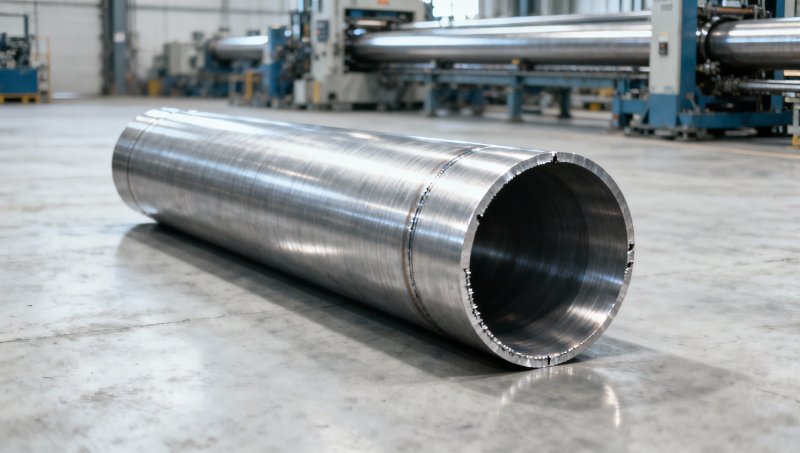
When bridge engineers specify “dimensionally stable structural steel pipe”, they need more than catalog numbers—they need verifiable process control. Hongteng Fengda integrates precision manufacturing with responsive global service: our certified facilities operate 24/7 production shifts with automated dimensional monitoring, achieving 99.2% first-time yield on bridge-grade pipe orders. We serve over 120 clients across North America, Europe, and the Middle East—with average lead time of 25–35 days for standard sizes and 45–60 days for custom diameters.
Our value extends beyond supply: we offer free engineering support for dimensional validation—including cross-section modeling, buckling analysis input files, and weld joint design review. For urgent projects, we maintain strategic inventory of common bridge pipe sizes (e.g., 323.9×12.7 mm, 406.4×16.0 mm) in Q355 and ASTM A500 Grade C grades, enabling 7–10 day air freight delivery to major ports.
To get started: share your bridge design drawings or pipe specification sheet—we’ll provide dimension-compliant quotes, mill test reports, and delivery timelines within 48 hours. Ask about our OEM co-engineering program for bespoke profiles, including perforated angle iron and laser-cut channel steel components.
Please give us a message


Please enter what you want to find