In cold storage construction, choosing the right Steel Wire for cold storage construction is essential for structural stability, corrosion resistance, and long-term performance in low-temperature environments. For engineering teams, the right specification improves durability, supports safe load transfer, and helps control maintenance over time.
What makes Steel Wire for cold storage construction different from standard applications?
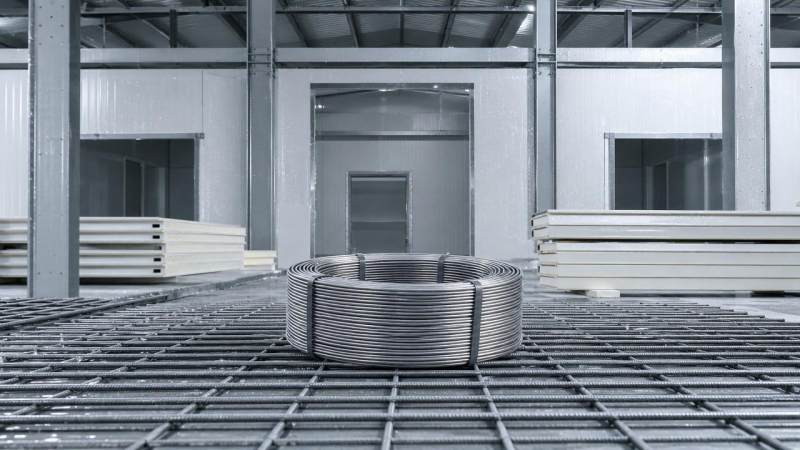
Cold storage buildings operate under unusual conditions. Low temperatures, moisture cycling, and condensation place constant stress on steel components and fastening systems.
Steel Wire for cold storage construction must perform beyond basic tensile strength. It should also maintain toughness, dimensional reliability, and surface protection in cold, wet, and insulated structures.
In these projects, steel wire may support reinforcement, binding, anchoring, mesh stability, suspended systems, or prefabricated structural connections. Each use demands dependable behavior during installation and long service life.
Unlike dry indoor applications, cold storage facilities face condensation around joints, door zones, roofs, and wall interfaces. This means corrosion resistance becomes just as important as strength.
A well-selected steel wire solution also helps reduce cracking risks in concrete-adjacent areas, improves assembly consistency, and supports smooth coordination with insulated panels and structural steel frames.
Where is Steel Wire for cold storage construction commonly used?
Steel Wire for cold storage construction appears in more places than many teams expect. It is not limited to one connection detail or one reinforcement task.
Typical applications include:
- Reinforcement tying for floors, slabs, beams, and foundations
- Support for concrete works around cold room structures
- Fixing steel mesh in walls, columns, and loading areas
- Securing structural elements during fabrication and installation
- Use in service platforms, access areas, and utility supports
Many cold storage projects also connect to roads, foundations, drainage zones, and logistics platforms. These surrounding structures still require durable steel materials with predictable performance.
For integrated construction needs, Wire rod can be used as a versatile upstream material in reinforcement and structural applications. Available grades include HRB335, HRB400, and HRB500.
Material choices such as Q195, Q235, Q345, ST37, ST52, 16Mn, and ASTM-related grades support different strength and processing requirements across cold-chain building systems.
Surface options also matter. Galvanized coating, anti-rust oil, or client-specific treatments can improve suitability for humid low-temperature environments and transportation exposure.
How do you choose the right Steel Wire for cold storage construction?
Selection should begin with function, not price alone. A tying wire for reinforced slabs has different needs than a wire used in exposed or semi-exposed support areas.
1. Check temperature-related toughness
Low temperatures can reduce ductility in unsuitable steel. The chosen product should resist brittleness and maintain stable behavior during bending and installation.
2. Match strength to structural duty
Do not over-specify or under-specify. Light fixing tasks differ from reinforcement-related uses tied to beams, slabs, walls, or foundation elements.
3. Review corrosion protection
Condensation is common in cold rooms and loading interfaces. Galvanized or otherwise protected Steel Wire for cold storage construction usually offers better long-term value.
4. Confirm standards and tolerances
Reliable material should align with recognized standards such as ASTM, EN, JIS, or GB. Tight tolerance control supports safer installation and predictable fit.
5. Consider fabrication compatibility
If cutting, bending, welding, decoiling, or punching are needed, the product must suit the actual workflow. Processing convenience affects labor time and installation quality.
What risks come from using the wrong steel wire in cold storage projects?
The wrong material often creates problems slowly. Early installation may seem acceptable, but long-term exposure reveals weaknesses.
Common risks include corrosion around wet zones, reduced fastening reliability, poor bending behavior, and inconsistent structural support during maintenance cycles.
If Steel Wire for cold storage construction lacks proper coating, surface rust can spread faster in areas with condensation and intermittent thawing near loading doors.
Incorrect diameter or grade may also affect reinforcement integrity in slabs or foundations. This can lead to rework, inspection delays, or lower confidence in structural quality.
Another mistake is ignoring processing needs. Material that cannot be cut or shaped efficiently slows installation and increases waste on site.
- Do not choose only by initial unit price
- Do not overlook coating performance in humid zones
- Do not assume general building wire suits low-temperature service
- Do not ignore certification and tolerance consistency
How do product specifications affect installation efficiency and project cost?
Good specification is not only about engineering safety. It also improves scheduling, labor productivity, and procurement control.
Common sizes such as 6mm, 8mm, 10mm, 12mm, 16mm, 20mm, and larger options support varied construction tasks. Proper sizing reduces cutting waste and unnecessary handling.
Length options like 5m-14m, 5.8m, 6m, 9m, and 12m can align with fabrication plans. This lowers on-site adjustment time and supports smoother sequencing.
When supply includes processing services such as bending, welding, decoiling, cutting, and punching, installation becomes more predictable and less dependent on extra site work.
For projects needing certified materials, products meeting BS4449-2005, JIS G3112-2004, ASTM A615-A615M-04a, ISO, SGS, or related standards can reduce approval friction.
Stable supply is equally important. A structural steel manufacturer with modern production and strict quality control helps maintain lead times and reduce sourcing uncertainty.
What should be checked before ordering Steel Wire for cold storage construction?
Before placing an order, verify performance needs against actual drawings, local standards, and environmental exposure. This prevents mismatch between design intent and delivered material.
Use this simple checklist:
- Confirm application area and required load behavior.
- Select suitable grade, diameter, and length.
- Review coating or surface treatment for humidity protection.
- Check certifications, tolerances, and test documentation.
- Align processing service with fabrication needs.
- Confirm packing, delivery schedule, and payment terms.
Strong supply partners matter here. Hongteng Fengda provides structural steel products and customized solutions with stable production, strict quality control, and support for international standards.
That combination helps cold storage projects control sourcing risk, maintain quality consistency, and keep construction progress on track across global markets.
Conclusion: How can better material decisions improve cold storage performance?
Steel Wire for cold storage construction affects more than one detail. It influences safety, corrosion resistance, installation speed, and long-term maintenance across the whole facility.
The best results come from matching grade, size, coating, and standards to the actual cold-chain environment. Careful selection reduces hidden costs and supports durable performance.
If your project needs dependable structural steel support, review the required specifications early, compare certified options carefully, and choose supply partners that can deliver consistent quality.
Please give us a message


Please enter what you want to find